Installation guide
 Owner’s manual
 Error Codes
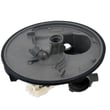



Does a KitchenAid dishwasher have a filter to clean out?
Yes. The KitchenAid KDTE204DSS0 dishwasher uses a triple filtration system (upper filter assembly and lower filter) that requires periodic cleaning to maintain peak cleaning performance and prevent gritty residue on dishes; see the KDTE204DSS0 user manual.
Where the filter is and what it does
The filters sit at the bottom center of the tub and help keep food soil from recirculating onto dishes.
- Upper filter assembly: helps keep oversized items and fine particles out of the pump
- Lower filter: helps keep food from being recirculated onto dishware
- When it needs attention: visible soil on the filter, poor cleaning, or dishes feel gritty
How to remove and clean the filters (KDTE204DSS0)
We recommend cleaning with water and a soft brush only.
- Remove the bottom rack.
- Turn the upper filter assembly about 1/4 turn counterclockwise and lift it out.
- Lift the lower filter slightly and pull forward to remove.
- Rinse under running water; use a soft brush for stuck-on debris.
- Reinstall the lower filter under the locating tabs.
- Insert the upper filter and rotate clockwise until it locks (it should not spin freely).
Recommended cleaning frequency
Your cleaning interval depends on how you load dishes.
| Loads per week | If you scrape only | If you do not scrape or rinse |
|---|---|---|
| 1-3 | Twice per year | Every 2 months |
| 4-7 | Twice per year | Once per month |
| 8-12 | Every 3 months | Every 2 weeks |
If you have very hard water (above 15 grains), clean the filters at least once per month.
Why it matters
A clogged or incorrectly installed filter can reduce wash performance, leave grit on dishes, and can contribute to odors. Running the dishwasher without the filters properly installed can also lead to poor results.
Last updated: January 2026
What is the average lifespan of a KitchenAid dishwasher?
KitchenAid dishwashers typically last 10 to 14 years. For your KitchenAid KDTE204DSS0, regular filter cleaning, correct detergent and rinse aid use, and fixing small leaks early can help you reach (or beat) that average; see the maintenance guidance in the KDTE204DSS0 user manual.
What affects lifespan the most
- Water quality: hard water can leave mineral buildup that strains the wash system.
- Filter maintenance: clogged filters reduce cleaning and can stress the pump.
- Loading habits: blocked spray arms or detergent dispenser can cause poor results and repeat washing.
- Heat and drying: consistent heating and proper rinse aid use improve performance and reduce residue.
- Small leaks: a worn seal can shorten life if water reaches components.
Maintenance schedule we recommend
Use this simple cadence to keep a KDTE204DSS0 running efficiently:
| Task | Typical frequency | What to look for |
|---|---|---|
| Clean the filter system | Monthly (more often with hard water) | Gritty dishes, visible debris, odors |
| Check spray arms | Monthly | Clogged holes, arms not spinning freely |
| Run a dishwasher cleaner cycle | Monthly | White film, odors, cloudy glassware |
| Inspect door sealing surfaces | Every 3-6 months | Drips at corners, moisture under the door |
Parts that commonly matter as the unit ages
If you notice leaking, poor draining, or inconsistent washing, these model-compatible parts are often involved:
- Dishwasher door seal W11177741: helps prevent leaks around the door perimeter.
- Dishwasher drain pump WPW10531320: pushes water out during drain; issues can leave water in the tub.
- Dishwasher water inlet valve W11175771: controls fill; problems can cause underfilling or no fill.
Why it matters
A dishwasher near the end of its expected lifespan can still be a great candidate for repair if the tub is sound and the issue is isolated (like a seal, valve, or drain component). Preventive care also helps avoid repeat cycles that add wear to the motor and heating system.
Last updated: January 2026
What is the most common problem with a KitchenAid dishwasher?
For the KitchenAid KDTE204DSS0 dishwasher, the most common day-to-day complaint we see is poor cleaning (food left on dishes). On this model, that’s often tied to filter maintenance, spray-arm blockage, or loading that prevents spray arms from spinning; leaks are another frequent issue when door seals wear.
What to check first (fast, no tools)
- Spin the upper and lower spray arms by hand; they should rotate freely.
- Clean the filtration system at the bottom center of the tub.
- Run hot water at the sink nearest the dishwasher until it’s hot before starting.
- Use fresh automatic dishwasher detergent; dose for your water hardness.
- Use rinse aid to improve drying and reduce spotting.
For the exact filter removal and cleaning steps for KDTE204DSS0, follow the KDTE204DSS0 user manual.
If the issue is poor cleaning
Here are the most common symptoms and what they usually mean on KDTE204DSS0:
| Symptom | Likely cause | What to do next |
|---|---|---|
| Grity dishes | Filters need cleaning | Clean upper and lower filters; reinstall fully locked |
| Top rack not clean | Upper spray pattern blocked or loading issue | Reposition tall items; check spray holes for debris |
| Detergent left in cup | Dispenser blocked by dishes | Reload so nothing blocks the dispenser door |
| Weak wash action | Restricted circulation | Clean filters; check spray arms for clogs |
If you’ve confirmed the lower spray arm is cracked or won’t spin smoothly after cleaning, replace the lower spray arm listed for this model: dishwasher spray arm WPW10448645.
If the issue is leaking
Leaks are commonly caused by buildup on sealing surfaces or a worn seal.
- Wipe the tub lip and door perimeter clean (remove grease and food soil).
- Inspect the main door seal for tears, flattening, or gaps.
- Check the lower door seal area for damage if water appears at the bottom of the door.
If the leak is coming from the door perimeter seal, the compatible part listed for KDTE204DSS0 is dishwasher door seal W11177741 (replaces older numbers such as W10300924).
Why it matters
Poor cleaning usually gets worse as filters load up and spray pressure drops. Catching seal wear early helps prevent recurring leaks and protects nearby cabinets and flooring.
Last updated: January 2026