Installation guide
 Owner’s manual
 Error Codes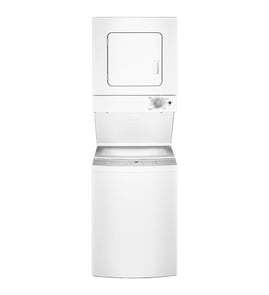


Are all washers and dryers 27 inches wide?
No. While many full-size washers and dryers are built around a 27-inch width, sizes vary by brand and style. For the GE GUD27ESSJ1WW stacked laundry center, confirm the exact cabinet width and installation clearances in the GUD27ESSJ1WW installation guide.
- Full-size laundry: commonly about 27 to 28 inches wide
- Compact laundry: commonly under 25 inches wide
- Stacked laundry centers: often designed to fit tighter spaces, but still vary by model
- Front-load vs. top-load: widths can be similar, but depth and door clearance often differ
- Pedestals and trim kits: can change the overall footprint and required space
Use these checkpoints so the unit fits and vents correctly:
- Measure the space width at the narrowest point (baseboards, door trim, etc.)
- Confirm door swing and access to the dryer door and washer lid
- Verify venting path and room behind the unit for the exhaust duct
- Confirm water pressure and hookups location
- Confirm drain standpipe height and diameter requirements
The installation instructions for this laundry center call out key site requirements such as:
| Requirement | What to plan for | Why it matters |
|---|---|---|
| Flooring | Firm, level surface | Reduces vibration during spin |
| Water pressure | 20 to 120 psi | Helps fill valves operate correctly |
| Drain height | Not less than 30 inches; not more than 8 feet | Prevents siphoning and drain issues |
| Electrical | Properly grounded, dedicated circuit | Helps prevent nuisance trips and unsafe wiring |
A “27-inch washer” label does not guarantee a 27-inch fit. Real-world installs need extra room for hoses, venting, leveling, and door clearance. Checking the model-specific dimensions first helps avoid delivery and installation surprises.
Last updated: February 2026
How does the GE washer dryer combo work?
The GE GUD27ESSJ1WW stacked laundry center is a two-in-one unit with a top-load washer and a vented dryer stacked above it; you select a wash cycle on the washer controls and a drying cycle on the dryer controls, and the washer and dryer can run at the same time. For cycle details and settings, use the GUD27ESSJ1WW owner’s manual.
The washer uses a cycle selector to control wash time and agitation intensity, then drains and spins to remove water.
- Choose a wash cycle (for example Cottons, Permanent Press, Delicates)
- Set water level and other options as available on your control panel
- Close the lid (the washer will not agitate or spin with the lid open)
- Press Start to begin the cycle
- The washer drains and spins at the end to extract water
The dryer tumbles clothes with heated air (or no heat on fluff cycles) and exhausts moisture through the vent system.
- Clean the lint filter before every load
- Select a fabric care temperature (Cottons, Delicates, Easy Care)
- Pick a drying cycle (Auto/Optimum Dry, Timed Dry, Dewrinkle, Quick Fluff)
- Press Start; the drum tumbles while heat and airflow dry the load
This model is designed so you can wash one load while drying another.
| What you want to do | What to check first | What to do next |
|---|---|---|
| Run washer and dryer together | Power supply and outlet capacity | Start washer cycle, then start dryer cycle |
| Improve drying performance | Lint filter and venting | Clean lint filter, confirm strong airflow |
| Prevent washer no-start issues | Lid closed and controls set | Close lid, reset cycle, press Start |
Understanding that GUD27ESSJ1WW is a stacked washer plus vented dryer (not a single drum “combo”) helps you troubleshoot correctly; washer issues are usually lid lock, drain, or spin related, while dryer issues are usually heat, airflow, or drive-belt related.
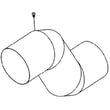
If the dryer runs but will not tumble, a worn belt is a common cause; see the dryer drum belt WE03X29897.
Last updated: February 2026
Is GUD27ESSJ1WW a brand name?
No. GUD27ESSJ1WW is a GE model number, not a brand name. For this stacked laundry center, the brand is GE, and GUD27ESSJ1WW identifies the exact unit so you can match the correct parts, manual information, and installation requirements.
- Brand (manufacturer): GE
- Model number: GUD27ESSJ1WW (the specific laundry center version)
- Product type: Stacked laundry center (unitized washer and dryer)
- Where you’ll find the model tag: Open the dryer door and look for the model and serial number label
For operating details, cycle features, and troubleshooting, use the GUD27ESSJ1WW owner’s manual.
Using the exact model number helps us match parts that fit your configuration (controls, wiring, drum support, belts, and safety switches). Common examples for this GE laundry center include:
- Dryer drum belt WE03X29897 (drum won’t tumble, squealing, belt broken)
- Washer lid lock WH44X10288 (lid won’t lock or unlock, won’t spin)
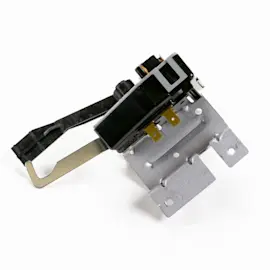
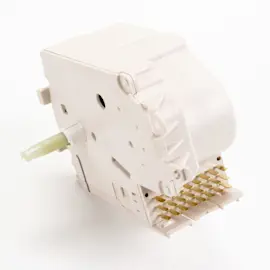
- Dryer door switch, push-to-start switch, timer, and control components
- Confirm the model number is GUD27ESSJ1WW (not a similar GUD27 variant)
- Match the part ID on the part listing to your need
- Compare symptoms to the manual’s troubleshooting section
- Verify power type and venting requirements during installation
| Item | Example for this unit | What it’s used for |
|---|---|---|
| Brand | GE | Manufacturer name |
| Model number | GUD27ESSJ1WW | Exact product version |
| Part ID | WE03X29897 | Identifies a specific replacement part |
| Part name | Dryer drum belt | Describes the part’s function |
GE makes many similar unitized laundry centers; a single letter or number change can mean different wiring, controls, or fitment. Using GUD27ESSJ1WW keeps repairs accurate and prevents ordering the wrong part.
Last updated: February 2026
What is the average life of a GE washing machine?
Most GE washing machines average 10 to 14 years of service life. For the washer in your GE GUD27ESSJ1WW stacked laundry center, consistent care (correct loading, routine cleaning, and replacing aging hoses) is what most often determines whether you land closer to 10 years or closer to 14.
- Load size and balance: Overloading and frequent out-of-balance loads increase wear on the drive system and tub support.
- Detergent use: Using too much detergent can contribute to residue and odor; using the right amount helps the washer run cleaner.
- Moisture control: Leaving the lid open after washing helps moisture evaporate and reduces musty buildup.
- Water supply hose age: GE recommends replacing fill hoses every 5 years to reduce risk of hose failure.
- Installation and leveling: A properly installed, level washer vibrates less and is easier on bearings, belts, and suspension.
Use these habits for the GUD27ESSJ1WW washer:
| Maintenance task | How often | Why it helps |
|---|---|---|
| Replace water fill hoses | Every 5 years | Prevents leaks and water damage risk; keeps water flow reliable |
| Leave lid open after loads | Most loads | Reduces trapped moisture and odor |
| Wipe basket with mild detergent cloth | As needed | Helps prevent residue buildup |
| Avoid overloading | Every load | Reduces strain on the drive and tub system |
For model-specific care steps and operating tips, follow the GUD27ESSJ1WW owner’s manual.
Many “old washer” symptoms are caused by a single worn part or adjustment, not the whole machine. Common examples include:
- Not spinning because the lid is not locking properly (see washer lid lock WH44X10288)
- Excessive vibration from leveling or load balance issues
- Poor cleaning from incorrect cycle selection or detergent amount
If your unit is showing a fault, checking the GE error codes can quickly narrow the problem to a specific system.
Knowing the typical 10 to 14 year lifespan helps you decide whether to maintain and repair (often cost-effective) or plan for replacement, especially if multiple major components are wearing at the same time.
Last updated: February 2026
What is the most common problem with a GE dryer?
The most common GE dryer problem is poor drying or no heat, and the most common root cause is restricted airflow from lint buildup or improper venting. On the GE GUD27ESSJ1WW stacked laundry center, start by checking the lint screen and the entire exhaust ducting per the GUD27ESSJ1WW owner’s manual.
- Clean the lint filter before every load.
- Confirm the dryer is vented outdoors (never into an attic, wall, or crawl space).
- Inspect the vent hose for kinks, crushing, or long runs.
- Vacuum lint from the duct and check the exterior hood flapper moves freely.
- Verify power: a tripped breaker or blown fuse can cause “won’t start” or “tumbles but won’t heat.”
| Symptom | Most likely cause | What to check first |
|---|---|---|
| Clothes take too long to dry | Vent restriction | Lint filter, duct, exterior hood |
| Dryer tumbles but no heat | Power supply issue or heat circuit fault | Breaker/fuse, then heating system |
| Dryer won’t start | Door not closed, switch issue, or power issue | Door latch feel, breaker/fuse |
| Thumping/squealing noise | Worn belt or drum support parts | Belt condition, drum glides/bearings |
If airflow checks out and the drum will not turn or you hear squealing/thumping, these model-matched parts are common fixes:
- Dryer drum belt WE03X29897 (broken or stretched belt)
- Dryer drum glide bearing, upper WE03X37320 (scraping, squeal, uneven drum support)
- Dryer top drum bearing WE03X25079 (rumble, thump, drum support wear)
Restricted venting makes drying slow and can overheat the dryer, which leads to repeated shutdowns and premature failure of heat and safety components. Good airflow is the foundation for normal drying time, energy use, and safe operation.
Last updated: February 2026