Owner’s manual


How to reset Kenmore washer model 11020852990 top loader?
To reset your Kenmore washer model 11020852990, we recommend doing a simple power reset: stop the cycle, turn the washer off, and disconnect power for a few minutes. When you restore power, restart the cycle using the timer knob as described in the owner's manual.
Quick reset steps (power reset)
- Push the Cycle Selector (Timer) knob in to stop the washer.
- Turn the washer off (if your model has a power control).
- Unplug the washer (or switch the breaker off).
- Wait 2 to 5 minutes.
- Restore power.
- Select a cycle and pull the Cycle Selector (Timer) knob out to restart.
If the washer is stuck mid-cycle
Many Kenmore top-load washers use a timer-based control. A “reset” is often just stopping and restarting correctly.
| What you do | What it does | What to expect |
|---|---|---|
| Push timer knob in | Stops the washer immediately | Cycle pauses |
| Pull timer knob out | Restarts the washer | Dial advances as the cycle runs |
| Change water level to RESET (if equipped) | Lets you increase water level after agitation starts | Water level changes after you reselect |
When a reset will not fix the problem
If the washer still will not drain or spin after a reset, focus on the most common causes:
- Lid not fully closed
- Kinked or clogged drain hose
- Drain hose installed too high (commonly over 96 in above the floor)
- Too much detergent causing excessive suds
- Unbalanced load preventing proper spin
Why it matters
A proper reset clears a “hung” timer sequence and gets the washer back to normal operation without forcing parts. If symptoms continue (won’t drain, won’t spin, wet loads), troubleshooting the drain and spin system prevents repeat stoppages.
Last updated: February 2026
What is the average lifespan of a Kenmore washer?
Most Kenmore washers average 10 to 15 years of service life. For Kenmore washer model 11020852990, good installation and routine care (leveling the cabinet, correct loading, and periodic cleaning) help you stay in that range and reduce wear on drive and suspension parts; see the owner's manual.
Typical lifespan by washer type
While usage and maintenance matter most, these are common expectations:
| Washer type | Typical lifespan | Notes |
|---|---|---|
| Top-load (agitator) | 10 to 15 years | Often tolerant of mixed loads; avoid overloading |
| Top-load (impeller/HE) | 8 to 14 years | More sensitive to load balance and detergent choice |
| Front-load | 8 to 12 years | Door boot and drainage upkeep are key |
What shortens washer life fastest
These issues commonly cut years off a washer’s life:
- Overloading or packing items tightly around the agitator
- Running unbalanced loads repeatedly (shaking and cabinet stress)
- Using too much detergent (residue, odors, and poor rinsing)
- Skipping leveling; vibration can loosen hardware over time
- Ignoring slow drain symptoms (pump strain and standing water)
Maintenance habits that add years
We recommend these practical steps for a Kenmore top-load washer like model 11020852990:
- Level the washer and keep the front leg nuts tight; the manual notes vibration can increase when leveling hardware is loose.
- Load correctly; do not wrap items around the agitator.
- Use additives correctly; measure bleach and dilute softener as directed to prevent dispenser issues.
- Check fill and drain performance; slow draining can point to a restriction or a weakening pump.
- Address early agitation/spin problems; worn mechanical drive parts can worsen quickly.
Parts that often matter as a washer ages
If performance drops, these model-compatible parts are common repair items:
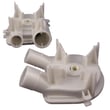
- Washer drain pump WP3363394 (drain problems, standing water)
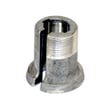
- Coupling 285753A (no agitation or spin on many direct-drive designs)
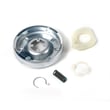
- Agitator dog 80040 (agitator “slips” or won’t ratchet properly)
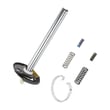
- Clutch 285785 (weak or inconsistent spin)
Why it matters
A washer near the end of its expected lifespan is more likely to develop vibration, draining, and agitation issues. Catching symptoms early helps prevent secondary damage to the gear case, basket drive, and suspension.
Last updated: February 2026
How to read Kenmore washer model numbers?
Kenmore washer model numbers are structured so the first 3 digits identify who built the washer for Kenmore, and the remaining digits narrow down the exact design and version. For your Kenmore washer model 11020852990, the 110 prefix is the key manufacturer identifier.
What each section of a Kenmore model number means
Most Kenmore washer model numbers follow this pattern:
- First 3 digits (prefix): manufacturer code (who made it for Kenmore)
- Next group of digits: base model design family
- Last digits: specific variation (features, color, revision, or production run)
Example breakdown
| Example model number | What to look at | What it tells you |
|---|---|---|
| 11020852990 | 110 | Manufacturer prefix (used for parts matching) |
| 11020852990 | 20852 | Base model family (design platform) |
| 11020852990 | 990 | Version/variation (exact configuration) |
Where to find the model and serial number on the washer
We use the model number to match the correct parts list, diagrams, and repair instructions. On Kenmore washers like 11020852990, the model and serial number plate is on the cabinet (the manual calls it the “Model and Serial Number Plate”).
- Look for a label or plate on the washer cabinet
- Record both the model number and serial number
- Keep the information with your purchase records for future reference
For the exact location and labeling details, use the owner's manual.
Why it matters when ordering parts
Even small model-number differences can change which parts fit. Using the full model number helps us match the correct components for your washer, such as:
- Washer drain pump WP3363394 (draining problems)
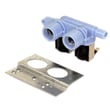
- Washer inlet valve 285805 (fill or water flow problems)
- Coupling 285753A (agitation or spin issues on direct-drive designs)
Quick checklist before you buy a part
- Confirm the model number is 11020852990 (all digits)
- Match the symptom to the correct system (fill, drain, spin, agitation)
- Compare the part name and ID carefully before ordering
Last updated: February 2026
How to unclog drain hose on Kenmore washer?
To unclog the drain hose on your Kenmore washer model 11020852990, unplug the washer, lower the hose to drain standing water, then remove and flush the hose and clear debris at the pump inlet. Reinstall the hose and clamps exactly as shown in the owner's manual.
Safety and prep
- Unplug the washer.
- Turn off both water supply valves.
- Put towels and a shallow pan under the hose and pump area.
- Keep a bucket ready; lowering the hose can release water quickly.
- If the tub is full, bail out or siphon first.
Step-by-step: clear the clog
- Check for kinks first: straighten the hose behind the washer.
- Gravity drain: lower the hose end into a bucket or floor drain.
- Remove the hose at the washer outlet: use pliers to open the clamp, slide it back, then twist and pull the hose off the drain connector.
- Flush the hose: run water through it; push out lint with a flexible brush or plastic drain snake.
- Check the pump inlet: remove any coins, socks, or lint packed where the hose meets the pump.
If the pump is blocked or failing
A clear hose with slow or no draining usually points to a jammed or worn pump. For this model, the replacement part is the washer drain pump WP3363394.
| What you see | Likely cause | What to do |
|---|---|---|
| Won’t drain or won’t spin | Hose kinked or clogged | Straighten, remove, flush |
| Keeps draining or cycle stuck | Hose sealed in standpipe | Create a loose fit and air gap |
| Wet loads | Excess suds | Use less detergent |
Why it matters
A restricted drain path prevents proper draining and can stop the spin cycle; it also strains the drain pump and can lead to repeat backups if the standpipe air gap is missing.
Last updated: February 2026