Owner’s manual
 Error Codes


Is it worth replacing the heating element in a dryer?
Yes; for a Kenmore electric dryer like model 11060932990, replacing a failed heating element is usually worth it because it restores normal drying performance for far less than the cost of a new dryer, especially when the drum, motor, and controls are otherwise working normally. Use the 11060932990 owner's manual to confirm cycle and temperature settings before diagnosing a heat problem.
Replacing the heating element is typically the right move when the dryer runs but does not heat, or heats weakly, and airflow is good.
- The dryer tumbles normally but clothes stay cool or take much longer to dry
- You have normal airflow at the outside vent (not crushed or clogged)
- The timer and cycle selection work as expected (Auto Moisture Sensing or Timed Dry)
- The dryer is in good overall condition (no major drum or motor issues)
- You want to extend the life of the appliance instead of replacing it
On electric dryers, a heating element can fail, but so can safety and temperature-control parts.
- Clean the lint screen and confirm strong venting (restricted venting can overheat and trip safeties)
- Verify you are using a heat cycle (not Air Fluff)
- If the dryer overheated and stopped heating, check the dryer thermal fuse WP3390719
- If heat cuts out or cycles oddly, check the dryer thermistor WP8577274
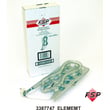
- If the element is damaged or open, replace the dryer heating element WP3387747
| Option | Typical outcome | Best for |
|---|---|---|
| Replace heating element | Restores heat and normal dry times | Dryer tumbles, controls work, venting is good |
| Replace thermal fuse/thermistor | Fixes safety trip or temperature sensing issues | Dryer runs but heat is inconsistent or stopped after overheating |
| Replace dryer | New appliance, higher cost | Multiple major failures or severe wear |
A weak or failed heat system forces longer run times, wastes energy, and can increase wear on the drive motor, drum support rollers, and belt system. Fixing the heating circuit helps your 11060932990 dry faster and more evenly.
You can order the correct replacement parts for model 11060932990 from the parts list for this model, or search by model number on Sears PartsDirect.
Last updated: February 2026
How do I tell if my dryer heating element is bad?
If your Kenmore electric dryer model 11060932990 runs but produces little to no heat, takes much longer to dry, or leaves clothes damp at the end of a normal cycle, the heating element is a top suspect. Confirm by safely testing the element for continuity with a multimeter and checking for a short to the metal housing.
- Dryer tumbles normally but there is no heat
- Clothes are still damp after a full cycle (you may find you need extra time in Timed Dry)
- Drying times suddenly get much longer for the same size load
- A burning smell or visible damage on the coil (stop using the dryer and inspect)
- Breaker trips when heat should turn on (can indicate a shorted element or wiring issue)
- Unplug the dryer (electric shock hazard).
- Access the heater terminals (location varies by design; follow the disassembly steps in the owner's manual).
- Remove at least one wire from the element terminal so you are not reading through the circuit.
- Test element continuity across the two heater terminals.
- Test for a short to ground by checking each heater terminal to the metal heater housing.
| Test | Typical result if good | Result if bad | What it points to |
|---|---|---|---|
| Terminal-to-terminal resistance | Often ~8 to 15 ohms | Open/infinite or far outside typical range | Broken coil or failed element |
| Terminal-to-housing (ground) | No continuity | Continuity present | Element shorted to housing |
A dryer can lose heat for reasons other than the element:
- Restricted venting or lint buildup reducing airflow
- Blown thermal safety device such as the dryer thermal fuse WP3390719
- Temperature sensing problems such as the dryer thermistor WP8577274
- Loose or overheated heater wiring (a repair option is the dryer heating element wire kit 279457)
A weak or failed heating circuit can cause long dry times and overheating elsewhere in the dryer. Good airflow and working safety controls help protect the heater housing, thermostats, and wiring while keeping drying performance consistent.
You can order the correct replacement parts for model 11060932990 from the parts list for this dryer, or search by model number on Sears PartsDirect.
Last updated: February 2026
What is the lifespan of a Kenmore dryer?
Most Kenmore dryers last 10 to 12 years with normal household use. A well-maintained Kenmore 11060932990 electric dryer often runs longer because routine care (lint removal, good airflow, and timely replacement of wear parts) reduces heat stress and strain on the drive system. See the owner's manual for the maintenance and operating details for your exact dryer.
Lifespan depends mostly on load frequency, venting, and whether small issues are fixed early.
| Usage pattern | Typical lifespan | What usually ends the dryer first |
|---|---|---|
| Light (1 to 3 loads/week) | 12 to 15 years | Belt/rollers, door latch wear |
| Average (4 to 7 loads/week) | 10 to 12 years | Heating and airflow-related failures |
| Heavy (8+ loads/week) | 7 to 10 years | Motor wear, overheating from restricted venting |
We see the biggest lifespan gains from airflow and basic mechanical upkeep.
- Clean the lint screen every load; replace a damaged screen if it no longer seals well.
- Keep the exhaust vent run short and clear; restricted venting is the most common cause of overheating.
- Avoid overdrying; use auto-dry features when available to reduce heat exposure.
- Listen for squealing or thumping; worn drum support parts should be replaced before they damage the drum.
- Do not overload; heavy loads strain the drive motor and drum support system.
If your dryer still heats and tumbles but is noisy, slow to dry, or shutting down on heat, these parts are common fixes:
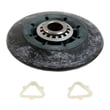
- Support kit WPW10314173 (drum support roller components): replace when you hear rumbling, thumping, or squealing.
- Dryer heating element WP3387747: replace when the dryer runs but does not heat.
- Dryer thermal fuse WP3390719: replace if the dryer will not run and you have confirmed good power.
- Dryer thermistor WP8577274: replace when temperatures are erratic or cycles end too soon.
A dryer’s lifespan is usually limited by heat and friction. Good venting prevents overheating (protecting the heater, thermostats, and wiring), and replacing wear items early prevents bigger repairs like drum damage or motor strain.
You can order replacement parts for your Kenmore 11060932990 from the parts list for this model, or search by model number on Sears PartsDirect.
Last updated: February 2026
How to tell if a dryer start switch is bad?
On your Kenmore electric dryer model 11060932990, a bad push-to-start switch typically shows power at the controls but the dryer will not start when you press PUSH TO START, or it only runs while you hold the button. Confirm it with a multimeter continuity test.
- Timer/control has power, but pressing PUSH TO START does nothing
- Dryer starts only if you press and hold the start button
- Button feels sticky, loose, or does not click consistently
- You hear a brief hum when pressing start, but the drum never begins turning
- Unplug the dryer.
- Access the console and locate the push-to-start switch (use the wiring diagram in the 11060932990 owner's manual).
- Pull the wire connectors off the switch terminals (pull on the connector, not the wire).
- Set a multimeter to continuity or ohms.
- Check readings:
- Not pressed: typically open (no continuity)
- Pressed: should go closed (continuity, near 0 ohms)
If the reading does not change when pressed, replace the switch.
| Check | What you’ll notice | Why it matters |
|---|---|---|
| Door latch/door switch | Starts only when pushing on the door | Dryer must sense door closed |
| Thermal fuse | Won’t run at all | Opens the motor circuit for safety |
| Belt/idler system | Hums, then stops; drum won’t move | A jam can prevent startup |
If the dryer will not run at all, testing the dryer thermal fuse WP3390719 is a smart next step.
The start switch is a simple momentary control; when it fails, the dryer can look “normal” but never energize the motor circuit. Testing it first helps avoid replacing higher-cost parts.
For replacement parts for model 11060932990, use the parts list for this dryer or search by model number on Sears PartsDirect.
Last updated: February 2026