Owner’s manual
 Error Codes
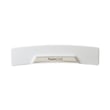

How to remove bottom grille on GE refrigerator?
On the GE GFE28GMKEES bottom-mount refrigerator, the bottom grille (base grille) typically comes off by releasing its retaining tabs or removing a couple of screws (depending on the exact grille style), then pulling the grille straight out from the front. Use gentle, even pressure to avoid cracking the plastic.
- Unplug the refrigerator or switch off power at the breaker if you will be working near wiring.
- Look along the top edge and corners of the grille for screws; remove them if present.
- If there are no screws, grip the grille at both ends and pull straight outward to pop the clips free.
- If it feels stuck, press in on the grille near the clip locations while pulling outward.
- Set the grille aside on a towel to prevent scratches.
The manual guidance for moving the refrigerator applies here too. If you need more access, raise the front leveling legs and pull the refrigerator straight out (not sideways) to prevent floor damage; avoid rolling over the power cord or water line. See the GFE28GMKEES owner's manual for the leveling leg and safe-moving details.
Once the base grille is off, you usually have access to items like:
| Area behind grille | What it’s for | What to check |
|---|---|---|
| Condenser area | Helps remove heat | Dust buildup, pet hair, airflow blockage |
| Water line routing (if equipped) | Feeds dispenser/ice maker | Kinks, rubbing, leaks |
| Front leveling legs | Levels cabinet, helps doors close | Legs firmly on floor, cabinet not rocking |
Removing the bottom grille is often the first step for cleaning condenser airflow and inspecting for water line issues. Better airflow helps cooling performance and can reduce run time.
Last updated: February 2026
Is GE GFE28GMKEES considered high end?
Yes. The GE GFE28GMKEES is generally considered an upper-tier, feature-forward refrigerator in GE’s lineup, with a premium look and convenience features that typically place it above basic models. For the exact feature set and configuration details, we recommend checking the GFE28GMKEES owner's manual.
A refrigerator is usually “high end” when it combines premium design, advanced controls, and convenience features that add cost and complexity.
Common high-end indicators include:
- French door, bottom-freezer layout with upgraded storage and lighting
- Advanced electronic temperature controls (with recommended set points)
- Built-in alarms and control lock features
- Filtration features (water filter status and reset)
- Optional connected features on some versions within this model family
The manual for this model family shows modern control features and recommended temperature presets:
- Recommended refrigerator setting: 37°F
- Recommended freezer setting: 0°F
- Control panel functions such as Door Alarm, Lock Controls, and Reset Filter
| Feature type | What you typically get | Why it feels “high end” |
|---|---|---|
| Controls and display | Digital set-point control and status indicators | More precision and visibility than dial controls |
| Convenience | Door alarm, control lock | Helps prevent temp swings and accidental changes |
| Filtration workflow | Filter reset/status | Encourages on-time filter changes for taste and flow |
“High end” usually means more comfort and capability, but it also means you will want to stay on top of basics like correct temperature settings, door sealing, and filter maintenance to keep performance consistent.
- Keep the refrigerator at 37°F and freezer at 0°F, then allow 24 hours for temperatures to stabilize
- Avoid blocking air vents with food containers to maintain airflow
- Use the door alarm to catch doors left ajar
- Replace the water filter on schedule and use the control’s Reset Filter function afterward
- If the door alarm behavior is confusing, follow how to reset the door alarm on a GE refrigerator
Last updated: February 2026
What is the most common problem with a GE refrigerator?
The most common problem we see with GE refrigerators like model GFE28GMKEES is inadequate cooling (fresh food too warm, freezer not holding temperature, or both). In many cases, the cause is restricted airflow or heat not being released properly, which makes the compressor run longer.
- Dirty condenser coils (can trap heat and reduce efficiency)
- Evaporator fan problem (weak airflow through the evaporator and into the compartments)
- Blocked vents or overpacked shelves (prevents cold air circulation)
- Defrost system issue (frost buildup blocks airflow across the evaporator)
- Door not sealing (warm air leaks in, causing long run times)
- Confirm settings: Make sure temperature settings were not accidentally changed.
- Check airflow: Keep items from blocking return vents and supply vents.
- Inspect door gaskets: Look for gaps, tears, or areas not contacting the cabinet.
- Listen for the evaporator fan: It typically runs when the compressor is running (door switch may need to be pressed to test).
- Look for frost patterns: Heavy frost on the back freezer panel often points to a defrost or airflow problem.
| Symptom | Most likely area to check | What you may notice |
|---|---|---|
| Fresh food warm, freezer OK | Airflow from freezer to fridge | Weak airflow at fridge vents |
| Freezer warm too | Condenser coils, sealed system, compressor run time | Unit runs a lot, poor cooling overall |
| Noisy or intermittent cooling | Fan or control issue | Clicking, buzzing, or fan noise changes |
| Frost buildup in freezer | Defrost system | Ice on rear panel, reduced airflow |
Cooling problems usually get worse over time. Addressing airflow, coil cleanliness, and door sealing early helps protect food, reduces energy use, and prevents the compressor from running excessively.
- Use the GE GFE28GMKEES Owner's manual for control settings, alarm behavior, and care and cleaning guidance.
- If the issue involves alarms or door-related warnings, follow how to reset the door alarm on a GE refrigerator.
- If the refrigerator is displaying a fault, use GE refrigerator error codes to narrow down the system involved.
Last updated: February 2026