Owner’s manual


How to hard reset kenmore washer?
To hard reset your Kenmore washer model 11029882890, we recommend a simple power reset: unplug the washer (or switch off the breaker) for 1 minute, then restore power and restart the cycle. This clears minor control glitches and stuck cycle behavior.
Quick hard reset steps (recommended)
- Press the cycle knob in to stop the washer (if it is running).
- Unplug the power cord from the outlet (or turn the breaker off).
- Wait 60 seconds.
- Plug the washer back in (or turn the breaker on).
- Select a cycle and pull the timer knob out to start.
For normal stop and restart operation on this model, follow the timer knob instructions in the 11029882890 owner's manual.
If the washer still will not run after a reset
These checks solve the most common “won’t start” or “won’t spin” complaints on direct-drive Kenmore top-load washers:
- Confirm the outlet has power (test with a lamp).
- Make sure the lid is fully closed; a failed lid switch can prevent spin and drain.
- Listen for the drain pump during drain; a jammed pump can stop the cycle.
- Check for a broken motor coupling if the motor runs but the tub does not move.
- If the washer drains but will not spin, inspect the clutch and drive block.
Helpful model-matched parts to consider when symptoms point to them:
| Symptom | Common cause | Example part for this model |
|---|---|---|
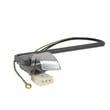
| Won’t spin/drain with lid closed | Lid switch not closing circuit | Washer lid switch WP3949238 |
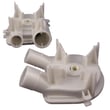
| Hums but won’t drain | Pump jammed or failed | Washer drain pump WP3363394 |
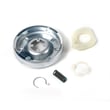
| Motor runs, no agitation/spin | Motor coupling broken | Coupling 285753A |
Why it matters
A hard reset fixes temporary electrical or timer-related hiccups, but it will not correct a mechanical failure (like a worn coupling or failed lid switch). Matching the symptom to the right part prevents repeat breakdowns and unnecessary replacements.
Last updated: February 2026
How to read Kenmore washer model numbers?
Kenmore washer model numbers (including 11029882890) are read left to right: the first 3 digits identify the manufacturer, the next group identifies the base design, and the remaining digits show feature or production variations. We use the full number to match the correct parts and manual.
What each section of the model number tells you
Most Kenmore washer model numbers follow this pattern:
- Prefix (first 3 digits): manufacturer code (who built it for Kenmore)
- Middle digits: base platform or series (the core washer design)
- Ending digits: version details (feature package, color, engineering change, or production run)
Where to find the model number on your washer
For Kenmore washers like model 11029882890, the model and serial information is printed on the model and serial number plate.
Common places to check:
- Under the lid near the tub opening (top-load models)
- On the rim of the washer opening
- On the back of the cabinet
- Inside the lid or on the underside of the top panel
For the exact location and how it’s labeled on your unit, use the 11029882890 owner’s manual.
Why the full model number matters for parts
Even small digit changes can mean different components, wiring, or fit. When you enter the complete model number, we can match parts like a lid switch, drain pump, or gear case correctly.
| What you’re doing | Use this | Why |
|---|---|---|
| Ordering replacement parts | Full model number | Prevents wrong-fit parts |
| Looking up diagrams | Full model number | Shows the correct breakdown |
| Checking operating details | Manual for your model | Confirms features and settings |
Quick example using 11029882890
| Section | Example digits | Meaning |
|---|---|---|
| Manufacturer prefix | 110 | Identifies the builder for Kenmore |
| Base model | 29882 | Core design family |
| Variation | 890 | Version/feature or production variation |
Why it matters
Reading the model number correctly helps you avoid ordering the wrong washer parts and ensures you’re using the right troubleshooting and operating information for your exact Kenmore washer.
Last updated: February 2026
What is the average lifespan of a Kenmore washer?
A Kenmore washer typically lasts 10 to 15 years. For Kenmore model 11029882890, reaching the high end of that range comes down to routine care, correct loading, and fixing early symptoms (drain issues, no-agitate, excessive vibration) before they damage major drive components.
Typical lifespan and what affects it
Most washers wear out from mechanical stress, water leaks, or repeated out-of-balance operation. These factors have the biggest impact:
- Load size and balance: chronic overloading strains the drive system and suspension
- Water quality: sediment can shorten inlet valve life and reduce fill performance
- Drain performance: slow draining overworks the pump and can leave residue behind
- Agitation wear: worn agitator parts reduce cleaning and can cause unusual noises
- Maintenance habits: periodic cleaning and inspection prevents small problems from becoming major repairs
Quick “age vs. repair” guide
Use this as a practical rule of thumb for a top-load Kenmore like the 11029882890.
| Washer age | Common situation | Typical next step |
|---|---|---|
| 0-5 years | Minor symptoms (noise, slow drain) | Repair and maintain |
| 6-10 years | Multiple wear items showing up | Repair if cost is reasonable |
| 11-15 years | Major drive or tub issues more likely | Compare repair cost vs. replacement |
| 15+ years | Frequent breakdowns | Replacement usually makes sense |
Parts that commonly shorten washer life when they fail
If any of these fail and the washer keeps being used, the extra strain can shorten overall lifespan:
- Washer drain pump WP3363394 (won’t drain, grinding, leaks)
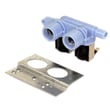
- Washer inlet valve 285805 (slow fill, no fill, temperature issues)
- Washer lid switch WP3949238 (won’t spin or agitate because the washer thinks the lid is open)
- Coupling 285753A (motor runs but washer won’t agitate or spin)
- Agitator dog 80040 (agitator slips or “ratchets,” poor turnover)
Why it matters
A washer can “still run” while quietly damaging expensive assemblies (gear case, basket drive, suspension). Catching early symptoms and replacing a lower-cost part often prevents a much larger repair later.
Model-specific tip from the manual
This Kenmore design uses a self-cleaning lint filter that flushes lint out automatically, so there is no separate lint screen to clean. For operating and care details specific to model 11029882890, follow the 11029882890 owner's manual.
Last updated: February 2026
What is the most common problem with a washing machine top loader?
The most common top-load washer problem is an off-balance load that causes banging, vibration, and poor spinning. On the Kenmore 11029882890, most “everyday” complaints trace back to loading, water level selection, or a basic safety/drain component such as the lid switch or drain pump.
Most common causes (and what to check first)
- Off-balance or overloaded load: Items packed tightly or wrapped around the agitator can make the tub shake during spin.
- Wrong water level for the load: Too low of a setting can increase tangling and vibration.
- Drain issues: A clogged standpipe/sink drain or a restriction in the drain path can prevent proper draining.
- Lid switch not closing: If the washer will not spin or seems to stop, the lid switch circuit is a common culprit.
- Loose or leaking hoses: Inlet hoses not tight or drain hose not clamped can cause leaks.
Quick fixes we recommend for Kenmore 11029882890
Start with the basics from the 11029882890 owner's manual:
- Load items loosely and do not wrap laundry around the agitator.
- Fill only to the top row of basket holes and mix large and small items.
- Load evenly to maintain balance; redistribute the load before spin.
- Choose a higher water level for bulky or permanent press loads to give items room to move.
- If you will be away, unplug the washer and turn off water supply to help prevent accidental flooding.
When it is likely a part problem
If loading and water level are correct but symptoms persist, these parts are common on this style of Kenmore top-load washer:
| Symptom | Common cause | Example part for this model |
|---|---|---|
| Won’t spin, stops mid-cycle | Lid switch not actuating | Washer lid switch WP3949238 |
| Won’t drain, water left in tub | Drain pump jammed or failing | Washer drain pump WP3363394 |
| Agitation weak or intermittent | Worn agitator dogs/cam | Agitator dog 80040 |
Why it matters
An off-balance load does more than make noise; it increases wear on suspension components and drive parts, and it can lead to repeated out-of-balance stops or poor spin performance. Correct loading is the fastest, no-cost fix.
Last updated: February 2026