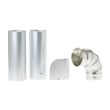
Owner’s manual




What is the most common problem with a GE dryer?
For the GE DPGT750EC2PL electric dryer, the most common issues we see are long dry times (usually airflow related), no heat (often a power supply or heating circuit issue), and the drum not turning (commonly a worn belt). Use the built-in HELP Troubleshooter and the DPGT750EC2PL owner’s manual to narrow it down fast.
Most common symptoms and what they usually point to
- Long dry time: restricted venting, crushed or kinked duct, lint buildup, overloaded or mixed-size loads
- Not heating or no heat: tripped breaker (electric dryers typically use two), loose power cord connection, heating circuit component failure
- Drum not turning: worn or broken belt, seized drum support components
- Won’t start: control panel “asleep”, door not fully closed, power supply issue
- Squeaking during startup: friction from drum support parts or belt path issues
Quick checks we recommend first (fast, high-impact)
- Check airflow: confirm strong airflow at the outside vent hood while the dryer runs.
- Inspect the duct run: we recommend rigid metal ducting; avoid bunching semi-rigid duct behind the dryer.
- Verify power: reset both breakers (or replace both fuses) because many electric dryers use two.
- Use the dryer’s HELP feature: press HELP, select TROUBLESHOOTER, then choose the symptom (for example, LONG DRYTIME or NOT HEATING).
- If the drum won’t turn: inspect the belt; the correct replacement for this model is the dryer drum belt WE12X10011.
Symptom-to-cause cheat sheet
| What you notice | Most likely category | What to do next |
|---|---|---|
| Clothes take too long to dry | Venting/airflow | Clean lint path, check duct routing, confirm outside vent opens |
| Runs but no heat | Power/heating circuit | Check both breakers, then follow Troubleshooter steps |
| Hums but drum won’t spin | Drive system | Inspect belt and drum movement by hand (power off) |
| Dead or unresponsive controls | Control “asleep” or reset needed | Press POWER/touch screen; unplug 2 minutes and restore power |
Why it matters
Airflow problems do more than slow drying; they can also cause overheating symptoms and repeated shutdowns. Keeping the venting correct (rigid metal, minimal kinks, minimal blockage) prevents many “mystery” dryer problems.
Last updated: January 2026
What is the lifespan of a GE dryer?
A GE electric dryer like model DPGT750EC2PL typically lasts about 10 years. With consistent care (good airflow, correct loading, and basic cleaning), it commonly reaches 10 to 15 years before major repairs become more likely.
What affects dryer lifespan the most
- Vent airflow: restricted exhaust makes the heater and thermostats work harder
- Lint control: lint buildup increases heat stress and wear
- Load size: overloading strains the drum, rollers, and belt
- Cycle choices: frequent high-heat cycles add wear over time
- Installation quality: crushed or long duct runs shorten component life
Maintenance that helps DPGT750EC2PL last longer
We recommend following the care and safety guidance in the DPGT750EC2PL owner’s manual. Practical habits that extend life include:
- Clean the lint screen every load
- Check that the outside exhaust hood flap moves freely and is not blocked
- Use rigid metal ducting when possible; avoid crushed or bunched semi-rigid duct
- Do not overload; it wastes energy and increases wrinkling (and wear)
- Level the dryer so the drum and cabinet do not vibrate excessively
Common “wear” parts vs. what they usually mean
| Symptom | Common cause | Typical fix |
|---|---|---|
| Drum not turning, motor runs | Worn or broken belt | Replace the dryer drum belt WE12X10011 |
| Long dry times, hot cabinet | Restricted venting or duct issue | Clean/shorten ducting; inspect hood |
| Thumping or squealing | Drum support wear (rollers/idler) | Inspect drum support system |
Why it matters
A dryer that is venting well and not overloaded runs cooler and more efficiently. That reduces strain on key components like the heating system, drum drive, and controls, which is the biggest factor in reaching the 10 to 15 year range.
Last updated: January 2026
What brand of dryer has the least problems?
Speed Queen tends to have the fewest problems over time because the designs are simple and built for heavy use; for mainstream home dryers, Whirlpool, LG, and GE are typically strong choices when you want a good balance of reliability, features, and serviceability. For your GE electric dryer model DPGT750EC2PL, we recommend using the built-in Help and troubleshooting steps in the DPGT750EC2PL owner's manual to prevent common issues and reduce service calls.
What “least problems” usually means
Reliability depends on how the dryer is used and installed, but these factors drive most repairs:
- Airflow restrictions (lint buildup, crushed vent, long vent runs)
- Overloading (extra strain on the drum, belt, and motor)
- Power supply issues (electric dryers need correct voltage and two breakers/fuses)
- Wear items (drum belt, rollers, idler pulley, door latch)
- Control and user interface wear (buttons, touch panels)
Brand comparison (practical buying guidance)
| Brand | Typical strengths | Best fit if you want | Tradeoffs |
|---|---|---|---|
| Speed Queen | Very durable, simple systems | Fewest repairs, long life | Fewer cycles/features, higher upfront cost |
| Whirlpool | Easy to service, widely available parts | Straightforward reliability | Features vary by model |
| LG | Strong performance, modern features | Efficiency and tech | Repairs can be more specialized |
| GE | Solid overall, good support ecosystem | Balanced features and reliability | Model-to-model variation |
How to reduce problems on your GE DPGT750EC2PL
These steps prevent the most common “dryer not heating” and “long dry time” complaints:
- Clean the lint screen before every load
- Confirm strong airflow at the outside vent hood
- Avoid overloading; leave room for tumbling
- If the dryer will not start, wake the control panel and verify the door is fully closed
- If power seems unstable, check that both house breakers/fuses for the electric dryer are on
- If you hear squealing or thumping, inspect wear items such as the dryer drum belt WE12X10011
Why it matters
Most “unreliable dryer” experiences come from airflow and maintenance issues, not the brand name alone. Keeping venting clear and loads reasonable protects key parts (belt, motor, heater) and helps any dryer run longer with fewer repairs.
Last updated: January 2026
How much does it cost to run an electric dryer for 1 hour?
For the GE DPGT750EC2PL electric dryer, running for 1 hour typically costs about $0.40 to $0.80, based on common electric-dryer energy use (about 3 to 5 kWh per hour) and typical U.S. electricity rates. Use the exact kWh rate from your utility bill for the most accurate number; see the DPGT750EC2PL owner's manual for electrical requirements.
Quick cost calculator (use your local rate)
Use this formula:
- Cost per hour = kWh used per hour × your $/kWh rate
- Most electric dryers use about 3 to 5 kWh per hour (varies by load size, heat setting, and venting)
Example:
- 4 kWh × $0.16/kWh = $0.64 per hour
Typical hourly cost range
| Assumed dryer use | Electric rate ($/kWh) | Estimated cost for 1 hour |
|---|---|---|
| 3 kWh | $0.13 | $0.39 |
| 4 kWh | $0.16 | $0.64 |
| 5 kWh | $0.20 | $1.00 |
What changes the cost the most
- Electricity rate (your $/kWh is the biggest driver)
- Cycle selection (high heat and long timed dry cost more)
- Load size and fabric type (towels and denim take longer)
- Vent restriction (clogged ducting increases run time)
- House voltage and wiring condition (the manual calls for a dedicated 30-amp circuit for electric dryers)
Why it matters
Dryer cost is usually more about how long the heater stays on than the motor. Improving airflow and using the right cycle can cut drying time, which lowers cost and helps protect parts like the dryer drum belt WE12X10011.
Ways to reduce cost per load
- Clean the lint screen before every load
- Keep the exhaust duct short, smooth, and clear
- Use auto-dry/sensor cycles when available
- Avoid overloading; it slows airflow through the drum
- Dry similar fabrics together to prevent over-drying
Last updated: January 2026