Owner’s manual
 Error Codes


How to raise a refrigerator off the floor?
To raise your Kenmore Elite refrigerator model 79574033411 off the floor, we adjust the front leveling legs. Per the 79574033411 owner's manual, turning a leveling leg to the left raises that side and to the right lowers it; a slight rear tilt helps the doors close properly.
Quick steps to raise and level it
- Unplug the refrigerator if you will be working near wiring or moving it.
- Pull the unit forward enough to access the front leveling legs.
- Use an 11/16-inch wrench or a flat-blade screwdriver (as specified in the manual).
- Turn the leveling leg left to raise that side; turn right to lower.
- Adjust both sides in small increments, then re-check door closing.
- For easier turning, have someone push backward against the top of the refrigerator to take weight off the legs.
How much height can you get?
Leveling legs are designed for leveling and minor height changes. If you need 2 to 3 inches of lift, a platform is usually more practical than maxing out the legs.
| Method | Best for | Typical lift | Notes |
|---|---|---|---|
| Leveling legs | Leveling, small raise | Up to about 1 inch | Keeps factory stance and stability |
| Solid platform/base | Larger raise | 1 to 3+ inches | Must be rigid, level, and fully supported |
| Rollers/movers | Temporary moving | Varies | Not ideal as a permanent “raised” setup |
Door closing and alignment tips
The manual recommends a slight tilt to the rear so doors close easily.
- If doors do not close easily, raise the front slightly more by turning both leveling legs to the left.
- Turn both legs the same amount to avoid twisting the cabinet.
- If the gap between doors is uneven, use the bottom-hinge adjustment described in the 79574033411 owner's manual.
Why it matters
Raising and leveling correctly prevents door seal leaks, reduces vibration noise, and helps the refrigerator cool efficiently by keeping doors closing and sealing the way Kenmore designed.
Last updated: February 2026
How to reset fridge temperature sensor?
On Kenmore Elite refrigerator model 79574033411, the practical “reset” for temperature sensing is a control reset: power the refrigerator off, restore power, then re-set the Refrigerator Temp and Freezer Temp to your desired settings. If temperatures still drift, the issue is usually airflow, a control setting, or a failed sensor.
Quick reset steps (safe and effective)
- Unplug the refrigerator (or turn off the circuit breaker) for 5 minutes.
- Restore power.
- Set temperatures using the control panel:
- Refrigerator range: 33°F to 46°F
- Freezer range: -6°F to 8°F
- Adjust one increment at a time, then wait 24 hours before changing again.
- Make sure vents are not blocked by food packages.
For the exact button layout and control behavior for your unit, follow the 79574033411 owner's manual.
If the display is acting “stuck”: check Control Lock and Demo Mode
Sometimes it looks like the sensor is bad when the controls are locked or the unit is in Demo Mode.
- Control Lock: press and hold Control Lock for about 3 seconds to toggle.
- Demo Mode (cooling off for showroom): with a door open, press and hold Refrigerator Temp and Ice Maker together for 5 seconds to toggle.
- °F/°C switch: press and hold Freezer Temp and Refrigerator Temp together for about 5 seconds.
What to check if temps still do not stabilize
- Confirm doors seal tightly; warm air leaks cause constant temperature swings.
- Keep airflow paths open (blocked vents cause warm spots and false readings).
- Clean dust from the condenser area; poor heat removal affects cooling performance.
- Listen for fans running; weak airflow can mimic a sensor problem.
- If you see frost buildup patterns, defrost system issues can cause incorrect temperature control.
Common symptoms and likely causes
| Symptom | Most common cause | What to do first |
|---|---|---|
| Fridge warm, freezer OK | Airflow restriction to fresh food section | Clear vents, avoid overpacking |
| Both sections warm | Cooling system not running or in Demo Mode | Check Demo Mode, then power reset |
| Temps swing up and down | Door not sealing, dirty condenser, heavy loading | Check gasket, clean condenser, wait 24 hours |
Why it matters
The temperature “sensor” works with the control board to regulate compressor and fan run time. If settings are changed too quickly or airflow is restricted, the refrigerator can’t stabilize, and it can look like the sensor is failing even when it is working normally.
Last updated: February 2026
What are the common problems with Kenmore Elite refrigerators?
For Kenmore Elite model 79574033411, the most common problems are not cooling well, ice maker or dispenser issues, water leaks, and door sealing problems. Many of these start with airflow restrictions (dirty coils, blocked vents), defrost system trouble, or worn components; our 79574033411 owner's manual troubleshooting section helps narrow it down fast.
Most common symptoms and likely causes
- Warm refrigerator or freezer: dirty condenser coil, evaporator fan issue, defrost failure, or sealed system/compressor problem
- Ice maker not making ice: clogged filter, low water pressure, frozen fill tube, failed ice maker module
- Slow or no water from dispenser: restricted water filter, kinked supply line, inlet valve issue
- Frost buildup on back wall or freezer: defrost sensor/heater/control problem, door left ajar
- Water under crisper or on floor: clogged defrost drain, door gasket leak, ice maker fill leak
- Odors: expired air filter, spills in hidden areas, poor airflow
Quick checks we recommend first (no tools)
- Confirm temps: 37°F fresh food, 0°F freezer.
- Make sure air vents are not blocked by food packages.
- Clean dust from the condenser area (improves cooling and efficiency).
- Check door closing and sealing; look for gaps or torn gasket.
- If you have a water/ice issue, replace the filter and purge air from the line.
Parts that commonly solve these problems
| Problem area | Common fix | Example part for this model |
|---|---|---|
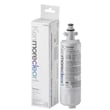
| Water taste/flow, ice production | Replace water filter | Genuine Kenmore refrigerator water filter 9690 AGF80300801 |
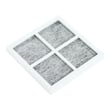
| Odors in fresh food section | Replace air filter | Lg refrigerator air filter ADQ73214408 |
| Frost/defrost complaints | Test/replace defrost sensor | Refrigerator defrost sensor assembly 6615JB2005R |
| Door not sealing | Replace gasket | Refrigerator door gasket, right ADX72930461 |
| No ice or intermittent ice | Replace ice maker | Lg refrigerator ice maker AEQ73130004 |
Why it matters
Cooling and ice maker complaints often share the same root causes: restricted airflow, poor heat rejection at the condenser, or water flow restrictions. Fixing the simple items first (vents, coils, filters, door seal) prevents repeat failures and protects major components like the compressor.
Last updated: February 2026
What is the average lifespan of a Kenmore Elite refrigerator?
A Kenmore Elite refrigerator like model 79574033411 typically lasts 12 to 15 years. Regular maintenance such as keeping the condenser area clean, maintaining good door seals, and replacing filters on schedule helps you reach the high end of that range.
Typical lifespan range (what to expect)
Most modern bottom-mount refrigerators fall into a predictable window:
| Condition | Typical lifespan | What usually drives it |
|---|---|---|
| Light use, consistent maintenance | 15 years | Clean airflow, stable temps, fewer repairs |
| Average household use | 12 to 15 years | Normal wear on fans, ice maker, controls |
| Heavy use or poor airflow/dirty coils | 8 to 12 years | Compressor strain, warmer temps, icing issues |
Maintenance that extends life
We recommend these habits for the Kenmore Elite 79574033411:
- Keep airflow clear around the refrigerator so heat can dissipate.
- Clean dust from the condenser area periodically to reduce compressor run time.
- Confirm doors close fully and the gasket seals all the way around.
- Replace the water filter on schedule to protect the dispenser and ice maker.
- Replace the air filter as directed to reduce odors and keep airflow fresh.
- After a power interruption, verify temperatures return to normal and ice production resumes.
For model-specific care intervals and procedures, use the 79574033411 owner's manual.
Why it matters
Refrigerator lifespan is mostly about heat and airflow. When the condenser cannot shed heat efficiently, the compressor runs longer and hotter, which shortens sealed-system life and can lead to cooling problems.
Parts that commonly affect performance over time
If performance drops, these model-matched parts are often involved:
- Refrigerator condenser coil ACG73645004 (heat removal and efficiency)
- Refrigerator door gasket, right ADX72930461 (prevents warm air leaks and frost)
- Genuine Kenmore refrigerator water filter 9690 AGF80300801 (protects water and ice system)
Last updated: February 2026
What is the cubic foot of my Kenmore Elite refrigerator model 79574033411?
Kenmore Elite refrigerator model 79574033411 is a 25 cu. ft. class bottom-mount refrigerator (total capacity). For the exact listed capacity for your specific unit variation, check the specifications section and rating label details in the 79574033411 owner's manual.
How to confirm the exact capacity on your unit
Use these quick checks to match the published spec to your refrigerator:
- Look for the model and serial rating label inside the fresh food compartment
- Compare the model format shown in the manual (the guide covers multiple 795.7403 and 795.7405 variations)
- Verify whether your unit has the same door and dispenser configuration shown in the manual
- Use the manual’s specifications pages to confirm total and compartment capacities
- If you are measuring usable space, remember shelves, bins, and the ice bin reduce usable volume
Capacity ranges: where 25 cu. ft. fits
A 25 cu. ft. class refrigerator sits in the mid-to-large range for most kitchens.
| Total capacity class | Typical household fit | What you usually notice |
|---|---|---|
| 18 to 22 cu. ft. | 1 to 2 people | Less freezer drawer space |
| 22 to 26 cu. ft. | 2 to 4 people | Balanced fridge and freezer storage |
| 26 to 30+ cu. ft. | 4+ people | Wider shelving, more door storage |
Why it matters
Knowing the correct cubic feet helps when planning kitchen clearance, comparing replacement models, and setting expectations for storage and airflow around features like the ice compartment and crisper drawers.
Maintenance that helps you keep full usable space
Good airflow and filtration prevent warm spots and frost that steal storage room:
- Keep interior air vents clear of food packages
- Clean dust from the condenser area regularly
- Replace the water filter on schedule; use the correct genuine Kenmore refrigerator water filter 9690 AGF80300801
- Replace the air filter if odors linger; the lg refrigerator air filter ADQ73214408 fits this model
- Make sure doors seal fully; gaps can cause temperature swings and moisture buildup
Last updated: February 2026
What is the problem with the bottom freezer refrigerator?
Bottom-mount refrigerators like the Kenmore Elite 79574033411 usually do not have one single “design problem”; most complaints come from airflow and moisture issues caused by frequent door openings, warm air leaks at the door gasket, or installation conditions outside the recommended temperature range. See the 79574033411 owner's manual for model-specific operating and care details.
Most common issues we see (and what causes them)
- Frost buildup or ice crystals: warm, humid air enters when doors are opened often or not sealing well.
- Freezer working harder than expected: door not closing properly, poor clearance, or warm room conditions.
- Food freezing in the fresh food section: items placed near vents, controls set too cold, or the refrigerator operated in a space that is too cold.
- Ice maker stops or makes less ice: in-door ice bin is uneven or the ice compartment door is not closed tightly.
- Noises that seem “new”: clicking, whooshing, gurgling, and sizzling can be normal during cooling and defrost cycles.
Quick checks that solve many “bottom freezer” complaints
- Confirm installation conditions: operate the refrigerator where ambient temperature stays 55°F to 110°F.
- Check clearances: allow about 2 inches behind the refrigerator and about 24 inches in front for door swing.
- Inspect door sealing: look for gaps, torn gasket areas, or doors that pop open.
- Reduce long door openings: frequent openings raise moisture and lead to frost.
- Level the ice in the bin: shake the in-door ice bin to level cubes if ice production stops early.
| Symptom | Most likely cause | Best first step |
|---|---|---|
| Frost on frozen food | Door opened often or not sealing | Check gasket seal and reduce door-open time |
| Fresh food freezing | Too-cold setting or items near vent | Move items away from vents; adjust 1 increment |
| Ice maker stops early | Ice bin uneven or door not shut | Level bin; close ice compartment door tightly |
| Clicking/whooshing | Normal cycling/airflow | Verify unit is level and not vibrating on cabinets |
Why it matters
Warm air leaks and poor airflow force the compressor and fans to run longer, which increases frost, temperature swings, and energy use. A tight door seal and correct installation conditions prevent most bottom-freezer performance problems.
Parts that often relate to these symptoms
- If the door is not sealing, the right-side gasket is a common wear item: refrigerator door gasket, right ADX72930461
- If odors or stale air are part of the complaint, replacing the air filter can help: lg refrigerator air filter ADQ73214408
Last updated: February 2026
Where to find model number on Kenmore Elite refrigerator?
On Kenmore Elite model 79574033411, the model number is printed on the refrigerator’s rating label (a sticker or metal tag) inside the fresh food compartment. Check the door opening area first; it’s the quickest place to confirm the exact model for parts like a water filter or ice maker.
Most common places to check
- Inside the refrigerator section on the side wall (usually upper left or upper right)
- On the ceiling of the fresh food compartment near the light cover
- On the door frame (the vertical surface you see when the door is open)
- Behind the crisper drawers (on the liner wall)
- On the hinge-side area of the right door opening
What the label looks like and what to copy
The label typically lists several identifiers. For parts lookup, we recommend copying these exactly:
| Label item | What it’s used for | Example you’ll see |
|---|---|---|
| Model number | Matches the correct parts diagrams | 79574033411 |
| Serial number | Helps date/identify production run | Letters and numbers |
| Electrical info | Confirms power specs | Volts/amps |
Why it matters
Kenmore Elite refrigerators often share similar styling across multiple model families (for example, 795.7403 and 795.7405 series shown in the 79574033411 owner's manual). Using the exact model number prevents ordering the wrong door gasket, control board, or water filter.
Quick tip for parts ordering
Once you find the model number, match parts by the model first, then by the part ID. For example, if you’re replacing the water filter, confirm compatibility using the model number and the part listing for the genuine Kenmore refrigerator water filter 9690 AGF80300801.
Last updated: February 2026
Why is my Kenmore Elite refrigerator leaking water out of the bottom?
Water leaking from the bottom of your Kenmore Elite refrigerator model 79574033411 is usually caused by a defrost drain that is clogged and overflowing into the base, or a leak in the water supply path for the dispenser and ice maker. Use the 79574033411 owner's manual to locate access points and follow safe shutoff steps.
Most common causes (and what to check first)
- Clogged defrost drain: Meltwater cannot flow to the drain pan, so it spills into the cabinet and out the bottom.
- Water line or fitting leak: A loose connection or cracked tube can drip and run down to the floor.
- Filter housing or filter not seated: A mis-installed filter can seep during dispensing or ice maker fills.
- Ice maker fill or dispenser area leak: Water can track along tubing and appear at the front or bottom.
- Door left ajar or poor seal: Excess frost can create more defrost water than the drain can handle.
Quick troubleshooting steps (safe and practical)
- Unplug the refrigerator and dry the area so you can see fresh drips.
- Check for leaks only when dispensing water; if it leaks only then, focus on the filter and dispenser tubing.
- Inspect the water line connection at the back and any visible tubing for cracks or wet fittings.
- Look for ice or debris in the drain area (often behind the rear panel in the freezer); clear any blockage with warm water.
- Confirm water pressure is reasonable; this model’s manual calls for 20 to 120 psi on a cold water supply.
Parts that commonly relate to bottom leaks
| Symptom you notice | Likely area | Example part to consider |
|---|---|---|
| Water near front, after dispensing | Filter or dispenser water path | Genuine Kenmore refrigerator water filter 9690 AGF80300801 |
| Water appears after defrost cycles | Defrost drain path | Drain clearing (no part needed first) |
| Frost buildup and water later | Door sealing | Refrigerator door gasket, right ADX72930461 |
Why it matters
A small leak can quickly turn into floor damage and can also lead to ice buildup, warm temperatures, and poor ice maker performance. Fixing the root cause (drain vs. supply leak) prevents repeat puddles.
Last updated: February 2026