

How to hard reset a Kenmore dryer?
To hard reset a Kenmore dryer model 11087874100, unplug the power cord (or switch the breaker off) for 2 minutes, then restore power and try a normal cycle. If it still will not run or heat, the reset is not the fix and we focus on airflow, door switch, and ignition parts.
Hard reset steps (works for most Kenmore dryers)
- Turn the dryer OFF.
- Unplug the dryer (or turn the circuit breaker OFF).
- Wait 2 minutes (up to 5 minutes is fine).
- Restore power.
- Close the door firmly and press Start.
- If the control is unresponsive, repeat once after leaving it unplugged for 5 minutes.
If the dryer still will not start after a reset
A reset will not bypass a safety circuit. Check these common causes:
- Door not latching; inspect the door strike and latch alignment.
- Failed door switch; consider the switch W10820036.
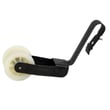
- Broken drive system; a snapped belt can stop the drum from turning (and some models will not run); consider the belt 341241 and idler.
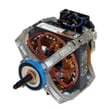
- Motor issue; consider the motor 279827 if you hear humming but no rotation.
- Power supply problem (tripped breaker, loose cord connection).
If the dryer runs but will not heat (gas models)
Many Kenmore 110-series dryers are gas; if yours tumbles but has no heat, these checks are typical:
- Make sure the gas shutoff valve is open and the vent is not restricted.
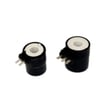
- If the igniter glows but the burner will not stay lit, suspect coils; consider the dryer valve coil kit 279834.
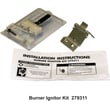
- If the igniter never glows, suspect the igniter or flame sensing circuit; consider the dryer igniter 279311 and the dryer radiant sensor WP338906.
| Symptom | What you usually see | Most likely direction |
|---|---|---|
| Dead, no lights | Nothing happens | Power, cord, breaker |
| Clicks but will not start | Door shuts, no run | Door switch/strike, motor |
| Tumbles, no heat | Drum turns, clothes cold | Gas ignition parts, airflow |
Why it matters
A hard reset only clears a temporary control glitch. If a safety device, switch, or gas ignition component is failing, the dryer will keep shutting down or refusing to heat until the underlying issue is corrected.
Last updated: January 2026
Where is the moisture sensor in a Kenmore Elite dryer?
On Kenmore model 11087874100, the moisture sensor is typically mounted inside the drum area near the lint screen housing; you usually access it from the front by removing the lint screen grille or front bulkhead area so you can see the sensor bars and their wire leads.
Where to look on the 11087874100
In most Kenmore Elite-style dryers, the moisture sensor consists of two metal sensor bars that the clothes brush against as the drum turns.
- Check just inside the door opening, low and toward the front of the drum
- Look near the lint screen duct or lint screen grille area
- Follow the two small wires that connect to the sensor bars (they usually plug onto spade terminals)
- If you see two parallel metal strips, that is the moisture sensor
Quick access checklist (safe, practical steps)
Before you open panels or reach into the cabinet, we recommend these basics:
- Unplug the dryer (or switch off the breaker)
- Let the dryer cool completely if it was running
- Remove the lint screen and clear any lint buildup around the housing
- Use a flashlight to spot the sensor bars and the wire connector
- Take a photo of wire positions before disconnecting anything
Moisture sensor vs. airflow problems (what symptoms point to)
| Symptom | More likely cause | What to check first |
|---|---|---|
| Clothes stop early but feel damp | Dirty sensor bars | Clean bars with rubbing alcohol |
| Long dry times, hot cabinet | Restricted venting | Lint screen, vent hose, outside hood |
| No heat on gas model | Ignition or gas valve issue | Igniter, coils, radiant sensor |
Why it matters
The moisture sensor helps the control decide when clothes are dry on automatic cycles. If the sensor bars are coated with residue (dryer sheets, fabric softener), the dryer can shut off too soon or run inconsistently.
Related parts that can affect drying performance
If you are troubleshooting poor drying or heat issues on this Kenmore dryer, these model-matched parts are commonly involved:
- Dryer igniter 279311 (gas ignition)
- Dryer valve coil kit 279834 (gas valve coils)
- Dryer radiant sensor WP338906 (flame sensing)
For broader troubleshooting steps, we also use the guidance in Kenmore 110 series electronic control model dryer error codes.
Last updated: January 2026
How much does it cost to replace a heating element in a Kenmore dryer?
For Kenmore dryer model 11087874100, the heat is produced by a gas burner system, not an electric heating element. Typical repair costs run $20 to $120 for common gas-heat parts, or $150 to $350+ installed when you include a service call and labor.
What you actually replace on this model (gas heat)
On the Kenmore 11087874100, “no heat” repairs usually involve one of these parts:
- Dryer igniter 279311
- Dryer valve coil kit 279834
- Gas valve assembly (if needed)
- Radiant sensor
- Airflow-related safety devices (thermal fuse, thermostats)
Typical cost ranges (parts and installed)
| Repair item (gas dryer) | Part cost (typical) | Installed cost (typical) |
|---|---|---|
| Igniter | $20 to $60 | $150 to $300+ |
| Gas valve coils | $15 to $40 | $150 to $300+ |
| Radiant sensor | $20 to $50 | $150 to $300+ |
| Gas valve | $60 to $150+ | $200 to $400+ |
What changes the total price
- Diagnosis time: intermittent heat issues take longer to pinpoint.
- Vent restriction: poor airflow can trigger safety shutoffs and repeat failures.
- Access and condition: rusted fasteners, damaged wiring, or a worn burner assembly add labor.
- Bundling parts: techs often replace coils and igniter together to prevent repeat visits.
Why it matters
Pricing a “heating element” replacement can be misleading on a gas dryer. Identifying the correct gas-heat component (igniter, coils, sensor, or valve) helps you estimate accurately and restores safe, consistent drying.
Last updated: January 2026
What does sru cll mean on a dryer?
On Kenmore dryer model 11087874100, SRU CLL is a service call style message that appears when the control stops the cycle because it detected a problem condition. The fastest path is to reset power, verify airflow, then check heat and drive components that commonly trigger early shutdown.
What to do first (safe, fast checks)
- Unplug the dryer (or switch off the breaker) for 2 minutes, then restore power.
- Clean the lint screen and make sure it seats fully.
- Inspect the vent hose for kinks, crushing, or heavy lint buildup.
- Run a short Timed Dry cycle to see if it still stops early.
- If it is a gas dryer, confirm the gas shutoff valve is fully open.
Most common causes when it runs a few minutes then stops
Airflow and heat problems are the most common reasons a dryer ends a cycle early.
| Symptom you see | Most likely area | What to check next |
|---|---|---|
| Weak airflow, very hot cabinet | Venting or blower | Vent path, lint buildup, blower wheel condition |
| Heat starts then quits | Gas ignition system | Igniter glow, flame stability, sensor/coil operation |
| Drum stops turning | Drive system | Belt tension, idler pulley, motor load |
Parts that often match these symptoms
- Airflow issue: inspect the dryer blower wheel WP694089 for damage or looseness.
- Gas heat drops out: test/inspect the dryer valve coil kit 279834, dryer radiant sensor WP338906, and dryer igniter 279311.
- Drum not turning: check the belt 341241 and dryer idler pulley WP691366.
Why it matters
When airflow is restricted or the burner system is not cycling correctly, temperatures rise quickly and the dryer may stop to protect components. Correcting the root cause prevents repeat stoppages, long dry times, and extra wear on the motor and heat system.
Related troubleshooting help
Use our gas dryer wont heat troubleshooting video to walk through airflow and gas-heat checks in the right order.
Last updated: January 2026