Owner’s manual



How many cubic feet is a Kenmore Model 11020722990 washer?
Kenmore washer model 11020722990 is a classic top-load, agitator-style washer; models in this design family typically run about 3.2 to 3.5 cubic feet of capacity. For the exact capacity rating for your specific unit, we recommend confirming it in the 11020722990 owner's manual.
How to confirm the exact capacity for your washer
Capacity is usually listed in the specifications section of the manual or on the model and serial number plate information pages.
- Check the specifications section in the 11020722990 owner's manual
- Look for a “capacity” or “cu ft” line in the product specs
- If your manual lists only basket dimensions, use those as the reference for load sizing
- Match the full model number 11020722990 when comparing specs across Kenmore 110-series washers
Typical capacity range (what to expect)
Here is a practical guide for older, standard top-load Kenmore 110-series washers like this one.
| Washer type | Typical capacity range | What that means for loads |
|---|---|---|
| Standard top-load with agitator (like 11020722990) | 3.0 to 3.6 cu ft | Good for everyday mixed loads |
| Larger top-load (newer high-capacity designs) | 3.8 to 4.8+ cu ft | Better for bulky items and big families |
Why it matters
Knowing the cubic feet helps us choose the right cycle and load size so the washer agitates and spins correctly. Overloading can lead to poor cleaning, out-of-balance spinning, and extra wear on drive components.
Load sizing tips for this style of washer
- Load items loosely; do not pack them down
- Keep items below the top of the basket so water and detergent circulate
- Wash bulky items (blankets, jackets) one at a time when possible
- If the washer struggles to spin or drains slowly, reduce load size and check for drainage issues
Last updated: February 2026
How to identify a Kenmore washer model?
Your Kenmore washer model number is printed on the model and serial number plate; on Kenmore model 11020722990, that plate is the key identifier you will use to match the correct washer parts and the correct documentation in the 11020722990 owner's manual.
Where to look for the model and serial number plate
On Kenmore washers, the plate is typically in one of these common locations:
- Under the lid (top-load washers), often along the rim of the tub opening
- Inside the door opening (front-load washers), on the cabinet frame
- On the back panel, near the power cord entry or console area
- Along the side of the cabinet opening where the lid or door closes
What the model number looks like (and why it matters)
Kenmore model numbers are often long and may start with 110 (as with 11020722990). Using the full model number helps us match the exact parts list and diagrams so you avoid ordering a similar-looking part that will not fit.
Quick ID checklist
- Write down the full model number exactly as shown (all digits and any letters)
- Record the serial number too; it helps confirm production details
- Use the model number when searching for parts like a lid switch, drain pump, or inlet valve
- Keep the information with your purchase records for future repairs
Common part lookups that depend on the model number
If you are troubleshooting, the model number ensures you land on the correct replacement part for your washer’s design.
| Symptom | Common part to check | Example for this model |
|---|---|---|
| Won’t spin or stops when lid opens | Lid switch | Washer lid switch WP3949238 |
| Won’t drain or drains slowly | Drain pump | Washer drain pump WP3363394 |
| Won’t fill or fills incorrectly | Inlet valve | Washer inlet valve 285805 |
Why it matters
Kenmore washers share many similar cabinets and controls across years; the model number on the plate is what separates a correct-fit repair (right coupling, timer, or gear case) from a return and more downtime.
Last updated: February 2026
What is the average lifespan of a Kenmore washer?
A Kenmore washer typically lasts 10 to 15 years with normal household use. For Kenmore model 11020722990, keeping the washer level, avoiding overloads, and following the care steps in the 11020722990 owner's manual helps you reach the high end of that range.
Typical lifespan and what affects it
Most washers land in the 10 to 15 year window; the biggest difference is how hard the machine works and how well it is maintained.
Common factors that extend life:
- Keeping loads balanced and not overfilling the basket
- Using the correct water level and cycle for the load
- Leveling the washer and tightening the front leg nuts to reduce vibration
- Turning water faucets on fully and using clean inlet screens
- Fixing small leaks or drain issues quickly
Common factors that shorten life:
- Frequent overloading (extra strain on drive system and clutch)
- Running with a wobble or vibration (can accelerate wear)
- Ignoring slow drains or repeated no-drain symptoms
- Using too much detergent or improper bleach/softener use
Parts that commonly drive “end of life” decisions
When a washer is near the end of its service life, repairs often involve the drive or safety/drain systems.
| Symptom | Often involved part | What you may notice |
|---|---|---|
| Won’t spin or agitates poorly | Coupling, clutch | Motor runs but basket movement is weak or inconsistent |
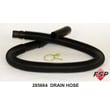
| Won’t drain | Drain pump, drain hose | Water left in tub, slow drain, wet clothes |
| Won’t start or won’t spin with lid closed | Lid switch | Washer stops when lid is shut or won’t advance |
Model-matched examples for 11020722990:
Why it matters
Knowing the typical lifespan helps you decide whether to repair or replace. If your 11020722990 is already in the 10 to 15 year range, a simple fix (like a lid switch or drain pump) often makes sense, while major drive or tub repairs may be a bigger decision.
Last updated: February 2026