Owner’s manual
 Error Codes


How to read Kenmore model numbers?
Kenmore model numbers are read left to right; the first three digits are the source (manufacturer) code, and the remaining digits identify the product design and version. For your Kenmore side-by-side refrigerator model 10659129801, the 106 prefix is the key identifier we use to match the correct parts and manual information.
Where to find the model number (and why it matters)
The model and serial number label is on the refrigerator; once you have it, record the model number, serial number, and purchase date for faster service and correct part matching. Details and label guidance are in the 10659129801 owner's manual.
- Check inside the fresh food compartment on the side wall
- Check the door frame area near the hinges
- Check behind the base grille or lower kickplate area
- Check the back exterior panel (upper or lower section)
- Write the full model number exactly as shown (all digits)
How to interpret a Kenmore model number
Kenmore numbers typically follow this pattern:
| Section | Example (10659129801) | What it tells you |
|---|---|---|
| Prefix (first 3 digits) | 106 | Source code used to identify the manufacturer family |
| Remainder | 59129801 | Series and engineering/version details used for parts lookup |
Tips to avoid ordering the wrong part
Even one digit off can change the parts list, especially for ice maker, water system, and door hardware.
- Match the full model number, not just the 3-digit prefix
- Use the complete model number when choosing filters, valves, and bins
- If you are replacing a water filter, confirm the filter style listed for your model
- Keep the model number handy before calling for service or ordering parts
Why it matters
The model number connects your refrigerator to the correct diagrams, troubleshooting steps, and compatible parts (for example, the correct water filter and cap style for the base grille filter system).
Last updated: February 2026
How to tell cubic feet of Kenmore refrigerator by model number?
For Kenmore model 10659129801, the most accurate way to get cubic feet is to look up the listed capacity in the specifications section of the 10659129801 owner's manual. Model numbers can hint at size, but they do not reliably encode the exact cubic-foot capacity.
Fast ways to find the cubic feet
- Check the model and serial rating label inside the fresh food compartment (often on a side wall or ceiling area); it confirms the exact model and is the best starting point for spec lookups.
- Use the specifications section in the 10659129801 owner's manual.
- If the label is hard to read, take a clear photo and match the full model number exactly (all digits).
- As a backup, estimate capacity by measuring interior space (less accurate because shelves, bins, and ducts reduce usable volume).
How to estimate cubic feet (backup method)
If you need a quick estimate, measure the interior of each compartment and add them:
- Measure interior width, height, and depth in inches.
- Multiply to get cubic inches.
- Divide by 1,728 to convert to cubic feet.
| What you measure | Formula | Notes |
|---|---|---|
| Refrigerator section | W × H × D (in³) ÷ 1,728 | Measure open space, not door bins |
| Freezer section | W × H × D (in³) ÷ 1,728 | Include only usable cavity |
| Total capacity (estimate) | Fridge cu ft + Freezer cu ft | Typically reads slightly low vs. published “total” |
Why it matters
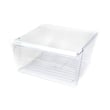
Knowing cubic feet helps us choose correctly sized parts and accessories (like bins and pans), compare energy use across similar side-by-side refrigerators, and confirm you are shopping parts for the exact Kenmore 106 model family.
Last updated: February 2026
How wide is a Kenmore side-by-side refrigerator?
Most Kenmore side-by-side refrigerators are about 32 to 36 inches wide; for Kenmore model 10659129801, the exact cabinet width is listed in the 10659129801 owner's manual. Use that measurement (not the door-to-door span) when planning a fit between cabinets.
Typical widths you will see
Side-by-side refrigerators commonly fall into these width ranges:
- 32 to 33 inches: space-saving models
- 35 to 36 inches: most full-size side-by-sides
- 36+ inches: larger capacity or premium configurations
Measure the right way (so it fits)
When we help customers size a refrigerator opening, we focus on three measurements:
- Cabinet width: the main box, excluding handles (most important)
- Overall width: includes doors and sometimes trim
- Door swing clearance: extra space needed so doors open fully
The manual also calls out clearance needs for ventilation and door swing. It recommends 1/2 inch space on each side and at the top, and 2 inches minimum next to a fixed wall (depending on model). Check the 10659129801 owner's manual for the diagram and notes.
Quick planning table
| What you are planning | What to use | Typical target |
|---|---|---|
| Cabinet opening width | Cabinet width + side clearance | Width + 1 inch total |
| Next to a wall | Door swing clearance | 2 inches minimum at wall side |
| Water line behind unit | Rear clearance | Extra space as needed |
Why it matters
A refrigerator that is “36 inches wide” on a spec sheet can still bind on cabinets or a wall if you do not allow for ventilation and door swing. Using the model-specific manual measurement prevents installation headaches and helps the doors seal properly.
Last updated: February 2026
What are the most common problems with Kenmore refrigerators?
The most common problems we see on Kenmore refrigerators like model 10659129801 are cooling issues, ice maker or dispenser failures, water leaks, unusual noise, and frost buildup. Many of these trace back to airflow restrictions, dirty condenser coils, or worn water system parts; start with the checks in the 10659129801 owner's manual.
Common problems and what they usually point to
- Not cooling or warm temperatures: dirty condenser coils, evaporator fan issue, thermostat/control problem, door not sealing
- Ice maker not making ice: freezer too warm, clogged filter, failed inlet valve, ice maker module issue
- Water dispenser slow or not dispensing: clogged filter, low house water pressure, frozen water line, inlet valve problem
- Water leaking: cracked water tubing, loose connections, clogged defrost drain, inlet valve seep
- Noisy operation: evaporator fan blade hitting ice, condenser fan noise, compressor vibration
- Frost buildup: door left ajar, bad door gasket, defrost system issue
Quick checks we recommend first (fast, no parts guessing)
- Confirm temps: set freezer near 0°F and fresh food near 37°F.
- Make sure vents inside both compartments are not blocked by food packages.
- Clean condenser coils (a common cause of poor cooling and noise).
- Check door closing and gasket contact all the way around.
- If water or ice is weak, replace the water filter and flush the system.
Parts that commonly affect these symptoms on 10659129801
| Symptom | Common part to inspect | Example part for this model |
|---|---|---|
| No water or slow water | Water filter | Refrigerator water filter EDR3RXD1 |
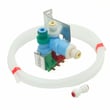
| No ice, no water | Water inlet valve | Refrigerator water inlet valve W10408179 |
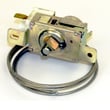
| Frost, warm temps, odd cycling | Thermostat/defrost sensing | Refrigerator bi-metal thermostat WPW10225581 |
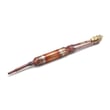
| Rattling or scraping in freezer | Fan blade interference | Refrigerator evaporator fan blade WP2169142 |
Why it matters
Catching the root cause early protects food safety, reduces energy use, and prevents secondary damage (for example, a small airflow problem can turn into heavy frost and warm temperatures).
Last updated: February 2026
What causes a side-by-side refrigerator to stop cooling?
A Kenmore side-by-side refrigerator model 10659129801 usually stops cooling because power is interrupted, the temperature controls are set to OFF or too warm, or airflow is blocked between the freezer and fresh food sections. Less often, a failed fan, defrost issue, or sealed-system problem is the cause.
Quick checks we recommend first
- Confirm the power cord is fully plugged into a grounded 3-prong outlet.
- Test the outlet by plugging in a lamp.
- Check the house fuse or circuit breaker and reset if needed.
- Make sure the refrigerator controls are ON (not turned to OFF).
- Allow a full 24 hours to cool after a new installation or after major control changes.
- Check that packages are not blocking the air vents between compartments.
Airflow and control settings (most common cooling killers)
Your 10659129801 circulates cold air between the freezer and refrigerator sections. When vents are blocked, airflow is obstructed and temperatures rise.
| What you notice | Likely cause | What to do |
|---|---|---|
| Freezer cold, fridge warm | Blocked top vent into refrigerator | Clear items away from vents; reorganize shelves |
| Both sections warm | Controls OFF or power issue | Turn controls ON; verify outlet and breaker |
| Temps drift after adjustment | Not enough time between changes | Wait at least 24 hours between adjustments |
For the exact control locations and OFF position details, follow the 10659129801 owner's manual.
When it is probably a part problem
If power, controls, and vents check out, these issues commonly stop cooling:
- Evaporator fan not moving air (you may not hear it running)
- Defrost system problem causing frost buildup and blocked airflow
- Temperature control failure (thermostat not calling for cooling)
- Compressor or sealed-system issue (runs oddly, or not at all)
A common control-related part for this model is the refrigerator thermostat WP2198202.
Why it matters
A “no-cool” complaint is often an airflow or control setting issue, and fixing that first prevents unnecessary part replacement. When airflow is blocked, one section can warm up even though the compressor is still running.
Last updated: February 2026
What's the average lifespan of a Kenmore refrigerator?
Most Kenmore refrigerators average 10 to 15 years of service life; with consistent care, many reach the upper end of that range. For your Kenmore 10659129801 side-by-side refrigerator, following the maintenance and cleaning guidance in the 10659129801 owner's manual helps reduce wear on key cooling and ice and water components.
Typical lifespan and what affects it
A refrigerator’s lifespan is driven less by the cabinet and more by how hard the sealed system and airflow system have to work.
- Dirty condenser coils make the compressor run hotter and longer
- Worn or leaking door gaskets increase run time and moisture issues
- Heavy ice maker and dispenser use increases valve and filter wear
- Poor airflow (overpacked shelves, blocked vents) causes temperature swings
- Skipped filter changes can reduce water flow and strain the inlet valve
Maintenance that extends life (high impact)
We recommend building these habits into your routine:
- Clean condenser coils regularly (more often with pets or dusty homes)
- Keep doors closing tightly; clean and inspect gaskets for gaps
- Replace the water filter on schedule and flush after changes
- Keep freezer and fresh food vents clear for proper circulation
- Address unusual noises early (fan blade rubbing, clicking, buzzing)
Quick reference: lifespan vs. common wear items
| Item | Typical replacement cycle | Why it matters |
|---|---|---|
| Refrigerator (overall) | 10 to 15 years | Normal service life for most household units |
| Water filter | About every 6 months | Maintains flow and water quality |
| Door gaskets | As needed | Prevents warm air leaks and frost buildup |
| Ice maker components | As needed | Reduces clogs, leaks, and no-ice issues |
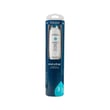
If you’re maintaining filtration on this model, use the exact filter designed for the housing, such as the genuine Kenmore refrigerator water filter EDR3RXD1.
Why it matters
A refrigerator that runs longer to hold temperature uses more energy and puts extra load on the compressor, fans, thermostat, and defrost system. Simple upkeep often adds years of reliable cooling.
Last updated: February 2026
Where is the model number on a Kenmore side by side refrigerator?
On Kenmore side-by-side refrigerator model 10659129801, the model number is printed on the appliance identification label inside the fresh food (refrigerator) compartment, typically along the side wall near the front. Use the exact model number from that label when ordering parts or checking specs in the 10659129801 owner's manual.
Common label locations to check first
Look in these spots in order; they are the most common for Kenmore side-by-side units:
- Inside the refrigerator compartment on the left side wall near the front
- Inside the refrigerator compartment on the right side wall near the front
- On the ceiling of the refrigerator compartment near the light housing
- On the door frame (the vertical face you see when the door is open)
- Behind the crisper drawers on the side wall (less common)
What you should write down (and why)
Record the model number exactly as shown, plus the serial number. We use the model number to match the correct Kenmore parts diagrams and the right replacement parts.
| Item | What it’s used for | Example format |
|---|---|---|
| Model number | Correct parts and diagrams | 10659129801 |
| Serial number | Production details and revisions | Letters plus numbers |
Why it matters
Kenmore model numbers that look similar can use different shelves, water filters, ice makers, or control parts. Using the exact 10659129801 from the label prevents ordering the wrong part and helps troubleshooting steps in the manual match your refrigerator.
Quick tip for parts orders
If you are ordering water and ice system parts, confirm the model number first, then match the part by ID. For example, this model uses a refrigerator water filter option listed as genuine Kenmore refrigerator water filter EDR3RXD1.
Last updated: February 2026