Owner’s manual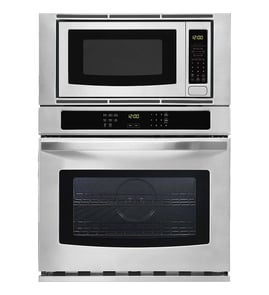



How do I reset my KitchenAid wall oven?
To reset your KitchenAid wall oven/microwave combo model KEMS308SSS03, turn the oven off, then reset power at the home breaker for about 1 minute and restore power. This clears many control glitches and returns the display to normal operation; then re-set the clock if needed (see the KEMS308SSS03 owner's manual).
Quick reset steps (most common)
- Touch OFF/CANCEL to stop any active cooking cycle.
- If the control is unresponsive, turn OFF the circuit breaker (or remove the fuse) that powers the wall oven.
- Wait 60 seconds.
- Turn the breaker ON.
- Confirm the display is back on; then set the clock and test BAKE.
If the control panel seems “locked”
This model has a Control Lock feature that can make the keypad seem dead even though power is on.
- Touch and hold START for about 5 seconds.
- Watch for “control locked” to appear or disappear on the display.
- Try BAKE or BROIL again.
| Symptom | Likely cause | What to do |
|---|---|---|
| Display works but most keys do nothing | Control Lock is on | Hold START 5 seconds |
| Display is blank | Power interruption | Reset breaker; check house breaker/fuse |
| Oven stops and shows messages/tones | Cycle ended or needs clearing | Touch OFF/CANCEL or open/close door |
Why it matters
A power reset clears temporary electronic control errors, while unlocking the controls restores normal keypad operation. If the oven still will not operate after a reset, the manual troubleshooting points you to basic power checks (house breaker/fuse) before moving on to component testing.
Last updated: January 2026
Does KitchenAid make good wall ovens?
Yes. KitchenAid wall ovens, including the KitchenAid KEMS308SSS03 wall oven/microwave combo, are built for strong everyday cooking performance and a premium look. Owners commonly value even baking and convenient features; the most common downsides are longer preheat times and occasional temperature accuracy complaints (often correctable).
What “good” usually means for a wall oven
A good wall oven typically delivers consistent temperatures, reliable controls, and durable heating components. For the KEMS308SSS03, the KEMS308SSS03 owner’s manual also emphasizes using factory specified parts for proper fit and performance.
Common strengths people notice:
- Even baking results once fully preheated
- Smooth, easy-to-use touch controls
- Premium fit and finish (especially stainless models)
- Useful cooking modes (bake, broil, convection depending on configuration)
- Strong parts support for long-term ownership
If you’re worried about temperature accuracy or slow preheat
Before assuming the oven is “bad,” we recommend checking a few common causes that affect any electric wall oven.
Quick checks:
- Fully preheat before loading food (many recipes assume a stabilized cavity)
- Avoid blocking airflow with oversized pans
- Verify the door closes and seals evenly
- Run a basic temperature check with an oven thermometer
- If temps swing widely, consider the sensor and heating circuit
Parts that often relate to these symptoms (when diagnosis points there)
| Symptom | Commonly involved part | Example part for this model |
|---|---|---|
| Oven too hot or too cool | Temperature sensor | Wall oven temperature sensor WPW10131825 |
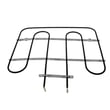
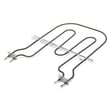
| Slow heat, uneven bake | Bake element | Bake element WPW10207398 |
| Oven shuts down or won’t heat | Thermal fuse | Wall oven thermal fuse WP8304452 |
Why it matters
A wall oven is a long-term appliance; consistent temperature control affects baking results, cooking times, and energy use. When performance is off, it is usually a correctable issue (calibration, airflow habits, or a specific part) rather than the entire oven being low quality.
Last updated: January 2026
What is the life expectancy of a KitchenAid oven?
A KitchenAid oven typically lasts 10 to 15 years. For a built-in wall oven/microwave combo like KitchenAid KEMS308SSS03, we see many units reach the upper end of that range when the cooling system stays clear, the door seals well, and heating components are replaced as needed.
Typical lifespan and what affects it
Most life expectancy differences come down to heat stress, ventilation, and how often the oven runs at high temperatures.
- Usage frequency: daily baking and broiling shortens lifespan compared to occasional use
- Heat management: blocked vents or a weak cooling fan can overheat controls
- Cleaning habits: heavy buildup can cause odor, smoke, and longer heat cycles
- Electrical health: loose wiring or failing fuses can create intermittent shutdowns
- Part replacement: replacing wear parts early often extends overall appliance life
For model-specific care and cleaning guidance, follow the KEMS308SSS03 owner's manual.
Parts that commonly influence longevity
On wall ovens, the parts below are frequent contributors to “it still powers on, but doesn’t cook right” or “it shuts down when hot.”
| Symptom | Commonly involved part | Example part for KEMS308SSS03 |
|---|---|---|
| Oven not heating or heats unevenly | Bake element | Bake element WPW10207398 |
| Oven temperature seems inaccurate | Temperature sensor | Wall oven temperature sensor WPW10131825 |
| Oven shuts off, dead display after overheating | Thermal fuse | Wall oven thermal fuse WP8304452 |
| Fan runs loud, oven area gets unusually hot | Cooling fan assembly | Wall oven cooling fan assembly WP8303972 |
Why it matters
A wall oven/microwave combo is built into cabinetry, so excess heat and poor airflow can stress the touch controls and safety devices. Keeping airflow clear and addressing heating or temperature issues early helps the oven cook correctly and reach its full service life.
Practical tips to help your oven reach 15 years
- Keep vents and surrounding trim areas clear of grease and dust
- Avoid slamming the door; it protects hinges, latches, and seals
- Use self-clean only as recommended; high heat cycles add stress to components
- If baking is inconsistent, test and replace the sensor or element promptly
- If the oven goes dead after a hot cycle, check the thermal fuse and cooling fan
Last updated: January 2026