Owner’s manual
 View engine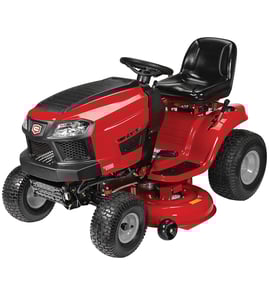

How to find out what year a riding mower is?
To find the year your Husqvarna tractor was built (including model GT54CS-96043022500), we look for the product identification label and decode the date information shown there. The exact format varies by brand and sometimes by production run, so the label is the source of truth.
Where to find the build date information
On most riding mowers and lawn tractors, the ID label is typically located in one of these spots:
- Under the seat pan or on the seat support
- On the frame rail near the engine
- Near the rear axle or transaxle area
- Under the hood near the dash tower
- On the mower deck shell (less common for the primary ID label)
For label location diagrams and model-specific identification notes, use the owner's manual.
How to decode the year (common formats)
Once you find the label, look for fields such as Date, DOM (date of manufacture), MFD, Manufactured, or a serial number that embeds a date.
Common patterns we see:
- MMDDYY: month, day, year (example: 071294 = July 12, 1994)
- YYMMDD: year, month, day
- WWYY: production week and year (example: 2319 = week 23 of 2019)
- Serial number date code: a few digits inside the serial indicate year and week/day
Quick reference table
| What you see on the label | What it usually means | Example interpretation |
|---|---|---|
| 071294 | MMDDYY | July 12, 1994 |
| 2319 | WWYY | Week 23 of 2019 |
| 2019-06-10 | YYYY-MM-DD | June 10, 2019 |
Why it matters
Knowing the build year helps us match the correct parts diagrams and compatible replacement parts (belts, pulleys, steering links, electrical parts) for your tractor, especially when a model has multiple revisions.
If you are trying to match parts by age
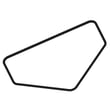
Use the model number first (GT54CS-96043022500), then confirm with the serial/date code. For example, common service parts on this model include the Husqvarna lawn tractor ground drive belt, 1/2 x 82-in 532140294 and the Husqvarna lawn tractor ignition switch 532193350.
Last updated: February 2026
Is a Husqvarna GT54CS-96043022500 a commercial mower?
The Husqvarna GT54CS-96043022500 is a residential lawn tractor, not a dedicated commercial mower. It is built for homeowner property maintenance (mowing, light towing, and yard work) rather than daily, all-day commercial cutting.
How to tell residential vs commercial
Commercial mowers are designed for long duty cycles, heavier frames, and serviceable drivetrains; residential tractors prioritize comfort and versatility for typical weekly mowing.
Common commercial indicators:
- Heavy-gauge fabricated deck and reinforced chassis
- Serviceable hydrostatic drive built for continuous use
- Higher-capacity cooling, filtration, and electrical components
- Commercial warranty language and fleet support
- Faster ground speed and higher productivity features
Common residential indicators:
- Stamped or lighter-duty deck designs (varies by trim)
- Comfort features for homeowner use (seat, controls, ergonomics)
- Designed around weekly mowing schedules
- More emphasis on attachments and general yard tasks
What this means for maintenance and parts
Using a residential tractor like the GT54CS-96043022500 for occasional heavy work is fine, but commercial-style use (multiple properties, long run times, frequent transport) increases wear on belts, pulleys, and electrical starting components.
Parts that commonly wear first on lawn tractors:
- Ground drive belt (slipping, glazing, loss of drive)
- Idler pulleys (noise, wobble, belt tracking issues)
- Starter solenoid and ignition switch (no-crank symptoms)
- Steering linkage components (play, uneven steering)
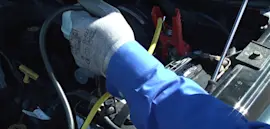
If you are troubleshooting starting or cranking issues, our DIY video riding lawn mower engine clicks but doesnt turn over video is a good match for this tractor.
Quick comparison
| Feature | Residential lawn tractor (GT54CS-96043022500) | Commercial mower |
|---|---|---|
| Typical use | Weekly mowing, light towing | Daily mowing, multiple properties |
| Duty cycle | Moderate | High |
| Build focus | Versatility and comfort | Productivity and durability |
| Wear pattern | Belts, pulleys, starting circuit | Spindles, hydraulics, deck components |
Why it matters
Choosing the right duty class helps you set realistic expectations for cut time, longevity, and upkeep. A residential tractor maintained on schedule will deliver reliable performance, but commercial workloads usually require commercial-grade equipment.
For model-specific operating guidance and maintenance intervals, use the owner's manual.
Last updated: February 2026
What model number is the Husqvarna GT54CS-96043022500?
The model number is GT54CS-96043022500. That is the full Husqvarna tractor model identifier you’ll use to look up the correct parts diagrams, maintenance specs, and replacement parts for this machine in the owner's manual.
Where to find the model number on the tractor
You’ll typically find the model number on the product identification label. Common locations include:
- Under the seat pan or seat frame area
- On the frame near the rear wheels
- Near the engine compartment on the chassis rail
- Around the footrest area on the frame
Why the model number matters for parts
Husqvarna tractors can look similar across multiple series, but parts like belts, steering links, and electrical components can vary by model and production run.
- Ensures you get the correct ground drive belt length and width
- Matches the correct ignition and starting circuit parts
- Helps identify the right steering and axle hardware
- Prevents ordering parts that fit a different deck or transaxle setup
Examples of model-matched parts on this page
| System | Example part | What it affects |
|---|---|---|
| Drive | Husqvarna lawn tractor ground drive belt, 1/2 x 82-in 532140294 | Forward and reverse movement |
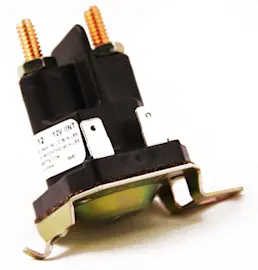
| Starting | Lawn tractor starter solenoid 582042802 | Cranking the engine |
| Ignition | Husqvarna lawn tractor ignition switch 532193350 | Key start and run power |
Quick tip before ordering
When you’re ordering parts, match all of these when possible:
- Model number: GT54CS-96043022500
- Part name (as listed)
- Part ID (on the parts list)
- Manufacturer part number (if you are cross-checking)
Last updated: February 2026
What riding mower has the least problems?
Riding mowers with the fewest problems are the ones that match your yard size and are maintained on schedule; in the lawn tractor class, Husqvarna models like the GT54CS-96043022500 tend to be dependable when the drive belt, battery, and safety switches are kept in good shape. For model-specific maintenance intervals and adjustments, use the owner's manual.
What to look for when “least problems” is the goal
We see the best long-term reliability when the mower has simple, proven systems and the owner keeps up with routine service.
- A properly sized deck and engine for your acreage (less strain, less heat)
- Easy-to-service drivetrain and accessible grease points
- Strong starting and charging system (battery, solenoid, ignition switch)
- Tight steering and front-end hardware (tie rods, bearings, lock nuts)
- A maintenance plan you will actually follow (oil, filters, blades, belts)
Common trouble spots that create “problem mower” complaints
Most “unreliable mower” issues come from a few predictable areas, especially after storage or heavy mowing.
| Symptom | Most common cause | What we check first |
|---|---|---|
| Clicks but won’t crank | Weak battery or bad solenoid connection | Battery condition and cable tightness |
| Cranks but won’t start | Fuel quality, stale gas, dirty air filter | Fresh fuel and air filter service |
| Won’t move or slips | Worn or glazed ground drive belt | Belt condition and idler action |
| Uneven cut | Deck out of level, worn blades | Deck leveling and blade condition |
Parts that often restore reliability on this Husqvarna tractor
If your GT54CS-96043022500 is acting up, these are common “fix the root cause” parts we see customers replace.
- Husqvarna lawn tractor ground drive belt, 1/2 x 82-in 532140294 (slipping, loss of drive)
- Lawn tractor starter solenoid 582042802 (intermittent no-crank)
- Husqvarna lawn tractor ignition switch 532193350 (no power to start circuit)
- Husqvarna lawn tractor idler pulley 532194327 (belt noise, poor tension)
Why it matters
A mower that “has the least problems” is usually a mower that is not being forced to do more than it was built for. Correct belt tension, a healthy battery, and clean airflow prevent most no-start and no-move situations and reduce wear on expensive drivetrain components.
Last updated: February 2026