Installation guide
 Owner’s manual
 Error Codes


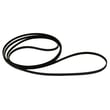
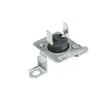
Can I look up Frigidaire parts by model number?
Yes. Looking up parts by model number is the most accurate way to get compatible replacement parts for your Frigidaire dryer model FGR311FS2, because the parts list is tied to the exact configuration of your dryer (gas or electric, door style, and component revisions). Use the model number exactly as shown on the serial plate and confirm the part ID before ordering.
Where to find the model number on FGR311FS2
On this Frigidaire dryer, the model and serial numbers are on the serial plate located on the left side of the door opening. Use that full model number when searching parts.
- Open the dryer door and look along the left inner frame
- Copy the model number exactly (letters and numbers)
- Record the serial number too (helpful for production variations)
- Use the parts diagrams and lists in the FGR311FS2 owner’s manual
How to search parts by model number (best practice)
When you search by model number, match the part by name and ID, then confirm it fits your symptom.
- Start with the symptom (won’t start, no heat, noisy, won’t tumble)
- Find the matching section in the parts list (drum, motor, burner, door)
- Verify the part ID and description before checkout
- Replace common wear items in sets when appropriate (belt plus idler components)
- Follow safety and installation steps in the FGR311FS2 installation guide
Common examples for this model
These are typical parts customers look up by model number for tumbling and noise issues:
| Symptom | Common part to check | Example part for FGR311FS2 |
|---|---|---|
| Drum not turning | Drum belt | Frigidaire dryer drum belt 134503600 |
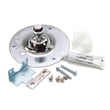
| Squealing or rumbling | Drum support/bearing | Dryer drum bearing kit 5303281153 |
| Thumping or scraping | Drum glides/felt seals | Dryer drum felt seal, upper 134440200 |
Why it matters
Dryer parts are not “one size fits all.” Searching by FGR311FS2 helps prevent ordering a belt, bearing, thermal limiter, or gas-heat component that looks similar but mounts differently or has different electrical ratings.
Last updated: February 2026
Is Frigidaire a good brand for dryers?
Frigidaire is a solid, dependable dryer brand for most homes; owners typically choose it for consistent drying performance, straightforward controls, and good long-term value. For the Frigidaire FGR311FS2 specifically, it is designed for home use and is supported with clear operating and installation documentation in the FGR311FS2 owner's manual.
What “good” looks like in real use
We judge dryer quality by day-to-day results and serviceability, not just features.
- Dries evenly without needing extra cycles for normal loads
- Maintains airflow well when the venting is installed correctly
- Runs quietly with minimal squeaks or thumps as the drum turns
- Has common, replaceable wear parts (belt, idler, drum support components)
- Is easy to maintain (lint screen cleaning, vent cleaning, basic inspections)
What to check on your FGR311FS2 before you decide
Even a good brand can perform poorly if setup or maintenance is off. Use this quick checklist:
- Confirm the dryer is installed for safe exhaust and gas supply requirements
- Keep the lint screen clean every load
- Inspect and clean the vent duct regularly to prevent long dry times
- Listen for squealing or thumping that can point to drum support wear
- If the drum will not turn, check common drive components like the Frigidaire dryer drum belt 134503600
Common “brand” complaints and what they usually mean
| Symptom | Most common cause | Typical fix |
|---|---|---|
| Long dry times | Restricted venting or lint buildup | Clean venting; verify exhaust setup |
| No heat (gas model) | Ignition or safety component issue | Follow diagnostic steps; service as needed |
| Squeal/thump | Belt, idler, bearing, or glide wear | Replace worn drum support parts |
Why it matters
A dryer’s real reliability depends heavily on airflow, correct installation, and routine cleaning. When venting is restricted, any dryer can overheat, shut down on safety devices, or take much longer to dry, which feels like a “bad brand” even when the machine is fine.
Last updated: February 2026
How much is a control board for a Frigidaire dryer?
For a Frigidaire dryer such as model FGR311FS2, the price of a control board depends on the exact control type used (timer-based controls vs. an electronic control board) and whether it’s sold as a standalone board or as part of a console assembly. Use the model’s parts breakdown and procedures in the FGR311FS2 owner’s manual to identify the correct control component before pricing.
What to price first (so you don’t buy the wrong part)
Many dryers that customers call a “control board” are actually a different control component. Confirm which one your dryer uses:
- Cycle selector timer (mechanical control)
- User interface or console switch assembly
- Electronic control board (main control)
- Wiring harness or connector at the console
- Door switch or start switch (can mimic a “dead control”)
How we recommend confirming the correct control part
Use the model number FGR311FS2 and match the control component by location and wiring:
- Unplug the dryer (and shut off gas if it’s a gas model).
- Open the console area as shown in the FGR311FS2 installation guide.
- Compare the control’s connector layout and mounting points to the model diagram.
- If the dryer is “dead,” verify power and door switch operation before replacing controls.
Typical price ranges (by control type)
These are common OEM price ranges for Frigidaire-style dryers; the exact price is set by the specific part number and availability.
| Control type customers mean by “control board” | Typical OEM price range | Notes |
|---|---|---|
| Cycle timer (mechanical) | $80 to $200 | Very common on many models |
| Electronic control board | $150 to $350 | Varies widely by model and features |
| Console/user interface assembly | $100 to $300 | Often includes switches or overlay |
Why it matters
Control parts are high-cost and often non-returnable once installed. Matching the correct control component to FGR311FS2 prevents ordering a timer when you need an electronic board (or vice versa) and helps avoid repeat failures caused by wiring or vent restrictions.
Last updated: February 2026