Installation guide
 Owner’s manual


Is a 7.3 cubic foot dryer big?
Yes. A 7.3 cubic foot capacity is considered a large dryer size, and it’s a good fit for bigger loads in a Whirlpool dryer like model WED92HEFC0 (comforters, towels, and family-size laundry). For cycle details and load guidance, use the WED92HEFC0 use & care manual.
What “7.3 cu. ft.” means in real use
A 7.3 cu. ft. drum is typically “large capacity,” which helps reduce the number of loads you run and gives bulky items room to tumble for better airflow.
Common loads that fit well:
- King or queen comforter (depending on fill and fabric)
- Full towel loads
- Mixed family laundry loads
- Jackets and heavier items that need tumbling space
How to get the best drying results with large loads
Even with a big drum, performance depends on airflow, load balance, and sensor operation.
We recommend:
- Don’t pack the drum tight; leave space for tumbling
- Clean the lint screen before every load
- Use sensor cycles for mixed loads; use timed dry for very heavy items
- If drying takes too long, check venting for restrictions
Quick size comparison
| Dryer capacity | Typical label | Best for |
|---|---|---|
| 6.0 to 6.9 cu. ft. | Medium | Couples, smaller loads |
| 7.0 to 7.4 cu. ft. | Large | Families, bulky items |
| 7.5+ cu. ft. | Extra-large | Frequent bulky loads |
Why it matters
Choosing the right capacity helps prevent overdrying, long cycle times, and poor airflow. A large-capacity drum like 7.3 cu. ft. can dry more evenly when loads have room to tumble.
Last updated: January 2026
What is the most common problem with whirlpool dryers?
For the Whirlpool WED92HEFC0 dryer, the most common customer-reported issue is the dryer won’t start. In many cases, the root cause is simple (power supply, door not fully closed, or control settings), but it can also involve a failed safety device or control component; see the WED92HEFC0 installation instructions for basic start-up checks.
Quick checks we recommend first (no parts)
- Confirm the dryer is getting full power (electric dryers typically need proper 240V supply).
- Make sure the door is fully closed and the latch engages.
- Verify the cycle is selected and the Start button is pressed firmly.
- Check the household breaker or fuses (a tripped breaker can look like a dead dryer).
- If the unit starts and stops quickly, check airflow and overheating conditions.
When “won’t start” points to a part
If power and settings are correct, a common repair path is checking the dryer’s overheat protection. A blown thermal fuse can prevent the dryer from running and is often triggered by restricted venting.
- Inspect and clean the entire vent run to the outside.
- Check for crushed venting behind the dryer.
- If the dryer overheated, test the thermal fuse and related thermostats.
Helpful model-compatible part to consider:
Symptoms and likely areas to check
| Symptom | Most likely area | What to do next |
|---|---|---|
| Won’t start at all | Power supply, door/latch circuit, safety fuse | Verify power, then test thermal fuse |
| Runs but no heat | Heating circuit, airflow restriction | Check venting, then heating components |
| Long dry times | Venting/airflow, lint buildup | Clean vent and lint path |
| Loud thumping/squealing | Drum support and drive system | Inspect rollers and idler pulley |
Why it matters
A “won’t start” complaint is often tied to airflow and overheating protection. Fixing vent restrictions not only restores operation, it also helps prevent repeat failures of safety parts and improves drying performance.
Last updated: January 2026
What is the life expectancy of a Whirlpool dryer?
A Whirlpool dryer like model WED92HEFC0 typically lasts about 10 years with normal household use. With consistent vent cleaning, good airflow, and timely replacement of common wear items, many Whirlpool dryers reach 12 to 15 years before major repairs become more frequent.
What affects lifespan the most
For WED92HEFC0, longevity is mostly about airflow (heat management) and mechanical wear in the drum drive system.
- Clean the lint screen before every load
- Keep the exhaust vent clear; avoid crushed or kinked venting
- Do not overload; heavy loads strain the belt, idler, and drum support rollers
- Level the dryer so the drum rides evenly and seals wear slower
- Investigate new noises early (thumping, squealing, scraping)
For model-specific venting and clearance requirements, follow the WED92HEFC0 installation instructions.
Wear parts that often decide whether a dryer is “worth fixing”
If your WED92HEFC0 is otherwise in good condition, replacing common wear parts can extend service life.
| Symptom | Common cause | Example compatible part for WED92HEFC0 |
|---|---|---|
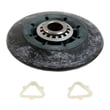
| Thumping or rumbling | Worn drum support rollers | Dryer drum support roller WPW10314173 |
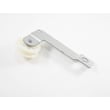
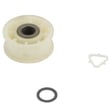
| Squealing or belt slack | Worn idler pulley | Dryer idler pulley W10837240 |
| No heat or shuts off from overheating | Failed thermal cut-off or related thermal protection | Dryer thermal cut-off fuse kit 279973 |
Why it matters
Knowing the typical lifespan helps you decide whether to maintain, repair, or replace. If your WED92HEFC0 is near the 10-year mark, proactive vent cleaning and addressing drum support noise can help prevent bigger failures such as motor strain or overheating.
Last updated: January 2026