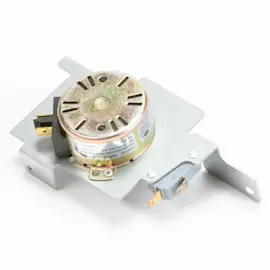
Installation guide
 Owner’s manual
 Error Codes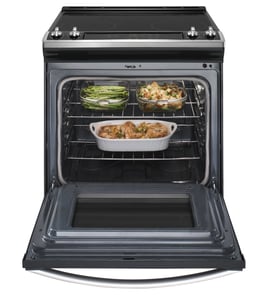





How do I clear the error code on my KitchenAid oven?
To clear an error code on your KitchenAid range model KERS202BSS0, we reset the control by canceling the current cycle and power-cycling the range. If the code returns right away, the problem is still being detected and troubleshooting is the next step.
Quick reset steps (most common)
- Press CANCEL/OFF to stop the current bake, broil, or self-clean cycle.
- If the code stays on, turn the range breaker OFF for 1 minute.
- Turn the breaker back ON.
- Wait for the display to come back on.
- Try a simple function like BAKE to confirm normal operation.
If the error code comes back
An error code that returns after a reset usually points to a heat-sensing or control issue. Start with the easiest checks first.
- If the oven temperature seems wrong (overheats or underheats), inspect and test the range oven temperature sensor WPW10181986.
- If the oven will not heat at all, check the bake circuit and inspect the range bake element W10779716 for visible damage.
- If the display is glitchy or the code appears during heavy use, check for a loose or overheated power connection at the terminal block (a common cause of intermittent faults).
What to check first (safe, practical checklist)
- Confirm the range has steady power; a tripped breaker can trigger faults.
- Let the oven cool completely; some codes clear after cooling.
- Check for a loose plug or power cord strain.
- Avoid running self-clean until the oven is operating normally.
- Use the wiring diagram and error-code details in the KERS202BSS0 owner’s manual.
Common symptoms and likely next step
| What you notice | What it usually means | What we do next |
|---|---|---|
| Code clears, then returns when heating starts | Heat sensing or heating circuit issue | Test sensor and bake element |
| Oven heats poorly, food cooks unevenly | Temperature feedback problem | Test oven temperature sensor |
| Code appears randomly | Power connection or wiring issue | Inspect terminal block and harness |
Why it matters
Clearing the code only resets the display; it does not fix the condition that triggered the fault. If the code returns, addressing the underlying issue helps prevent no-heat problems, overheating, and repeated shutdowns.
Last updated: February 2026
How to replace KitchenAid oven sensor?
On the KitchenAid KERS202BSS0 electric range, replacing the oven temperature sensor is a straightforward repair: disconnect power, remove the sensor mounting screws inside the oven, unplug the sensor connector, then connect and reinstall the new sensor and restore power. See the KERS202BSS0 owner’s manual for safety and access details.
Before you start (safety and prep)
- Turn off power at the breaker; the range uses 240 volts.
- Let the oven cool completely.
- Pull the range forward only if needed; protect the floor.
- Use a flashlight and a small nut driver or screwdriver.
- Avoid pulling on wires; grip connectors only.
Replacement steps (typical for this KitchenAid range)
- Shut off power at the breaker.
- Locate the sensor inside the oven cavity (usually upper rear wall).
- Remove the mounting screws holding the sensor.
- Gently pull the sensor forward until you can access the connector.
- Unplug the connector (do not yank the harness).
- Plug in the new sensor, tuck excess wire back through the opening, and reinstall screws.
- Restore power and test bake temperature.
Which part usually fixes it?
For KERS202BSS0, the correct replacement is the range oven temperature sensor WPW10181986. If your oven is still heating incorrectly after replacement, the next common checks are wiring connections and the control.
| Symptom | Most likely cause | What to do next |
|---|---|---|
| Oven too hot or too cool | Sensor out of spec | Replace sensor, then test temps |
| Erratic temps | Loose connector or damaged harness | Inspect connector and wiring |
| No heat and no error | Control or power issue | Verify power supply and wiring |
Why it matters
A failing oven temperature sensor can make baking unreliable and can cause longer preheat times, temperature swings, or error codes. Replacing the sensor restores accurate temperature feedback to the control so the bake element cycles correctly.
Last updated: February 2026
What are the parts of an electric oven?
An electric oven in a KitchenAid range like model KERS202BSS0 is built around heating elements, temperature sensing, lighting, and airflow/venting parts that work together to bake and broil evenly. Your exact configuration and access points are shown in the KERS202BSS0 owner’s manual.
Core electric oven parts (what they do)
- Bake element: Bottom heating element used for most baking and roasting.
- Broil element: Top heating element used for high-heat browning.
- Oven temperature sensor: Monitors oven temperature so the control can regulate heat.
- Oven light and lens: Lets you see food without opening the door.
- Oven racks: Support cookware at different heights.
- Vent and vent tube: Routes hot air and moisture out of the oven cavity.
Common parts you may replace on KERS202BSS0
If your oven will not heat, heats unevenly, or shows temperature issues, these model-matched parts are frequent fixes:
- Range bake element W10779716
- Range oven temperature sensor WPW10181986
- Light bulb 8009
- Light lens WP3196068
Quick symptom-to-part guide
| Symptom | Most likely area | What to check first |
|---|---|---|
| Oven will not bake | Bake circuit | Bake element, wiring connections |
| Oven temperature is off | Temperature feedback | Temperature sensor, sensor harness |
| Light does not work | Lighting | Bulb, lens, socket condition |
| Moisture or heat seems trapped | Venting | Vent path, vent tube obstructions |
Why it matters
Knowing the main oven components helps you troubleshoot faster and order the right KitchenAid range parts the first time. It also helps you decide when a simple part replacement (like a bake element or sensor) is more practical than deeper electrical diagnosis.
Safety and access notes
- Turn off power at the breaker before inspecting wiring, elements, or the terminal area.
- The oven door is heavy; follow the removal steps in the KERS202BSS0 installation guide if you need extra access.
- If you see burned wiring or loose power connections, stop and have the range inspected before using it.
Last updated: February 2026
What is the life expectancy of a KitchenAid oven?
A KitchenAid electric oven like model KERS202BSS0 typically lasts 13 to 15 years with normal household use and basic maintenance. Keeping the oven clean, ensuring proper installation, and fixing heating or temperature issues early helps you reach that expected lifespan.
Typical lifespan by oven type
Most homeowners see these averages:
- Electric ovens: 13 to 15 years
- Gas ovens: 15 to 17 years
- Freestanding ranges (like KERS202BSS0): usually follow the oven fuel type (electric)
| Appliance type | Typical life expectancy | What usually ends it first |
|---|---|---|
| Electric oven/range | 13 to 15 years | Bake element wear, sensor drift, control failures |
| Gas oven/range | 15 to 17 years | Ignition issues, valve problems |
What to do to help your range reach 13 to 15 years
These steps reduce stress on heating and electrical parts:
- Use the self-clean feature sparingly; high heat can shorten the life of wiring and controls.
- Wipe spills quickly so baked-on residue does not trap heat and cause hot spots.
- Confirm the range is level and stable; the KERS202BSS0 installation guide covers leveling and anti-tip setup.
- If baking temps seem off, test and replace common wear parts such as the range oven temperature sensor WPW10181986.
- If the oven will not heat or heats unevenly, inspect the range bake element W10779716 for blisters, breaks, or burn marks.
Signs it may be near end of life (or needs a key repair)
A repair often restores performance, but repeated failures can signal it is time to evaluate replacement:
- Oven takes much longer than normal to preheat
- Food consistently overbakes or underbakes
- Burning smell, arcing, or visible damage on the bake element
- Control panel problems (buttons not responding, erratic operation)
- Multiple major repairs needed within a short period
Why it matters
Knowing the expected life helps you decide whether to repair or replace. On a 30-inch electric freestanding range like KERS202BSS0, replacing a bake element or temperature sensor is often a cost-effective way to restore accurate heating and extend service life.
Last updated: February 2026
Why is my KitchenAid electric oven not getting hot enough?
If your KitchenAid electric range model KERS202BSS0 isn’t getting hot enough, the most common causes are a weak bake element, a drifting oven temperature sensor, or a power supply issue that leaves the oven running on partial voltage. We recommend testing the sensor and inspecting the bake element first.
Quick checks (fastest wins)
- Confirm you are using Bake, not Broil or Convect only.
- Let the oven preheat at least 15 to 20 minutes; many electric ovens cycle the element during preheat.
- Check for a visible blister, crack, or hole on the bake element.
- If the oven heats slowly and broil seems weak too, check for a tripped double breaker (one side can trip and the range still powers on).
- Avoid opening the door repeatedly during preheat; it drops cavity temperature quickly.
Parts to test on KERS202BSS0
1) Oven temperature sensor
A sensor that reads wrong can make the control think the oven is hotter than it is.
- Unplug the range or shut off the breaker.
- Access the sensor inside the oven cavity (usually rear wall) and test resistance with a multimeter.
- If readings are far off typical room-temperature values (often around 1,080 ohms at 70°F for many Whirlpool-built ranges), replace the sensor.
Helpful part: range oven temperature sensor WPW10181986
2) Bake element
A bake element can glow but still not produce full heat if it is damaged or partially failed.
- Look for burn spots or separation.
- If the element shows damage or fails a continuity test, replace it.
Helpful part: range bake element W10779716
What to check if both parts test good
| Symptom | Most likely cause | What to do next |
|---|---|---|
| Oven never reaches set temp, preheat takes very long | Low/partial power (240V issue) | Check the double breaker and terminal connections |
| Temperature swings widely | Sensor drifting or calibration needed | Use calibration steps in the manual |
| Oven heats, but food still undercooks | Rack position, cookware, door seal leak | Verify rack position and inspect door closure |
For wiring and safe electrical connection details, follow the KERS202BSS0 installation guide. For operating tips and temperature adjustment, use the KERS202BSS0 owner’s manual.
Why it matters
Running cool can lead to undercooked food and longer bake times; catching a failing sensor, bake element, or power issue early helps prevent repeated overheating cycles and control stress.
Last updated: February 2026