Owner’s manual
 Error Codes


What is the bottom compartment of a fridge called?
On the GE PYE22KSKESS bottom-mount refrigerator, the bottom compartment is the freezer drawer (the freezer section located below the fresh food compartment). Some people also use “bottom freezer” to describe this style. See the owner's manual for the exact compartment names used for your model.
Common names you might hear (and what they mean)
- Freezer drawer: The pull-out bottom freezer compartment (most accurate for this model style).
- Bottom freezer: The freezer section located on the bottom.
- Lower basket / freezer basket: The storage baskets that sit inside the freezer drawer.
- Fresh food compartment: The upper refrigerator section.
- Compressor compartment: The mechanical area near the bottom/back (not a food compartment).
Quick reference: bottom areas vs. what you store there
| Term people use | What it usually refers to | Food storage area? |
|---|---|---|
| Freezer drawer | Bottom pull-out freezer section | Yes |
| Freezer basket | Bins/baskets inside the freezer drawer | Yes |
| Compressor compartment | Area housing cooling components | No |
Why it matters
Using the right name helps when you are troubleshooting (ice maker, door closing, temperature issues) or looking up removal and re-install steps for the freezer drawer and baskets in the documentation.
Helpful related DIY guidance
- If your question is tied to beeping or a door left open, use how to reset the door alarm on a GE refrigerator.
Last updated: February 2026
What is the most common problem with GE PYE22KSKESS refrigerators?
The most common issues we see on the GE PYE22KSKESS bottom-mount refrigerator involve the ice maker and dispenser system (no ice, slow ice, dripping after dispensing) and temperature complaints that trace back to airflow or sensor-related problems. The troubleshooting section in the PYE22KSKESS owner's manual points heavily to water supply, filter installation, and normal cool-down timing.
Most common symptoms customers report
- Ice maker not making ice or making ice slowly
- Water dripping from the dispenser after you stop dispensing
- Fresh food section warm while freezer seems OK (airflow imbalance)
- “Not cooling enough” right after a power outage or first plug-in
- Door alignment issues that affect sealing and temperature stability
Quick checks that fix many “common” problems
Start with these basics before replacing parts:
- Give it time after power loss: the manual notes it can take up to 24 hours for both compartments to reach the set temperatures.
- Confirm the ice maker is ON: many “no ice” calls are simply the ice maker switched off.
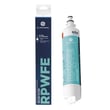
- Check the water filter: a clogged filter or one not fully locked in place can reduce flow and cause dispenser issues.
- Purge air from the water line: if water drips after dispensing, dispensing water for several minutes can clear trapped air.
- Inspect door alignment and sealing: the manual describes fine door alignment using an Allen wrench adjustment at the bottom of the door.
What the manual points to (common causes and fixes)
| Problem area | What you notice | Common cause | What to do first |
|---|---|---|---|
| Ice maker | No ice | Ice maker turned off | Turn ice maker on and verify operation |
| Water dispenser | Drips after dispensing | Air in water line | Dispense water for several minutes |
| Water system | Slow flow, weak dispense | Water filter clogged | Replace filter or install bypass plug |
| Cooling after outage | Temps not stable yet | Normal recovery | Wait 24 hours |
| Doors | Uneven doors, poor seal | Alignment shifted | Adjust door alignment per manual |
Why it matters
Ice and cooling complaints often share the same root causes: restricted water flow (filter or air in the line), doors not sealing consistently, or normal temperature recovery after an outage. Fixing these first prevents unnecessary part replacement and helps the refrigerator stabilize.
For deeper diagnostics (including display messages), we use the troubleshooting and error guidance in the PYE22KSKESS owner's manual and the model-specific reference in GE refrigerator error codes.
Last updated: February 2026
How to remove bottom grille on GE refrigerator?
On the GE PYE22KSKESS bottom-mount refrigerator, the bottom grille (base grille/toe grille) typically comes off by releasing its retaining tabs or removing a couple of screws (model variations exist). Once released, pull the grille straight out from the front to remove it.
Steps to remove the bottom grille
- Unplug the refrigerator or switch off power at the breaker (recommended).
- Open both fresh food doors for better access.
- Look along the top edge of the grille for fasteners:
- If you see screws, remove them with a Phillips screwdriver.
- If you see slots/tabs, press the tabs inward with your fingers or a flat-blade screwdriver.
- Pull the grille forward evenly from both sides to avoid cracking the plastic.
- Set the grille aside; keep screws in a cup so they do not get lost.
What to check while the grille is off (why it matters)
Removing the grille gives you access to areas that affect cooling efficiency and odors. A blocked intake area can make the compressor run longer and reduce temperature performance.
- Vacuum dust from the front intake area and nearby floor.
- Check for pet hair buildup.
- Look for signs of water dripping or a puddle forming.
- Make sure the grille is not warped, which can prevent it from snapping back in.
Reinstall tips
- Align the grille with the mounting slots first.
- Push straight in until tabs click (or reinstall screws snugly, not over-tight).
- Confirm the grille sits flush and does not rub the doors or freezer drawer.
| What you see | What it usually means | Tool needed |
|---|---|---|
| 2 screws at the top corners | Screw-mounted base grille | Phillips screwdriver |
| No screws, visible tabs/slots | Snap-in grille with retaining clips | Hands or flat-blade screwdriver |
Related help for GE refrigerators
If you are removing the grille as part of a door or front-panel issue, the owner's manual is the best place to confirm the exact fastener style for your configuration.
Last updated: February 2026