Error Codes


What is the most expensive part of a dishwasher?
In most dishwashers (including the Jenn-Air JDB9000CWP3), the most expensive repair is usually an electronic control, such as the main control board or user interface, because it manages cycle timing, sensors, heating, and motor operation. Motor and pump assemblies are also commonly high-cost items.
Electronic controls cost more because they combine multiple functions (logic, relays, diagnostics) into one assembly and are model-specific.
Common “top cost” parts include:
- Electronic control board or control module
- User interface or control panel electronics
- Pump and motor assembly (circulation)
- Heating system components (heater, control, wiring)
- Specialty assemblies (door, tub-related components)
These are examples from the parts commonly purchased for this model; pricing varies by availability and what else is needed for the repair.
| Part type | Example part on this model | Why it can be expensive |
|---|---|---|
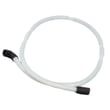
| Control/electronics | Ctrl-sky-n15 W10909701 | Model-specific electronics that coordinate multiple functions |
| Pump/motor | Dishwasher pump and motor assembly WPW10605057 | High-load motor plus seals and pump components in one unit |
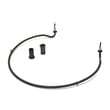
| Heating | Element assembly W10703867 | Critical for drying and water temperature performance |
Use these checkpoints before ordering a high-cost part:
- Confirm the symptom is consistent (no power, dead panel, won’t start, no wash action, no heat)
- Check for simple causes first (tripped breaker, loose door latch, clogged filter/drain path)
- Inspect wiring connectors for corrosion or heat damage
- Compare the part cost to the dishwasher’s age (typical dishwasher lifespan is 10 years)
- If multiple major parts are failing, plan for a broader repair strategy
The most expensive part is often the one that controls or combines multiple systems. Identifying the correct failure point first helps avoid replacing an electronic control when the real issue is a latch, drain restriction, or a failing pump.
Last updated: February 2026
Where to find model number on Jenn-Air dishwasher?
On a Jenn-Air dishwasher like model JDB9000CWP3, the model number is printed on the rating label located on the inside edge of the door, typically along the left side when you open the door. That same label usually lists the serial number.
- Open the dishwasher door fully.
- Check the vertical inner door frame (the “tub opening” edge), not the outer front panel.
- Look along the left-hand side first.
- Wipe the area with a damp cloth; labels can be hard to read through residue.
- Use a flashlight and take a photo; zooming in often makes the numbers clearer.
Most Jenn-Air dishwashers use a small rectangular sticker or metal tag. It commonly includes:
- Model number (example: JDB9000CWP3)
- Serial number
- Electrical ratings (voltage/amps)
- Certification markings
Use these options to confirm the correct model before ordering parts:
| Option | What to do | When it helps most |
|---|---|---|
| Check paperwork | Look at your purchase/installation documents | If the unit was recently installed |
| Check the door edge carefully | Inspect all around the inner door frame | If the label adhesive failed |
| Match a common wear part | Compare your rack hardware to a known replacement | If you need parts quickly |
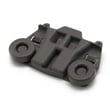
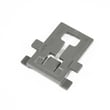
A common part customers replace on this model is the dishwasher dishrack roller assembly, lower WPW10195417.
We use the exact model number to match the correct door latch, water inlet valve, drain pump, racks, and seals. Even small model variations can change fit and wiring, so confirming JDB9000CWP3 prevents wrong-part returns.
Last updated: February 2026
What is the life expectancy of a Jenn-Air dishwasher?
Most Jenn-Air dishwashers, including model JDB9000CWP3, typically last 10 to 13 years with normal use and proper care. If yours is near that age and showing repeat problems (leaks, poor cleaning, no heat), targeted repairs can often extend its service life.
A dishwasher’s life depends more on water quality, loading habits, and maintenance than brand name alone.
- Hard water and heavy detergent use can shorten pump, valve, and heater life
- Frequent clogs and standing water strain the drain pump and hoses
- Overloading racks can wear rack wheels, adjusters, and door hinges faster
- Heat-dry use increases wear on the heating circuit over time
- Regular filter and spray-arm cleaning helps the circulation system last longer
If you see these issues repeatedly, it is usually time to price out repair vs. replacement.
- Dishes stay wet or cool after the cycle (heating problem)
- Water remains in the tub (drain problem)
- Loud grinding or humming during wash (circulation motor or diverter issue)
- Door will not latch or pops open mid-cycle
- Leaks at the bottom of the door or under the unit
| What you’re seeing | Common repair area | When repair makes sense |
|---|---|---|
| Standing water | Drain pump, drain hose | Unit is under ~10 years old and otherwise reliable |
| No heat or poor drying | Heater circuit | Tub and racks are in good shape |
| Door won’t close | Latch, hinges, balance system | Problem is isolated and not recurring |
| Chronic leaks + multiple symptoms | Multiple systems | Unit is 10 to 13+ years old |
When symptoms match, replacing a worn part is often the most cost-effective way to keep the dishwasher running.
- For draining problems, check the dishwasher drain pump W10876537
- For poor drying or no-heat symptoms, check the element assembly W10703867
- For door-closing issues, check the dishwasher door latch WPW10653840
Knowing the typical lifespan helps you avoid over-investing in an aging dishwasher while still making smart repairs when the failure is isolated (like a drain pump, heating element, or door latch).
Last updated: February 2026
What are the commonly replaced parts in a dishwasher?
In a dishwasher like Jenn-Air model JDB9000CWP3, the most commonly replaced parts are the ones that move water, heat water, seal the door, or handle draining. When you see leaks, poor cleaning, no heat, or standing water, these parts are the first places we check.
- Door sealing parts: stop leaks at the bottom and sides of the door
- Drain parts: clear water out at the end of the cycle
- Water fill parts: let the right amount of water into the tub
- Wash circulation parts: push water through spray arms for cleaning
- Heating parts: heat water and help dry dishes
- Rack hardware: keeps racks rolling and adjusting smoothly
Here are several high-frequency replacements that match this model’s parts list:
| Symptom | Likely part | Example for this model |
|---|---|---|
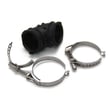
| Water left in tub | Drain pump or drain hose | Dishwasher drain pump W10876537 or dishwasher drain hose 8269144A |
| Not filling or fills slowly | Water inlet valve | Dishwasher water inlet valve WPW10327249 |
| Poor drying or water not heating | Heating element | Element assembly W10703867 |
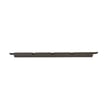
| Leaking at bottom of door | Lower door seal | Dishwasher door seal, lower W10909089 |
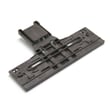
| Racks fall off track or roll rough | Rack rollers/adjusters | Dishwasher dishrack roller assembly, lower WPW10195417 or dishwasher dishrack adjuster WPW10546503 |
- Clean the filter area and check the sump for debris (glass, labels, bones)
- Confirm the drain hose has a proper high loop and is not kinked
- Run hot water at the sink before starting a cycle to improve wash performance
- Check for a door seal that is torn, flattened, or pulling away from the channel
- Listen for the drain pump at the end of the cycle (a steady hum with no draining points to a blockage)
Replacing the correct part first saves time and prevents repeat failures. For example, a “won’t drain” complaint can be a clogged hose, a failing drain pump, or a restriction at the sump; matching the symptom to the right component avoids unnecessary returns.
Last updated: February 2026