Owner’s manual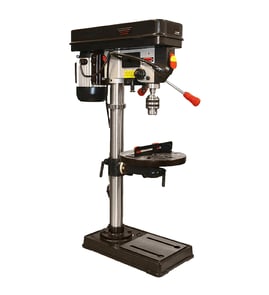

What is a good horsepower for a drill press?
For a Delta 17-900 16-1/2" drill press, a good horsepower depends on what you drill most often: for typical home shop work in wood and light metal, 1/2 HP is a solid target; for frequent large bits, hole saws, or tougher metals, 3/4 HP to 1 HP is a better fit.
How to choose the right HP for your work
Horsepower matters most when you push larger diameter bits, drill deeper holes, or work in harder materials. Use this quick guide:
- 1/3 to 1/2 HP: general woodworking, plastics, light-duty metal drilling
- 3/4 HP: frequent metalwork, larger Forstner bits, moderate hole saw use
- 1 HP: heavy-duty drilling, larger hole saws, thicker steel (with proper speed and feed)
- More HP: usually only needed for production-level work or very large cutters
HP is only part of performance (speed control matters)
On the Delta 17-900, you get multiple belt-and-pulley spindle speeds. Matching spindle speed to the bit size and material often prevents stalling more effectively than simply buying more HP.
- Use slower speeds for larger bits and metal
- Use faster speeds for smaller bits and wood
- Keep belts properly tensioned to reduce slip and power loss
A typical “power vs. control” tradeoff looks like this:
| If you mostly drill... | HP to prioritize | What else to prioritize |
|---|---|---|
| Small holes in wood | 1/2 HP | higher speeds, sharp bits |
| Mixed wood and light metal | 1/2 to 3/4 HP | wide speed range, stable table |
| Larger holes and tougher metals | 3/4 to 1 HP | low speeds, rigid setup, proper feed |
Why it matters
Choosing the right HP helps you avoid stalling, belt slip, and overheating, but correct setup is just as important. The Delta 17-900 manual also emphasizes safe electrical practices (proper grounding and correct extension cord type and gauge), which directly affects motor performance and safety.
Setup tips that protect power and accuracy
- Use sharp bits and the right bit style (twist bit vs. Forstner vs. hole saw)
- Clamp the workpiece; do not hand-hold material
- Reduce feed pressure when the motor slows; let the bit cut
- Set the table back to true 90 degrees using the alignment pin after tilting
- Use a properly grounded outlet and a heavy-enough 3-wire extension cord
For model-specific speed changes, belt positioning, and electrical requirements, follow the 17-900 owner's manual. For parts lookup by model number, search on Sears PartsDirect.
Last updated: February 2026
What is the 4 inch rule for drill press?
The 4-inch rule for a drill press means we keep our hands and fingers at least 4 inches away from the rotating drill bit, chuck, and spindle while the Delta 17-900 drill press is running. This reduces the chance of accidental contact if the workpiece shifts or our grip slips.
How to follow the 4-inch rule on a drill press
- Clamp the workpiece to the table or hold it in a vise instead of holding it by hand.
- Keep hands on the clamp, vise handle, or feed handles, not near the bit.
- Stop the drill press before clearing chips or moving scrap pieces.
- Never do layout, assembly, or set-up work on the table while the tool is operating.
- Start the drill press only when the bit is clear of the workpiece.
Related safety rules that matter just as much
The 4-inch rule works best when it is paired with these core drill press habits (all consistent with the Delta 17-900 safety guidance):
| Safety habit | What it prevents | Quick tip |
|---|---|---|
| Remove the chuck key before starting | Key becoming a projectile | Put the key down in the same spot every time |
| Lock the bit securely in the chuck | Bit slipping or wobbling | Tighten the chuck in all key positions |
| Adjust table/depth stop | Drilling into the table | Set depth stop before powering on |
| Support large workpieces | Workpiece tipping or spinning | Support at table height |
Why it matters
A drill press can grab a workpiece and spin it instantly. Keeping a 4-inch buffer gives us reaction time and space, especially when drilling metal, hardwood, or larger stock.
Where to confirm model-specific operating guidance
For the Delta 17-900, we follow the safety and operation steps in the 17-900 owner's manual. For parts lookup and ordering by model number, use the parts list for this model or search on Sears PartsDirect.
Last updated: February 2026
What size is a Delta 17 900 drill press?
The Delta 17-900 is a 16-1/2 inch floor model drill press (16-1/2 inch swing). For overall footprint and setup clearances, use the mounting dimensions and stability guidance in the 17-900 owner's manual, then size your stand or plywood base accordingly.
What “size” means on this drill press
On drill presses, “size” usually refers to swing, not the height.
- Swing: 16-1/2 inches (this is the model’s size class)
- Capacity reference: swing equals about 2x the throat distance (center of spindle to column)
- Mounting footprint: determined by the base and mounting-hole spacing
- Shop space planning: include room for the table to rotate and for long workpieces
Mounting and footprint guidance (practical sizing)
If you are planning a bench, stand, or mobile base, the manual’s mounting instructions are the best way to size it correctly.
- For non-permanent setups, mount the drill press to a plywood board at least 3/4 inch thick
- Drill two 3/8 inch holes spaced 10 inches apart to match the base mounting holes
- Use a plywood board at least 21 inches x 28 inches
- The board should extend at least 3 inches beyond each edge of the drill press base
Quick sizing table
| What you’re sizing for | What to use | Typical goal |
|---|---|---|
| Model “size” | Swing | 16-1/2 inches |
| Mounting holes | Hole diameter and spacing | 3/8 inch holes, 10 inches apart |
| Base board | Minimum board size | 21 inches x 28 inches |
| Stability margin | Board overhang | 3 inches minimum beyond base |
Why it matters
Choosing the right “size” prevents tipping, vibration, and inaccurate drilling. A stable base and adequate clearance also make it easier to drill larger panels, use clamps, and keep the workpiece against the column for safer control.
Ordering parts and confirming details
For replacement parts for your Delta 17-900 drill press, start with the parts list for this model, or search by model number on Sears PartsDirect.
Last updated: February 2026