Owner’s manual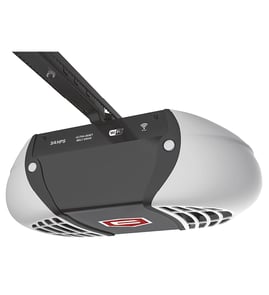



What is the life expectancy of a Craftsman garage door opener?
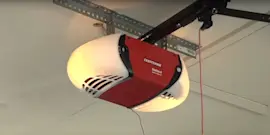
A Craftsman garage door opener typically lasts 10 to 15 years with normal residential use. For your Craftsman 13953641SRT, consistent maintenance and correct force and limit settings help you reach that lifespan and reduce wear on the motor, drive system, and safety sensors.
What affects lifespan the most
- Cycles per day (more opens and closes equals faster wear)
- Door balance and spring condition; an unbalanced door overworks the opener
- Chain tension and drive wear (especially on chain-drive units)
- Safety sensor alignment (misalignment can cause repeated reversals and strain)
- Force/limit settings that are too aggressive
Maintenance schedule we recommend (based on the manual)
Your 13953641SRT manual calls out a simple routine that directly impacts longevity:
- Once a month: Manually operate the door; if it binds or feels unbalanced, get the door serviced.
- Twice a year: Confirm the door opens and closes fully; adjust limits and/or force if needed.
- Twice a year: Repeat the safety reverse test after any force or limit adjustment.
- Twice a year: Check and adjust chain tension (disconnect the trolley first).
- Once a year: Oil door rollers, bearings, and hinges (do not grease the tracks).
For the exact steps and intervals, follow the owner's manual.
Signs it is near end of life
| Symptom | What it usually means | What to do first |
|---|---|---|
| Motor hums briefly, then stops | Door load too high or internal drive issue | Check door balance; do not increase force |
| Needs maximum force to move the door | Door is binding or springs are failing | Disconnect trolley and test door by hand |
| Door will not close consistently | Safety sensors obstructed or misaligned | Clear/align sensors and retest |
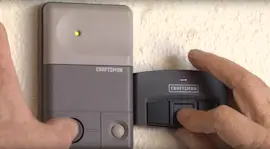
| Remote range is poor | Weak remote battery | Replace the 12-volt remote battery |
Why it matters
A garage door opener is designed to move a properly balanced door. When the door is heavy, binding, or the safety system is out of adjustment, the opener compensates by straining, which shortens the life of the motor and drive components.
If you are troubleshooting blinking lights or diagnostic patterns, use our Craftsman error codes guide to narrow down the failure quickly.
Last updated: February 2026
Where can I buy Craftsman garage door opener parts?
You can buy replacement parts for your Craftsman garage door opener model 13953641SRT through our parts listings and diagrams, using the exact model number and the part number/description from the opener. Your owner's manual also lists repair parts and shows where to find the model label.
What to have ready before you order
Having the right details prevents ordering the wrong gear kit, logic board, or safety sensor hardware.
- Product type: garage door opener
- Model number: 13953641SRT (the label is typically under the light lens on the front end panel)
- Part number and part description (from the parts list in the manual)
- A symptom description (for example: door reverses, motor hums, lights blink)
Common parts customers replace on this Craftsman opener
Your manual includes repair parts lists for the rail assembly, installation hardware, and opener assembly. Typical replacement items include:
- Gear and sprocket assembly
- Drive/worm gear kit (with grease)
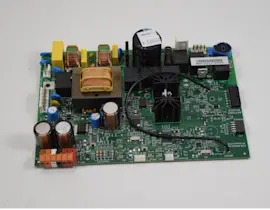
- Receiver logic board assembly
- Capacitor and capacitor bracket
- Light socket and lens
Use symptoms to narrow down the right part
If you are not sure which part failed, match the symptom first, then confirm the part number in the manual.
| Symptom | Most likely area to check | What to do next |
|---|---|---|
| Motor runs but door does not move | Drive gear/worm gear | Inspect for stripped plastic gear teeth; confirm kit in the parts list |
| Opener has no power | Line cord, wiring, logic board | Verify outlet power; check connections; match the correct board number |
| Door will not close and lights blink | Safety sensors | Check alignment and wiring; correct obstructions |
| Remote or wall control issues | Receiver/logic board, programming | Reprogram and troubleshoot controls |
Helpful DIY resources
- Use Craftsman error codes to interpret blinking lights or diagnostic codes and target the right repair.
Why it matters
Garage door opener parts are model-specific; ordering by 13953641SRT and confirming the exact part number from the parts list helps ensure proper fit, safe operation, and fewer repeat repairs.
Last updated: February 2026
What are the common problems with Craftsman garage door openers?
Common problems on the Craftsman 13953641SRT garage door opener are power and control issues (no response from wall control or remote), safety sensor alignment/obstructions that prevent closing or cause reversing, and door balance or spring problems that make the motor strain or hum. Use the troubleshooting steps in the owner's manual to match symptoms to fixes.
Most common symptoms and what they usually mean
- Opener does nothing (wall control and remote): outlet has no power, breaker/fuse tripped, door lock engaged, or motor overload protector tripped (wait about 15 minutes and retry).
- Remote works but wall control does not: wall control not lit, wiring issue, staple short, or broken bell wire.
- Door reverses and opener lights blink for about 5 seconds: safety reversing sensors are blocked or misaligned.
- Motor hums briefly but door will not move: door lock engaged, door binding, or door spring/balance problem.
- Door is heavy or opener strains: door is out of balance or springs are failing; do not increase force to compensate.
Quick checks we recommend (in order)
- Confirm the opener has power (test the outlet with a lamp).
- Make sure all manual door locks are disabled.
- Check the safety sensor “eyes” for alignment and obstructions; clean the lenses.
- Pull the emergency release and move the door by hand; it should move smoothly and stay supported by the springs.
- If the opener stopped after repeated cycles, wait 15 minutes for the overload protector to reset.
What to do based on the symptom
| Symptom | Most likely cause | Best next step |
|---|---|---|
| No operation from wall control or remote | No power or overload trip | Check breaker/outlet; wait 15 minutes |
| Remote works, wall control doesn’t | Wall control wiring issue | Check wall control light; inspect/verify wiring |
| Reverses while closing, lights blink | Safety sensor issue | Remove obstruction; realign sensors |
| Strains, hums, or needs max force | Door balance/spring issue | Disconnect trolley; test door balance |
Why it matters
These problems are tied to safety features and door mechanics. A misaligned sensor can stop closing to prevent injury, and an out-of-balance door can overload the motor and wear drive components faster.
For code and light-flash style diagnostics, use our Craftsman error codes reference alongside the symptom chart in your manual.
Last updated: February 2026
Is it cheaper to repair or replace a garage door opener?
For a Craftsman 13953641SRT garage door opener, it’s cheaper to repair when the problem is isolated (remote battery, safety sensor alignment, wall control wiring, chain tension, limit or force settings). Replace the opener when repairs are frequent, the motor or drive system is failing, or the total repair cost approaches the price of a new unit.
Quick decision guide (repair vs. replace)
- Repair if the opener has power but won’t run due to a simple cause (tripped breaker, frozen door, door lock engaged).
- Repair if the remote works inconsistently and a battery or reprogramming fixes it.
- Repair if the door won’t close because the safety reversing sensors are blocked or misaligned.
- Repair if the door travel is off and you can correct limits/force, then re-test safety reverse.
- Replace if the opener hums briefly and won’t move the door after basic checks, or if major components are worn and you are stacking repairs.
- Replace if the opener is very old and you want quieter operation and updated features.
Typical cost comparison
| Scenario | Usually makes sense | Why |
|---|---|---|
| Remote, wall control, sensor, or adjustment issue | Repair | Lower parts and labor; fast fix |
| Door is heavy/unbalanced due to springs or hardware | Repair the door system first | Opener strain is a symptom; do not “force adjust” around it |
| Motor/drive system failure or repeated breakdowns | Replace | Big-ticket repair; reliability improves with a new unit |
Model-specific checks we use first (before spending money)
These steps come straight from the troubleshooting and maintenance guidance for this Craftsman opener:
- Confirm the outlet has power (test with a lamp); check breaker/fuse.
- Disable any door locks; a locked door can mimic opener failure.
- If the opener runs by remote but not wall control, check wall control wiring and connections.
- Clear obstructions and align the safety reversing sensors.
- If repeated use tripped the overload protector, wait about 15 minutes and try again.
- If the door is hard to lift manually, stop and address door balance/springs; do not increase force to compensate.
For adjustment procedures and the required safety reverse test after changes, use the owner's manual.
Why it matters
A garage door opener is designed to move a properly balanced door. If the door is binding or the springs are failing, “repairing” the opener alone can lead to repeat failures and unsafe operation.
Last updated: February 2026