Error Codes


Can I air fry in my KitchenAid convection oven?
The KitchenAid KEBC101KSS06 is a thermal (non-convection) wall oven, so it does not have an air fry or convection fan mode. You can still get air-fryer-like crisping by using high heat, a rack-over-pan setup, and flipping food for even browning.
Best way to get “air fry” results in a thermal oven
Use your regular Bake or Broil functions to maximize browning while letting heat circulate around the food.
- Preheat fully; crisping depends on steady high heat.
- Elevate food on a wire rack set over a sheet pan (airflow under the food matters).
- Leave space between pieces; crowding traps steam.
- Flip or rotate halfway through for even browning.
- Finish with a short broil (watch closely) to deepen color and crisp edges.
Starting settings (quick guide)
These are reliable baselines for most wall ovens; adjust for thickness and your preferred doneness.
| Food type | Bake temperature | Typical time | Optional finish |
|---|---|---|---|
| Frozen fries, nuggets | 425°F | 12 to 25 min | 1 to 3 min broil |
| Wings, breaded items | 425°F | 25 to 40 min | 1 to 2 min broil |
| Vegetables | 425°F | 15 to 25 min | None or brief broil |
What cookware works best
- Best: wire rack over sheet pan, shallow metal pan
- Good: perforated pan (if you have one that fits)
- Avoid: deep glass/ceramic dishes (they steam food), foil covering the rack
Why it matters
Air frying is mainly fast heat transfer and moisture control. Since KEBC101KSS06 does not circulate air with a fan, the rack setup and a controlled broil finish are what create the crisp exterior.
If browning is weak or cooking seems off
Uneven browning or long cook times can also point to a heating or temperature-sensing issue. For temperature accuracy problems, a common check is the wall oven temperature sensor WPW10131825.
Last updated: February 2026
How to know if the KitchenAid wall oven thermostat is bad?
On your KitchenAid KEBC101KSS06 electric wall oven, a bad thermostat or temperature-control safety can cause overheating, underheating, or big temperature swings even after you try calibration. The fastest way to confirm is to compare actual oven temperature to the set temperature and then test the related temperature-sensing and limit components.
Common signs the thermostat or temperature control is failing
- Oven consistently runs hot or cold by more than about 25°F
- Temperature swings widely during baking (food browns unevenly)
- Oven overheats and may shut down until it cools
- Preheat takes much longer than normal
- Broil or bake seems weak even though the oven is “on”
Quick checks we recommend before replacing parts
- Verify the symptom: Place an oven-safe thermometer in the center of the cavity; preheat to 350°F and record readings every 5 minutes for 20 to 30 minutes.
- Power reset: Turn the breaker off for 1 minute, then back on (control glitches can mimic a bad thermostat).
- Inspect the sensor circuit: A failing sensor often looks like a thermostat problem. For this model, the key part to check is the wall oven temperature sensor WPW10131825.
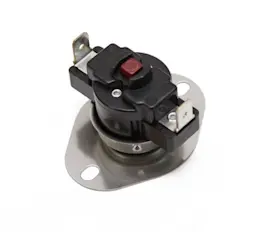
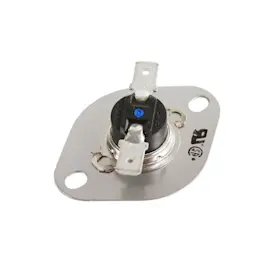
- Check for overheating protection trips: If the oven shuts down when hot, the range high-limit thermostat WP9759242 can be involved.
What to test (and what the results mean)
Use a multimeter with power disconnected from the oven.
| What you test | What you’re looking for | What it points to |
|---|---|---|
| Temperature accuracy (thermometer test) | Average temp far from setpoint | Sensor, control, or calibration issue |
| Sensor wiring and connector condition | Loose, corroded, heat-damaged | Intermittent temp readings |
| High-limit behavior | Oven cuts out when hot | High-limit opening due to heat or airflow issue |
| Cooling airflow | Fan not running when oven is hot | Cooling fan or airflow restriction |
Why it matters
Accurate temperature control protects baking results and prevents heat damage to wiring, the control area, and door components. Catching an overheating condition early also helps avoid repeat shutdowns and nuisance trips.
Helpful DIY resource
Last updated: February 2026
How to reset a KitchenAid wall oven?
To reset your KitchenAid wall oven model KEBC101KSS06, we recommend doing a simple power reset: turn the oven off, cut power at the breaker for about 1 minute, then restore power and confirm the display returns to normal. This clears many control glitches and lockups.
Quick reset steps (power cycle)
- Press Cancel/Off to stop any active bake, broil, or self-clean cycle.
- Turn OFF the oven circuit breaker (or remove the fuse) at your home electrical panel.
- Wait 60 seconds (2 to 5 minutes is fine if the control was acting erratic).
- Turn the breaker ON.
- Set the clock if prompted, then test Bake and Broil.
If the display is blank or the oven still will not respond
A reset will not fix a failed component. These checks narrow it down:
- Verify the breaker is fully seated (flip OFF, then ON again).
- Confirm the oven is not in a lock mode (door lock issues can mimic a “frozen” control).
- If the oven heats incorrectly after reset, check common heat-control parts like the wall oven temperature sensor WPW10131825.
- If the oven overheats or shuts down during use, a safety device like the range high-limit thermostat WP9759242 can be involved.
What a reset does (and does not) do
| Reset type | What it helps | What it will not fix |
|---|---|---|
| Breaker reset (recommended) | Frozen keypad, blank display, minor control glitches | Bad sensor, failed element, wiring damage, failed control board |
| Cancel/Off only | Stops a cooking cycle | Power-related lockups |
Why it matters
A breaker reset is the fastest, safest first step for KEBC101KSS06 when the control panel is unresponsive. If symptoms return quickly, the issue is usually heat sensing, door lock hardware, wiring, or a failing electronic control.
Last updated: February 2026
What is the error code f6 e6 on a Kitchenaid oven?
On the KitchenAid KEBC101KSS06 electric wall oven, error code F6 E6 points to a communication problem in the upper oven controls (a loss of communication between control components). This is usually caused by a loose connection, a failing sensor or control, or a wiring issue.
What to do first (safe, quick checks)
- Reset power: turn the breaker OFF for 1 minute, then ON; recheck for the code.
- If the code returns, avoid self-clean until the issue is resolved (self-clean heat can worsen marginal wiring).
- Check for obvious heat damage: look for melted insulation or discoloration near harnesses.
- If you are comfortable with electrical testing, use a meter to check likely inputs (sensor resistance, continuity).
- If the oven is dead or trips the breaker, stop and schedule service.
Parts that commonly relate to F6 E6 symptoms
Communication faults often show up when a feedback device or safety device is out of range, or when wiring is compromised.
- Wall oven temperature sensor WPW10131825
- Range high-limit thermostat WP9759242
- Wall oven transformer WP9760588
- Terminal block WP8203546
Quick symptom-to-part guide
| Symptom you notice | Most likely area to check | Why it matters |
|---|---|---|
| Oven heats erratically or overshoots | Temperature sensing circuit | Bad readings can trigger control communication faults |
| Oven shuts down when hot | High-limit thermostat, cooling airflow | Overheat protection can interrupt operation |
| Display glitches or intermittent power | Transformer, terminal block, wiring | Unstable low-voltage power disrupts control signals |
Why it matters
F6 E6 is not just a nuisance code; it usually means the oven control system is losing reliable feedback or power. Fixing it early helps prevent no-heat, runaway temperature, or repeated shutdowns.
Helpful DIY testing guidance
- How to use a multimeter to test electrical parts video
- How to tell if a fuse is blown
- How to repair broken or damaged wires video
Last updated: February 2026
What is the life expectancy of a KitchenAid oven?
A KitchenAid wall oven like model KEBC101KSS06 typically lasts 10 to 15 years with normal household use and basic maintenance. Frequent high-heat self-clean cycles, heavy daily baking, and heat-related part wear can shorten that lifespan.
Typical lifespan and what affects it
Most electric built-in ovens reach their best reliability when heat is managed and airflow stays clear.
- Usage frequency: daily cooking wears heating and door components faster
- Self-clean habits: repeated self-clean cycles accelerate heat stress on wiring and controls
- Ventilation: blocked cooling airflow raises internal temperatures
- Power quality: loose connections can overheat terminals and cause intermittent failures
- Door seal condition: heat leaks make the oven run longer to maintain temperature
Parts that commonly influence “end of life” decisions
When an oven starts struggling to preheat, holds uneven temperatures, or overheats, these parts are often involved:
- Wall oven temperature sensor WPW10131825
- Bake element 4451175
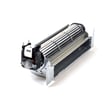
- Blower WPW10176670
- Range high-limit thermostat WP9759242
Quick symptom-to-part guide
| Symptom | Common cause | Part to check first |
|---|---|---|
| Oven temperature swings or is inaccurate | Sensor drifting out of range | Temperature sensor |
| Slow preheat or no bake heat | Weak or broken bake element | Bake element |
| Oven shuts off or trips on high heat | Overtemp protection opening | High-limit thermostat |
| Cabinet gets very hot, fan noisy, or no fan | Cooling fan issue | Blower |
Why it matters
Knowing the typical 10 to 15 year life expectancy helps you decide whether to repair or replace. If your KEBC101KSS06 is near that age and needs multiple heat-related parts, a targeted repair (sensor, element, or blower) often restores performance and extends service life.
Last updated: February 2026
What kind of outlet does a wall oven need?
Most KitchenAid built-in wall ovens like model KEBC101KSS06 are hardwired to a dedicated 240-volt circuit (not a standard 120V receptacle); the exact connection method depends on your home wiring and the oven’s junction box setup. If the oven is not powering correctly, also inspect the power connection area and the terminal block WP8203546.
Typical electrical requirements for a wall oven
In most U.S. installations, a single electric wall oven uses:
- 240V, 60 Hz supply (two hot legs plus ground; neutral may be used depending on configuration)
- A dedicated circuit (no other appliances on the same breaker)
- Copper conductors sized to the circuit (commonly 10 AWG for 30A; heavier gauge for higher amperage)
- A junction box (hardwire) connection rather than a plug-in outlet
Outlet vs hardwire: what you should expect
Many wall ovens are designed to be hardwired. If your installation uses a receptacle, it is typically a 240V range-style receptacle matched to the oven’s rated amperage and local electrical code.
| Connection style | What it means | Most common for wall ovens |
|---|---|---|
| Hardwired to junction box | Oven wiring connects with approved connectors in a box | Yes |
| Plug-in receptacle | Oven has a cord and plugs into a 240V outlet | Sometimes |
Quick checks before you buy parts or schedule service
Turn power off at the breaker before inspecting anything.
- Confirm the breaker is 2-pole and sized correctly for the oven circuit
- Verify you have 240V at the junction box (use a meter rated for the job)
- Look for burnt wiring or loose lugs at the terminal connection point
- If the oven is dead or intermittent, check for heat damage at the terminal block area
- If you see melted insulation or arcing marks, stop and have the wiring repaired before operating
Why it matters
Wall ovens draw high current. Using the wrong outlet type, undersized wire, or a shared circuit can cause nuisance tripping, poor heating performance, or overheated connections at the terminal block.
Last updated: February 2026