Owner’s manual


What is the lifespan of an LG dryer?
An LG dryer typically lasts 10 to 15 years. For your LG DLG2532W, consistent airflow maintenance (lint screen and venting) and quick fixes for wear items like the drum belt and idler pulley are the biggest factors in reaching that lifespan; see the DLG2532W owner's manual for model-specific care and safety guidance.
What affects dryer lifespan the most
- Vent restriction (long dry times, overheating, extra wear on thermostats)
- Lint buildup inside the cabinet and blower housing
- Overloading (stresses the drum belt, rollers, and motor)
- Heat system cycling issues (can overwork sensors and safety thermostats)
- Delayed repairs when you hear squealing, thumping, or grinding
Maintenance schedule we recommend
| Task | How often | Why it matters |
|---|---|---|
| Clean lint screen | Every load | Keeps airflow strong and drying times short |
| Check vent airflow at outside hood | Monthly | Prevents heat buildup and shutdowns |
| Clean/inspect vent duct run | Every 6 to 12 months | Reduces overheating and wear |
| Listen for belt/roller noises | Ongoing | Catches failures before they damage other parts |
Parts that commonly wear as a dryer ages
If your DLG2532W is noisy, not tumbling, or taking longer to dry, these are common wear items to check:
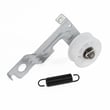
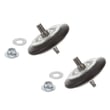
- Dryer drum belt 4400EL2001F
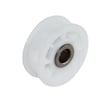
- Dryer idler pulley 4560EL3001A
- Dryer high-limit thermostat 6931EL3003C
- Dryer thermistor AGM30045804
Why it matters
A dryer that is kept clean and vented correctly runs cooler and finishes cycles faster. That reduces stress on the motor, belt drive, and heat safety components, which is the simplest way to get the full 10 to 15 years from an LG dryer.
Last updated: February 2026
How do you reset the flow sensor on a LG dryer?
On the LG DLG2532W dryer, the Flow Sense (airflow) warning clears after you fix the airflow restriction and then power-cycle the dryer. We reset it by cleaning the lint filter and exhaust venting, then unplugging the dryer (or switching the breaker off) for about 5 minutes before restarting a cycle.
What to do first (this is what actually “resets” Flow Sense)
- Clean the lint screen completely (wash and dry it if it has fabric softener residue).
- Check the vent hood outside; remove lint buildup and confirm the damper opens freely.
- Inspect the entire vent run for crushed ducting, kinks, or heavy lint.
- Confirm you are using 4-inch metal ducting (not plastic or thin foil).
- Shorten the vent run and reduce elbows where possible.
For LG’s venting requirements and setup details, follow the owner's manual.
Power reset steps
- Turn the dryer off.
- Unplug the power cord (or turn the breaker off).
- Wait 5 minutes.
- Restore power.
- Start a timed cycle and verify airflow at the outside vent.
Quick check: what you should see
| Check | Normal result | If not normal |
|---|---|---|
| Airflow at outside vent | Strong, steady flow | Vent restriction or crushed duct |
| Dry times | Typical for load size | Venting issue or moisture sensing issue |
| Lint screen | Clear mesh | Residue blocking airflow |
If the dryer still shows airflow problems
Flow Sense warnings are most often caused by vent restriction, but overheating protection can also trip if airflow is poor. If you are also seeing no-heat or overheating symptoms, common related parts on this model include the dryer high-limit thermostat 6931EL3003C and the dryer thermistor AGM30045804.
For code meanings and what to check next, use our LG dryer error codes guide.
Why it matters
Restricted airflow makes the dryer run hotter and longer, which increases wear on components and can cause repeated shutdowns or poor drying performance. Correct venting (short run, few elbows, 4-inch metal duct) keeps cycles accurate and efficient.
Last updated: February 2026
What is the most common problem with LG dryers?
The most common issue we see with LG dryers like model DLG2532W is restricted airflow, which causes long dry times, overheating, and cycles that stop early. A full lint filter, blocked venting, or a clogged lint housing are the usual culprits; heat and drum-wear parts can also contribute.
What to check first (fast, high-impact)
- Clean the lint screen before every load and confirm air is blowing strongly outside.
- Inspect the vent path for kinks, crushed flex duct, lint buildup, or a stuck exterior damper.
- Avoid plastic venting; use rigid or semi-rigid metal ducting for safer, steadier airflow.
- If the dryer tumbles but does not heat, confirm gas service is on (gas models) and check household power and breakers.
- If you hear squealing, thumping, or grinding, inspect the belt and pulley system.
Common symptoms and the parts most often involved
| Symptom | Most common cause | Parts on this model that often relate |
|---|---|---|
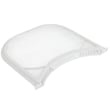
| Takes too long to dry | Vent restriction, lint buildup | Dryer lint screen housing 3550EL1006B |
| Shuts off or overheats | Poor airflow; temperature sensing reacting | Dryer thermistor AGM30045804, dryer high-limit thermostat 6931EL3003C |
| No heat (gas dryer) | Ignition or gas valve issue | LG dryer burner igniter 5318EL3001A, dryer gas valve AGM30063309 |
| Squeals or won’t tumble | Worn belt or idler pulley | Dryer drum belt 4400EL2001F, dryer idler pulley 4560EL3001A |
Why airflow problems matter
When airflow is restricted, heat cannot move out of the drum efficiently. That drives up drying time and can trigger temperature controls to limit heat or stop the cycle to protect the dryer. Keeping the venting and lint areas clear is the best way to prevent repeat problems.
Helpful references for LG dryer troubleshooting
- Use the troubleshooting charts and maintenance guidance in the owner's manual.
- If your dryer is showing a code, match it using LG dryer error codes.
Last updated: February 2026