Installation guide
 Owner’s manual
 Error Codes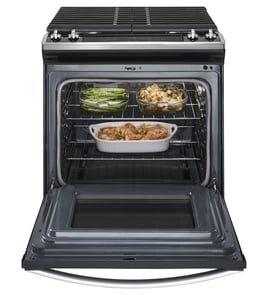



What does F350 mean on my GE stove?
On a GE JGBS30DEK2WW gas freestanding range, “F350” is not a standard, commonly published GE range fault code. In practice, it usually indicates the control is seeing an abnormal condition; the fastest path is to confirm the exact code display and then reset power and check for overheating or airflow issues.
What to do right away
- Press Clear/Off to stop any bake or broil cycle.
- Let the range cool for 30 to 60 minutes with the oven door closed.
- Turn the breaker off for 1 minute, then back on to reset the control.
- If the code returns immediately, stop using the oven and plan for service.
- If you smell gas, shut off the gas supply and ventilate the area.
Confirm the code and match it to GE guidance
Sometimes the display is misread (for example, “F3” plus another number, or “F350” when the actual code is “F3” and “50”). Use the JGBS30DEK2WW owner's manual to verify how your control displays fault codes and what the recommended reset steps are.
What the symptoms usually point to
| What you notice | Most likely area to check | Why it fits |
|---|---|---|
| Code appears during long baking or after self-clean | Heat management or airflow around the control area | Excess heat can trigger protective faults |
| Oven stops heating and code returns after reset | Control sensing a persistent fault | Reset does not clear an active problem |
| Code appears with normal cooking results | Keypad or control glitch | Intermittent electronics issue |
Why it matters
Fault codes are the range’s way of preventing unsafe temperatures or unreliable operation. Repeated codes mean the control is protecting the appliance, so continued use can lead to more shutdowns and inconsistent baking.
Helpful reference
For GE code patterns and troubleshooting steps, use our GE freestanding range error codes guide.
Last updated: January 2026
What is a JGBS30DEK2WW?
The GE JGBS30DEK2WW is a 30-inch gas freestanding range (a standard-width stove that stands on the floor) with a gas cooktop and a gas oven. It’s designed to fit a typical 30-inch range opening and uses a gas supply plus electrical power for ignition and controls; see the JGBS30DEK2WW owner’s manual for feature and operation details.
What this model includes (typical configuration)
Most GE gas freestanding ranges in the JGBS30 family are built around these core components:
- Gas cooktop burners for everyday cooking
- Gas bake burner and ignition system for oven baking
- Broil function (often in a lower broiler area or broiler drawer)
- Oven light and light socket
- Oven temperature control system (thermostat or electronic control, depending on version)
Key installation and fit basics
For the JGBS30DEK2WW, the installation guide calls out standard range dimensions and clearances that matter when you’re replacing an older unit or planning cabinetry.
- Nominal width: 30 inches
- Overall height: about 36 1/4 inches (adjustable with leveling legs)
- Depth varies depending on whether you measure with the handle
- Anti-tip bracket use is required for safe installation
| Measurement area | What to expect | Why it matters |
|---|---|---|
| Width | 30 inches | Fits standard range cutouts |
| Height | ~36 1/4 inches (adjustable) | Aligns cooktop with countertop |
| Depth | Varies with handle | Affects door swing and aisle space |
Parts you’ll commonly see referenced for this range
If you’re identifying the appliance by parts or troubleshooting symptoms, these are common service items for this model family:
- Bake burner ignition WB13X40208 (ignites the oven bake burner)
- Oven light bulb and socket (for interior lighting)
- Oven door gasket (helps seal heat in the oven)
- Gas valve and regulator assembly (controls and regulates gas flow)
Why it matters
Knowing that JGBS30DEK2WW is a GE gas freestanding range helps you choose the correct parts (like igniters, door gaskets, and orifices), follow the right gas and clearance requirements, and use the correct operating and cleaning instructions.
Last updated: January 2026
What is the average lifespan of JGBS30DEK2WW?
A GE gas freestanding range like model JGBS30DEK2WW typically lasts 13 to 15 years with normal household use. Keeping burners clean, maintaining proper gas pressure, and fixing ignition issues early helps you reach that lifespan. For care steps, use the owner's manual.
What affects lifespan the most
- Burner and oven ignition reliability (weak igniters cause long heat-up times and extra wear)
- Heat and grease buildup under the cooktop and inside the oven cavity
- Proper installation clearances and sealed floor and wall openings (prevents drafts that disrupt burner operation)
- Gas supply stability (shut-off valve access, regulator condition)
- Door seal condition (heat loss makes the oven work harder)
Quick maintenance checklist (high impact)
- Clean burner caps and ports regularly; keep flames steady and blue.
- Wipe spills promptly to prevent corrosion and clogged burner passages.
- Check the oven door seal for gaps; replace if torn or flattened.
- If the oven struggles to light or takes longer to preheat, consider replacing the bake burner ignition WB13X40208.
- Replace the oven light if needed using the correct bulb type.
Common “end-of-life” symptoms vs. fixable issues
| Symptom | Most common cause | Typical fix |
|---|---|---|
| Oven slow to heat | Weak igniter | Replace igniter |
| Uneven baking | Temperature control drifting | Test and replace thermostat if needed |
| Yellow, lifting flames | Dirty burner or incorrect air mix | Clean burner, verify setup |
| Heat leaking at door | Worn gasket | Replace door gasket |
Why it matters
A range that is heating inefficiently can run longer cycles, waste fuel, and stress components like the igniter, thermostat, and door gasket. Addressing small performance issues early usually extends the service life of your JGBS30DEK2WW.
Last updated: March 2026