Owner’s manual
 Error Codes


What are the common problems with Kenmore Elite refrigerators?
Common problems on the Kenmore Elite 79574013411 bottom-mount refrigerator include weak or no cooling, frost buildup, water leaks, and unusual noises. These issues usually trace back to airflow restrictions, a defrost or drain problem, or a failing sealed-system or compressor-start component.
Most common symptoms and what they usually mean
- Not cooling or warm temperatures: dirty condenser area, failed fan, damper/airflow issue, or sealed-system trouble
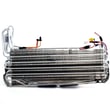
- Frost or ice buildup: defrost sensor or defrost control problem, or a door not sealing
- Water under the refrigerator or in the freezer: clogged/iced drain path or drain tube issue
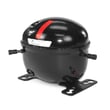
- Buzzing/clicking: compressor start relay cycling, or compressor struggling to start
- Bad odors: overdue air filter replacement or spills trapped in liners and drawers
Quick checks we recommend first (no parts swapping)
- Confirm controls are set correctly and vents are not blocked by food.
- Clean dust from the condenser area and make sure airflow around the cabinet is clear.
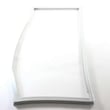
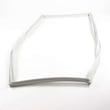
- Inspect door gaskets for gaps, rips, or areas that do not contact the cabinet evenly.
- Look for ice or debris in the drain area if you see puddles or freezer-floor ice.
- If your model supports it, use the diagnostic feature described in the 79574013411 owner's manual.
Parts that commonly relate to these problems
| Symptom | Common part involved | Example part for this model |
|---|---|---|
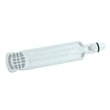
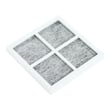
| Odors, stale air | Air filtration | Lg refrigerator air filter ADQ73214408 |
| Buzzing/clicking, no start | Start device | Refrigerator compressor start relay (model-specific match varies) |
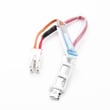
| Frost buildup | Defrost sensing | Refrigerator defrost sensor assembly |
| Leaks/puddles | Drain path | Refrigerator drain tube |
Why it matters
Catching airflow, defrost, and drain issues early helps prevent food spoilage, recurring ice buildup, and compressor overwork. The manual also outlines proper operation and diagnostic steps that can shorten troubleshooting time.
Last updated: January 2026
What size is Kenmore refrigerator model 79574013411?
Kenmore Elite refrigerator model 79574013411 is a bottom-mount style refrigerator; most units in this Kenmore 795 platform are about 33 inches wide, 31 to 34 inches deep (depth varies with handles), and about 68 inches tall. For the exact cabinet and overall dimensions, use the 79574013411 owner's manual.
Typical dimensions you should expect
Because depth is often listed two ways (with and without handles), we recommend checking both measurements before ordering a replacement door, bin, or planning a tight installation.
- Width: typically about 33 inches
- Height: typically about 67 to 69 inches
- Depth (cabinet only): typically about 30 to 32 inches
- Depth (with handles): typically about 33 to 35 inches
- Capacity: many Kenmore 795 bottom-mount models are in the low-to-mid 20 cu. ft. range
How to measure your refrigerator correctly
Use a tape measure and record each number twice (cabinet-only and overall). This prevents fit issues with cabinetry, door swing, and water line clearance.
- Measure width at the widest point of the cabinet (not the doors if they overhang).
- Measure height from floor to the top hinge cover area.
- Measure depth from the back to the front edge of the doors; then measure again to the front of the handles.
- Confirm you have extra space for door opening and airflow around the cabinet.
Quick reference table (what the labels usually mean)
| Spec label | What it includes | Why it changes |
|---|---|---|
| Width | Cabinet side-to-side | Door design and trim can add a little |
| Depth (without handles) | Cabinet and doors, no handles | Door thickness varies by model |
| Depth (with handles) | Adds handle projection | Handle style can add 2 to 4 inches |
| Height | Floor to top of cabinet/hinge area | Leveling feet and flooring matter |
Why it matters
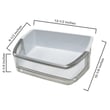
Correct dimensions help you avoid clearance problems, ensure proper ventilation, and prevent ordering the wrong-size storage parts (for example, a door bin like lg Kenmore refrigerator door bin AAP73252202).
Last updated: January 2026
Why is my Kenmore Elite refrigerator leaking water out of the bottom?
Water leaking from the bottom of your Kenmore Elite refrigerator model 79574013411 is usually caused by a defrost drain that is clogged or frozen, or by a leak in the water supply connections for the ice maker and dispenser. Use the steps in the 79574013411 owner's manual to safely access and check the drain and water line connections.
Most common causes (and what to check first)
- Clogged or frozen defrost drain: Water from normal defrosting cannot reach the drain pan and spills onto the floor.
- Loose or leaking water line connection: A compression nut or fitting at the rear water valve can seep.
- Cracked water tubing: Tubing to the dispenser or ice maker can split or rub through.
- Drain tube issue: A damaged or misrouted drain tube can let water escape before it reaches the pan (see refrigerator drain tube 5251JA3003D).
- Door not sealing: Warm air intrusion increases frost, which can overwhelm the drain during defrost.
Quick troubleshooting steps (safe, practical)
- Unplug the refrigerator; then pull it out and look for water trails from the rear water valve area.
- If the unit is connected to water, confirm the supply is cold water and water pressure is typically 20 to 120 psi.
- Inspect the 1/4-inch tubing and fittings; tighten connections that drip.
- Check the freezer floor and rear panel area for ice buildup that suggests a frozen defrost drain.
- Clear the drain path with warm water (a turkey baster works well) and remove debris if accessible.
- Verify doors close fully and gaskets sit flat all the way around.
What the symptoms usually mean
| What you see | Most likely source | Where to look |
|---|---|---|
| Water only after defrost cycles | Defrost drain clogged/frozen | Freezer floor, drain trough |
| Water near back wall/floor | Water line or valve connection | Rear lower area |
| Water near front, under doors | Drain overflow or door seal issue | Front edge, drain pan area |
| Ice buildup then leaking | Excess frost leading to drain freeze | Freezer evaporator area |
Why it matters
A small leak can turn into floor damage and can also cause icing that restricts airflow, leading to warmer temperatures in the fresh food section and more frequent defrosting.
Last updated: January 2026
What does DH mean on Kenmore Elite refrigerator?
On Kenmore Elite refrigerator model 79574013411, dH typically indicates a defrost heater (defrost) problem, meaning the refrigerator is not completing a normal defrost cycle. This can lead to frost buildup on the evaporator and warm temperatures in the fresh food section.
What you’ll usually notice
- Frost or ice buildup on the freezer’s back wall
- Refrigerator section warming up while the freezer still seems cold
- Fan noise changing (fan hitting ice) or reduced airflow from vents
- Water leaking or refreezing due to a restricted defrost drain
Quick checks we recommend first
- Power reset: Unplug the refrigerator (or turn off the breaker) for 5 minutes, then restore power.
- Confirm airflow: Make sure vents are not blocked by food packages.
- Look for heavy frost: If the freezer back panel is heavily frosted, the defrost system is the likely cause.
- Check door sealing: A poor seal can add moisture and worsen frost buildup.
Parts commonly involved in a dH/defrost issue
A dH condition is usually tied to the defrost circuit (heater, sensor, wiring, or control).
| What can fail | What it does | Common symptom |
|---|---|---|
| Defrost sensor/thermistor | Tells the control when to defrost and when to stop | Frost buildup, erratic temps |
| Defrost heater circuit (not listed here) | Melts frost off the evaporator | Solid ice on evaporator |
| Drain path | Moves defrost water to the drain pan | Water leaks, ice under drawers |
If you’re seeing frost buildup, the Refrigerator defrost sensor assembly 6615JB2005R is one model-matched part that can be involved.
Why it matters
When defrost is not working, frost can block airflow across the evaporator. The sealed system may still be fine, but the refrigerator cannot move cold air where it’s needed, so temperatures rise and food can spoil.
Where to find model-specific guidance
For control panel behavior, diagnostic steps, and component locations for model 79574013411, use the 79574013411 owner’s manual.
Last updated: January 2026