 Installation guide
 Owner’s manual
 Error Codes





How to check GE dishwasher model number?
On the GE dishwasher model GDF510PSJ2SS, we check the model number on the rating label located on the inside edge of the dishwasher door. Open the door fully and look along the inner door frame; the label lists both the model and serial number.
Where to look on the dishwasher
- Open the dishwasher door and inspect the inner door frame (the perimeter edge).
- Check the left side first; many GE labels are placed there.
- Look for a printed sticker or metal tag with MODEL and SERIAL fields.
- Wipe the area with a damp cloth if the label is dusty or spotted.
- Write the model number exactly as shown (letters and numbers).
What the label typically includes
| Label item | What it’s used for | Why you need it |
|---|---|---|
| Model number | Identifies the exact dishwasher version | Ensures correct parts fit and correct troubleshooting steps |
| Serial number | Identifies production run/date info | Helps match revisions and service information |
| Electrical ratings | Voltage/amps info | Useful for installation and diagnostics |
Why it matters
The exact model number (like GDF510PSJ2SS) is what we use to match GE dishwasher parts such as a door latch, spray arm, or control components. One character off can lead to ordering the wrong part.
Helpful tip for parts and service info
If you’re confirming the model before ordering parts or following setup steps, the GDF510PSJ2SS installation guide is the best reference to keep with your paperwork.
Last updated: February 2026
What is the average life expectancy of a GE dishwasher?
Most GE dishwashers, including model GDF510PSJ2SS, typically last 10 to 12 years with normal household use. Regular cleaning, correct loading, and fixing small issues early (like poor draining or weak wash action) help you reach the upper end of that range.
What affects lifespan the most
- Water quality and temperature (hard water and low hot-water temps shorten component life)
- Cleaning and maintenance (keeping the sump area and seals clean)
- How often you run it (multiple cycles daily adds wear to pumps, heater, and door parts)
- Installation quality (leveling, drain hose routing, and secure mounting)
- Early symptom repairs (addressing leaks, no-heat drying, or grinding noises quickly)
Quick maintenance checklist (high impact)
Use these habits to reduce wear on the circulation system, heater, and door components:
- Run hot water at the sink before starting a cycle.
- Keep the lower spray arm holes clear; remove debris if wash pressure seems weak.
- Clean the tub seal area and check for drips around the door.
- Avoid overloading; make sure spray arms spin freely.
- If the unit is newly installed or moved, confirm it is square and level and the drain hose is not kinked (installation details are in the installation guide).
Common “wear-out” parts and what they usually cause
| Symptom | Common wear area | Example part for GDF510PSJ2SS |
|---|---|---|
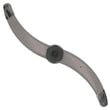
| Dishes not getting clean | Spray arm clogging or damage | Dishwasher spray arm, lower WD22X33499 |
| Poor drying or no heat | Heater circuit issues | Dishwasher heating element WD05X30818 |
| Door won’t latch or starts then stops | Latch/strike alignment or wear | GE dishwasher door latch lock WD21X10490 |
Why it matters
A dishwasher near the 10 to 12 year mark can still be a great candidate for repair if the tub is sound and the problem is isolated (latch, heater, spray arm, drain). Catching issues early helps prevent secondary damage to the pump, wiring, and seals.
For model-specific operating and care recommendations, follow the cleaning and usage guidance in the GDF510PSJ2SS owner’s manual.
Last updated: February 2026
What are the commonly replaced parts in a dishwasher?
On the GE GDF510PSJ2SS dishwasher, the most commonly replaced parts are the wash and drain components (spray arms, pumps, diverter), door and leak-prevention parts (latch, gasket), and heat and control items (heating element, user interface). These parts wear from normal use, clogs, and leaks.
Commonly replaced parts (and what they do)
- Spray arms: spin and distribute wash water; clogging and cracks reduce cleaning
- Circulation pump: drives wash pressure through the spray arms
- Diverter: routes water to different spray zones
- Drain pump and drain hose: remove dirty water; clogs and kinks cause standing water
- Door latch and strike: keep the door locked so the dishwasher can run
- Tub gasket: seals the tub opening to help prevent leaks
- Heating element: heats water and supports drying performance
Model-matched examples for GDF510PSJ2SS
| Symptom | Likely part area | Example part for this model |
|---|---|---|
| Dishes not getting clean | Spray, wash pressure | Dishwasher spray arm, lower WD22X33499 |
| Won’t start or stops mid-cycle | Door not latching | GE dishwasher door latch lock WD21X10490 |
| Not drying well or water not heating | Heating circuit | Dishwasher heating element WD05X30818 |
| Not draining | Drain path | Dishwasher drain hose WD24X10062 |
| Leaking at the door | Door seal | Dishwasher tub gasket WD08X23476 |
Quick checks before replacing parts
- Confirm the dishwasher is level; racks should not roll on their own and the door should close without rubbing
- Make sure the drain hose is not pinched behind the unit
- Clear debris from spray arm holes and check for cracks or wobble
- Verify the door closes firmly and the latch engages the strike
- If you recently installed a braided water line, confirm it does not have a check valve that restricts filling
Why it matters
Replacing the correct part restores wash pressure, heating, draining, and leak protection; that prevents repeat clogs, poor cleaning, and water damage. For installation-related issues (leveling, hose routing, securing to the cabinet), follow the installation guide.
Last updated: February 2026
What is the most common problem with GE dishwashers?
The most common problems we see on GE dishwashers like model GDF510PSJ2SS are not draining, leaking, and not starting or stopping mid-cycle. Many cases are caused by a clogged drain path, a door that is not latching fully, or a wash system issue that reduces spray pressure.
Most common issues and what to check first
- Not draining: Check the sink/disposal connection, air gap (if used), and make sure the drain hose is not kinked.
- Leaking: Inspect the door seal area for debris, check tub alignment, and confirm the door closes smoothly.
- Won’t start: Confirm the door closes and latches; a misaligned door can prevent a cycle from running.
- Poor cleaning: Look for blocked spray arm holes and loading issues that stop the arms from spinning.
- No heat or poor drying: Heating problems can reduce drying and cleaning performance.
Parts that commonly solve these symptoms (when a component has failed)
If basic checks do not fix it, these model-matched parts are frequent culprits:
- Drain problems: Dishwasher drain hose WD24X10062
- Door won’t latch or starts then stops: GE dishwasher door latch lock WD21X10490 and dishwasher door latch strike WD13X10071
- Poor cleaning or low spray pressure: Dishwasher spray arm, lower WD22X33499 (also check for clogs)
- Not drying or water not heating: Dishwasher heating element WD05X30818
Quick symptom-to-likely-cause guide
| Symptom | Most common cause | Best first action |
|---|---|---|
| Water left in tub | Drain hose kink/clog, drain pump issue | Check hose routing and sink/disposal connection |
| Door won’t start cycle | Latch not engaging, door alignment | Inspect latch/strike and door closing |
| Dishes still dirty | Spray arm blocked, circulation issue | Clean spray arm holes; verify arms spin freely |
| Wet dishes | Heating issue, rinse aid missing | Confirm heat option; use rinse aid |
Why it matters
Drain, latch, and wash-pressure problems can look like “the dishwasher is bad,” but they often come down to one blocked path, one misaligned door, or one worn part. Fixing the root cause prevents repeat clogs, leaks, and incomplete cycles.
Model-specific references
For installation-related causes (kinked drain hose, trapped utility lines, door rubbing the cabinet), follow the clearances and alignment checks in the installation guide. For operating tips and cycle behavior, use the owner's manual.
Last updated: February 2026





