Installation guide
 Owner’s manual
 Error Codes



How to tell if a Kenmore refrigerator compressor is bad?
On a Kenmore 2537034341F bottom-mount refrigerator, a “bad compressor” usually shows up as poor cooling with the unit trying to run, unusual clicking or repeated start attempts, or the compressor running hot while temperatures stay warm. Before condemning the compressor, we check power supply and airflow basics listed in the owner's manual.
Quick symptoms that point toward a compressor problem
- Refrigerator and freezer both warm even though the unit seems to be running
- Repeated clicking every few minutes (start attempt then shutoff)
- Compressor is very hot to the touch after running (use caution)
- Little to no vibration or sound from the compressor when it should be running
- Cooling improves briefly after unplugging and restarting, then fails again
Rule out common look-alikes first (fast checks)
These issues can mimic a failing compressor and are worth checking before parts replacement:
- Power quality: The manual notes performance can be affected if voltage varies by about 10% or more; low voltage can damage the compressor.
- Outlet setup: Plug into a properly grounded 3-prong receptacle; avoid extension cords and avoid GFI circuits if possible.
- Air circulation: Do not block the toe grille; restricted airflow can cause poor cooling and overheating.
- Room temperature: Installation guidance warns against locations below 55°F or above 110°F because the compressor cannot maintain proper temperatures.
What a technician tests (how “bad compressor” is confirmed)
A compressor diagnosis is typically confirmed with electrical and sealed-system checks.
| Test or observation | What it suggests |
|---|---|
| High start amperage then immediate shutoff/click | Hard-start condition, locked rotor, or start device issue |
| Compressor runs but pressures/temps do not change as expected | Inefficient compressor or sealed-system restriction |
| Windings continuity and insulation checks | Electrical failure inside compressor |
Parts that may be involved
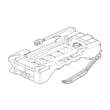
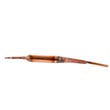
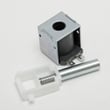
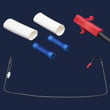
If testing shows the compressor itself has failed, the replacement part for this model is the refrigerator compressor 241706201. If the issue is in the sealed system (restriction or contamination), a technician may also address components such as the refrigerator filter dryer 5303305677.
Why it matters
A compressor is the heart of the cooling system. Misdiagnosing it can lead to unnecessary cost, while running a struggling compressor can worsen overheating and reduce cooling reliability.
Last updated: February 2026
How to tell what model Kenmore refrigerator?
Your Kenmore refrigerator’s model number is printed on the appliance ID label, usually inside the fresh food (refrigerator) compartment on a side wall or ceiling, or behind/under a crisper drawer. Once you find it, match that exact number when looking up parts and instructions in the owner's manual.
Where to look for the model number label
Check these common locations first (use a flashlight and look for a white or silver sticker/plate):
- Inside the refrigerator section on the left or right side wall
- On the ceiling of the refrigerator section (near the light housing)
- Behind the crisper drawers (remove the drawer to see the back wall or side wall)
- Along the door frame area (visible when the door is open)
- Behind the toe grille or kick plate at the bottom front (some installations)
How to read and use the model number
For parts and troubleshooting, the exact characters matter.
- Write the model number exactly as shown (numbers and letters)
- Include any suffix letters or digits (they can affect part compatibility)
- Use the model number to pull the correct diagrams and parts list
- Use the model number to match the correct Use & Care Guide and installation instructions
Example for this page
| Item | Example |
|---|---|
| Model number format | 2537034341F |
| Brand | Kenmore |
| Product type | Bottom-mount refrigerator |
If the label is hard to find or unreadable
These steps usually solve it quickly:
- Remove the crisper drawers and look on the side wall and back wall
- Wipe the label gently with a damp cloth (grease and dust can hide the print)
- Take a close-up photo and zoom in to read faded characters
- Check your paperwork and packaging; the model number is often printed there
Why it matters
Kenmore refrigerators can look similar across multiple series, but parts like door gaskets, temperature sensors, and ice maker assemblies are model-specific. Using the exact model number helps ensure you order the right replacement part the first time.
Last updated: February 2026
What are the disadvantages of a bottom freezer refrigerator?
Bottom-freezer refrigerators like the Kenmore 2537034341F make fresh-food access easier at eye level, but the tradeoffs are mostly in freezer ergonomics and service complexity. The freezer drawer sits low, so heavy frozen items are harder to lift, and drawer-style storage can be less convenient for quick access and organization.
Common disadvantages you may notice
- More bending and lifting: you reach down for frozen foods, ice, and bulky items.
- Deep drawer organization: items can stack and get buried, especially in a packed freezer.
- Heavier drawer loads: a full freezer drawer can feel stiff or hard to glide smoothly.
- Kids access and safety: children can pull out a heavy drawer and reach heavier items.
- More places for air leaks: drawer gaskets and alignment matter; poor sealing can cause frost or temperature swings.
- Drain and defrost sensitivity: bottom-freezer designs can be more prone to water pooling if the drain system ices up.
Bottom freezer vs. top freezer: quick comparison
| Feature | Bottom freezer | Top freezer |
|---|---|---|
| Fresh-food access | Easier (eye level) | Requires bending |
| Freezer access | Requires bending | Easier |
| Organization | Deep drawers, stacking | Shelves, easier visibility |
| Typical service pain points | Drawer sealing, drain/defrost issues | Door sealing, airflow issues |
What to do if the disadvantages are causing problems
If you are seeing frost, warm temps, or water on the floor, these checks solve many bottom-freezer complaints:
- Confirm the cabinet is level and slightly tilted back so doors close tightly (a common efficiency tip).
- Make sure the freezer drawer closes fully and seals on all sides.
- Avoid overloading the freezer; most freezers run best when at least two-thirds full.
- Leave space between packages so cold air can circulate.
- If you have an ice maker, recheck water connections for leaks after installation and again later.
For model-specific setup and leveling details, use the installation guide.
Why it matters
Most “bottom freezer” downsides show up as everyday usability issues (bending, drawer access) or efficiency issues (air leaks, frost, puddles). Keeping the unit level and the drawer sealing correctly helps your Kenmore 2537034341F cool more consistently and waste less energy.
Last updated: February 2026
What is the bottom part of a refrigerator called?
The bottom area of a Kenmore 2537034341F refrigerator is commonly called the machine compartment; it typically houses key cooling components like the compressor, condenser fan, and related airflow parts behind the toe grille or rear access cover. For your model’s component locations and clearances, use the 2537034341F owner's manual.
What you’ll usually find in the bottom section
These parts work together to move heat out of the refrigerator so the fresh food and freezer sections can stay cold:
- Compressor: pumps refrigerant through the sealed system
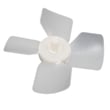
- Condenser fan and blade: moves air across the condenser area
- Condenser coils (often near the bottom or back): release heat
- Drain pan (varies by design): catches defrost water for evaporation
- Toe grille (front bottom): protects the compartment and allows airflow
Why this matters
When the bottom compartment is blocked by dust, pet hair, or a loose toe grille, airflow drops and the compressor can run longer. Your manual also notes that the compressor normally runs continuously except during defrost, and it needs proper ventilation and installation clearances to maintain temperatures.
Quick identification guide
| What you’re looking at | Common name | What it does |
|---|---|---|
| Black metal “can” with lines attached | Compressor | Pressurizes and circulates refrigerant |
| Fan near the compressor area | Condenser fan | Cools the condenser and compressor area |
| Slotted cover at the very bottom front | Toe grille | Lets air in and out; protects components |
| Warm air coming from lower back | Condenser airflow | Normal heat rejection during operation |
Helpful tips before you inspect anything
- Unplug the refrigerator before removing any access panels.
- Keep the toe grille unobstructed; the installation instructions warn not to block it because air circulation is essential.
- Maintain typical clearances for this model: about 3/8 inch at the sides and top and 1 inch at the back (per the manual).
- If you hear a new rattling or buzzing at the bottom, check that the toe grille is seated and nothing is vibrating against the cabinet.
Last updated: February 2026