Installation guide
 Owner’s manual
 Error Codes


Where to find part number on GE dryer?
On your GE gas dryer model DWSR483GG7WW, the model and serial information (used to look up the correct parts) is on a label on the front of the dryer behind the door. Use that model number when ordering replacement parts to ensure an exact fit; see the DWSR483GG7WW owner's manual.
Where to look on the dryer
Check these common label locations first (starting with the most likely for this model):
- Open the dryer door and look on the front panel behind the door opening
- Check the door frame area around the opening
- Look along the inside edge of the door (less common)
- If the label is worn, use a flashlight and view it from an angle to read faint print
What numbers you need (and what they mean)
For parts lookup, we recommend writing down both numbers exactly as shown.
| Label item | What it’s used for | Example format |
|---|---|---|
| Model number | Matches parts diagrams and part compatibility | DWSR483GG7WW |
| Serial number | Helps identify production run details for service | Letters and numbers |
Tips for ordering the right part
Once you have the model number, match the part by name and ID to avoid ordering the wrong item.
- Use the full model number (include every letter and digit)
- Match the part name to your symptom (noise, no heat, won’t start)
- Confirm the part ID before checkout
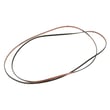
- For tumbling problems, common wear items include the dryer drum belt WE03X29897 and idler components
Why it matters
GE often uses similar-looking parts across multiple dryer series. Using the exact DWSR483GG7WW model number from the label behind the door helps us narrow to the correct diagrams and compatible parts the first time.
Last updated: February 2026
How to replace GE dryer sensor?
On the GE DWSR483GG7WW gas dryer, a “sensor” request usually means one of two things: the moisture sensor bars (used on automatic cycles) or a safety/operating thermostat. We replace it by unplugging power first, accessing the component location shown in the DWSR483GG7WW owner’s manual, then swapping the part and restoring all wire connections exactly as found.
Identify which “sensor” you mean
These are the most common parts customers call a sensor:
- Moisture sensor bars: inside the drum area near the lint filter housing; they detect dampness.
- Operating thermostat: on the blower housing or heater/duct area; it regulates temperature.
- High-limit thermostat or thermal fuse (often called a sensor): shuts heat down if overheating occurs.
Safety steps we follow first (gas dryer)
Before opening the cabinet on a gas dryer:
- Unplug the dryer or switch off the breaker.
- Shut off the gas supply valve.
- Let the dryer cool completely.
- Work in a well-ventilated area.
- Confirm the dryer is vented correctly; gas dryers must exhaust outdoors using 4-inch metal ducting.
Basic replacement workflow
Use the manual for panel removal and access points; the general process is consistent:
- Disconnect power.
- Remove the front or rear access panel (varies by component).
- Take a photo of wire routing and connector positions.
- Remove mounting screws and transfer wires one at a time.
- Reassemble, restore gas and power, then test a timed heat cycle.
Quick comparison: moisture sensor vs thermostat
| Item | Typical symptom | Where you’ll find it | What to check first |
|---|---|---|---|
| Moisture sensor bars | Auto cycle ends early or runs too long | Drum front area near lint filter | Clean bars with rubbing alcohol; check harness |
| Operating thermostat | Overheats, underheats, or cycles oddly | Blower housing/duct area | Vent restriction, lint buildup, loose connectors |
Why it matters
A dirty moisture sensor or a failing thermostat can cause long dry times, overheating, or poor cycle performance. On gas models like the DWSR483GG7WW, correct venting and airflow are also critical for safe, efficient drying.
Last updated: February 2026
Why does my GE front load dryer squeak?
A squeak in your GE DWSR483GG7WW gas dryer almost always comes from friction in the drum support system (belt, idler pulley, glides, felt seal, or rear bearing area). We recommend inspecting those wear parts first because a quick spray lubricant only masks the noise and the squeak typically returns.
Most common squeak sources on this model
- Worn or glazed drum belt: can chirp or squeal as it slips on the drum
- Dry or worn idler pulley: often squeaks once per drum revolution
- Worn front drum glides or glide pads: creates a high-pitched squeak as the drum rides on plastic
- Worn felt seal: can squeak and also cause rubbing marks on the drum edge
- Rear bearing area wear (if equipped): can squeal or grind as the drum turns
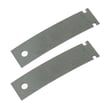
Helpful model-matched parts to check include the dryer drum belt WE03X29897, idler pulley WE12X83, dryer drum glide bearing (green) WE03X37317, dryer drum front glide pad WE03X37318, and felt WE09X27634.
Quick diagnostic checks (5 to 10 minutes)
- Empty-drum test: Run the dryer empty; if it still squeaks, the issue is in the drum support or blower area, not the load.
- Listen for a pattern: A squeak that repeats at a steady rhythm often points to the idler pulley or a flat spot on the belt.
- Check for drag: With power off, rotate the drum by hand; roughness or sticking suggests glides, felt, or bearing wear.
- Look for lint buildup: Heavy lint around the drum edge can increase friction and noise.
What to replace first (typical best-bet order)
| Symptom | Most likely wear item | What you’ll notice |
|---|---|---|
| Squeak once per revolution | Idler pulley | Noise changes with belt tension |
| Light squeal, drum still turns | Drum belt | Shiny/glazed belt surface |
| Squeak plus scraping | Glides or felt | Wear dust, rub marks near front |
Why it matters
A squeak is an early warning that a wear surface is running dry or out of alignment. Fixing it early helps prevent belt failure, drum damage, and longer dry times caused by extra friction.
For safe access, panel removal, and venting guidance while you’re servicing the dryer, follow the DWSR483GG7WW owner’s manual.
Last updated: February 2026
How to remove front panel of GE front load dryer?
On the GE DWSR483GG7WW gas dryer, we remove the front panel by first lifting the top, then taking out the screws that secure the front panel, and finally disconnecting any wiring (such as the door switch) while supporting the panel so it does not drop.
Before you start (safety and prep)
- Unplug the dryer from the electrical outlet.
- Shut off the gas supply valve to the dryer.
- Wear work gloves; cabinet edges can be sharp.
- Pull the dryer forward enough to work comfortably.
- Keep a small container for screws so nothing gets lost.
Front panel removal steps (typical for this GE design)
- Lift the top panel: Release the top (often with a putty knife at the front seam) and raise it.
- Remove the front panel mounting screws: With the top up, remove the screws along the top edge that hold the front panel to the cabinet.
- Support the front panel: Hold the panel with one hand as you free the last fasteners.
- Disconnect wiring: Unplug the door switch harness if it is attached to the front panel (common on GE dryers).
- Lift and pull the panel off: Tilt the top of the front panel toward you, then lift it up and off the lower retaining tabs/clips.
What to check while the front is off
If you are opening the dryer to address noise, no tumble, or rubbing, these are the most common wear items:
- Drum belt condition and tension
- Idler pulley spin and alignment
- Front glide pads and drum glide bearing wear
- Felt seal condition (tears, gaps, heavy lint buildup)
Common symptoms and likely parts
| Symptom | Most common cause | Part to inspect |
|---|---|---|
| Drum will not turn, motor runs | Broken/slipped belt | Dryer drum belt WE03X29897 |
| Squealing or chirping | Worn idler pulley | Idler pulley WE12X83 |
| Thumping, scraping at front | Worn glides/pads | Dryer drum front glide pad WE03X37318 |
Why it matters
Removing the front panel correctly prevents broken plastic tabs, pinched wires, and door switch issues. It also gives you safe access to the drum support system, which is where most GE dryer noise and no-tumble problems start.
For model-specific panel fastener locations and reassembly notes, follow the DWSR483GG7WW installation guide.
Last updated: February 2026