Owner’s manual
 View engine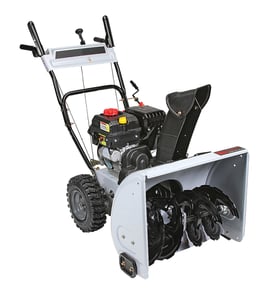




How to find snowblower model number?
Your Craftsman snow thrower’s model number is on the identification label; for model 536.884561, it’s typically printed as 536.884561 (often shown with a dot) and is used to match the correct parts and instructions in the owner's manual.
Where to look on the snowblower
Check these common label locations first:
- Rear of the unit between the wheels
- Side of the frame near the auger housing
- Near the handle supports or control panel area
- On the engine shroud (engine model info may be separate)
- On the lower frame close to the axle
What the model number looks like for this unit
For this Craftsman snow thrower, the manual identifies the unit as MODEL NO. 536.884561. You may see it formatted in a few ways:
| You might see | It means |
|---|---|
| 536.884561 | Full model number (common on the label/manual) |
| 536884561 | Same model number without the dot (common online) |
| 536.884561 (21" 3 H.P.) | Model plus basic description |
Tips to avoid mix-ups when ordering parts
Using the exact model number prevents ordering the wrong chute, belt, or fuel parts.
- Copy the full number exactly as printed (including any dots)
- Use the model number (536884561) for the snowblower parts list; do not rely only on engine markings
- Match parts by description and ID when possible (example: v-belt 319596MA)
- If the label is dirty, wipe it and use a flashlight to read stamped or faded text
- Keep the model number with your maintenance notes for oil changes and tune-ups
Why it matters
Craftsman snow throwers can look similar across years, but parts like the discharge chute, auger components, and drive belt vary by model. Using 536884561 ensures the diagrams and procedures in the manual match your machine.
Last updated: February 2026
Should I spray my snowblower with WD-40?
Yes, it is helpful to spray a light coat of WD-40 or a similar spray lubricant on key snow-contact metal surfaces of your Craftsman 536884561 snow thrower to reduce snow sticking and clogging. We avoid spraying belts, friction surfaces, and hot engine areas; those spots can cause slipping or fire risk.
Where spraying helps (and where it does not)
Use a light coat and wipe off excess.
Good places to spray
- Inside the discharge chute and around the chute opening
- The blower housing area where snow passes through
- Auger housing surfaces (snow-contact metal only)
- Bare metal spots after cleaning to help prevent rust
Places to avoid spraying
- Drive belts, pulleys, and friction drive components (can cause slipping)
- The muffler, cylinder, and other hot engine parts
- Controls, grips, and any braking or traction surfaces
Best practice for this model: clean, clear, then protect
Your manual emphasizes clearing snow and slush after use to prevent freezing of the auger or controls, and it also recommends protecting bare metal with a rust preventative such as a spray lubricant for storage. For model-specific maintenance points and lubrication locations, follow the owner's manual.
Quick after-use routine
- Run the machine briefly to clear the auger of snow
- Shut off the engine and let moving parts stop
- Brush out packed snow from the chute and housing
- Apply a light spray to snow-contact metal, then wipe excess
- Store dry; cover with a breathable cover (not plastic/vinyl)
WD-40 vs grease: what to use and when
| Task | Best choice | Why |
|---|---|---|
| Reduce chute clogging during use | WD-40 or similar spray | Helps snow slide instead of sticking |
| Lubricate chute flange before storage | Grease (per manual) | Stays in place longer than spray |
| Long-term rust prevention on bare metal | Rust preventative spray | Protects exposed metal during storage |
Why it matters
Snow sticking and chute clogs usually happen when wet snow refreezes or packs inside the housing. A clean machine plus the right lubrication reduces jams, prevents freeze-ups, and helps protect the auger housing and chute from corrosion.
Last updated: February 2026
What is the life expectancy of a snowblower?
A gas snowblower like the Craftsman 536884561 typically lasts 15 to 20 years with normal residential use and consistent maintenance. Regular fuel care, lubrication, and replacing wear items (belts, spark plug, shear pins) are what keep a snow thrower reliable long-term; see the maintenance schedule in the owner's manual.
What most affects lifespan
- Fuel quality and storage habits (stale fuel and moisture cause hard starting and carburetor issues)
- Routine lubrication of moving points (chute flange, shafts, pivots)
- Wear-part replacement before failure (drive belt, auger belt, spark plug)
- Cleaning after each use (remove snow and slush to prevent freeze-up)
- Proper off-season storage (dry, covered, and protected from moisture)
Maintenance checklist that extends life
Use these habits every season:
- After each use, run the machine briefly to clear the auger and remove packed snow.
- Tighten loose fasteners and check for damaged parts.
- Use the correct fuel mix and spark plug type/gap listed for this model.
- Before storage, lubricate the discharge chute flange and other lubrication points.
- For storage, treat fuel with stabilizer and run the engine so treated fuel reaches the carburetor.
Typical lifespan by snowblower type
| Snowblower type | Typical life expectancy | What usually ends its life |
|---|---|---|
| Gas, 2-stage | 15 to 20 years | Fuel system neglect, belt/drive wear, corrosion |
| Gas, single-stage | 10 to 15 years | Auger wear, belt wear, hard-use damage |
| Electric corded | 8 to 12 years | Switch/motor wear, cord damage |
| Battery | 5 to 10 years | Battery capacity loss |
Why it matters
A snowblower’s “age” matters less than its maintenance history. The manual for this Craftsman model specifically calls out lubrication, clearing snow after use, and storage steps; those items prevent the most common failures like difficult starting, belt problems, and frozen controls.
Last updated: February 2026
Is it worth fixing a snowblower?
Yes, fixing a snowblower is worth it when the repair cost is clearly less than replacing the machine and the unit is otherwise in solid shape. For your Craftsman snow thrower model 536884561, many common fixes are routine maintenance items (belts, fuel system cleaning, tune-up) that restore performance without replacing the whole snowblower; see the owner's manual.
Quick way to decide (cost vs. value)
Use this simple rule: if the total repair cost is more than about half the cost of a comparable new snowblower, replacement is usually the better value.
Include these in your repair estimate:
- Parts (for example a belt, fuel line, or filter)
- Labor (if you are not doing it yourself)
- Any tools or supplies (oil, spark plug, stabilizer)
- Your time (especially if the issue is intermittent)
When repair is usually the smart choice
Repair your 536884561 when you have one of these common, fixable symptoms:
- Hard starting or stalling (often fuel-related or spark plug related)
- Unit fails to propel (commonly a drive belt issue)
- Unit fails to discharge snow (chute clog or foreign object)
- Excessive vibration (loose parts or damaged impeller/auger components)
- Fuel leaks or fuel starvation (cracked line or dirty fuel)
Helpful model-related parts to consider:
- V-belt 319596MA (common wear item tied to drive/auger complaints)
- Gas line 323363MA (helps address fuel flow problems)
- Filter 394358S (supports basic engine maintenance)
When replacement is usually the better move
Replacement makes more sense when:
- The auger/impeller area has major damage and multiple expensive parts are needed
- The machine has repeated fuel system issues from long-term storage habits
- You need several big-ticket repairs at once (auger assembly, housing, frame)
Why it matters
A snowblower that is maintained, lubricated, and tuned up on schedule runs more reliably and is safer to service. The manual also calls out key safety steps (turn key OFF, remove key, disconnect spark plug wire) before unclogging the chute or making repairs.
Repair vs. replace: quick comparison
| Situation | Typical best choice | Why |
|---|---|---|
| Belt, fuel line, filter, tune-up | Repair | Lower cost, high success rate |
| Clogged chute, minor adjustments | Repair | Fast fix, minimal parts |
| Multiple major drivetrain/auger housing parts | Replace | Cost can exceed machine value |
Last updated: February 2026
How to tell year of Craftsman snowblower by serial number?
For Craftsman snow thrower model 536884561, the most reliable way to confirm the year is to match the model and serial number on the machine’s ID label to the information in the 536884561 owner's manual. This model’s manual is dated May 7, 1996, which strongly indicates the unit was produced in that era.
Where to find the serial number on a Craftsman snowblower
On most Craftsman single-stage snowblowers, the model and serial label is on the main frame near the engine or handle mounting area.
Check these common spots:
- Frame rail near the engine (left or right side)
- Rear of the housing near the handle base
- Under the belt cover area (after the unit is cool and off)
- Near the chute mounting area
- On a metal tag riveted to the frame (older units)
How to decode the year from the serial number (what to look for)
Craftsman serial formats vary by production run and manufacturer, so we decode by pattern.
Typical patterns you may see:
- 6-digit date code: often reads like MMDDYY or YYMMDD
- 8 to 10 digits: may embed a date plus a plant or sequence code
- Letter + numbers: a letter can represent a production year series, followed by month/day or sequence
Quick pattern check table
| Serial number pattern | What it usually means | Example (format only) |
|---|---|---|
| 6 digits | Date code | 051996 or 050796 |
| 8 to 10 digits | Date plus sequence/plant | 050796123 |
| Letter + digits | Year series plus date/sequence | P0507xxx |
Use the engine code as a cross-check
Many snowblowers have an engine date or code on the engine shroud. For this Craftsman model, the manual shows a 2-cycle engine (engine model 143.973091). If the engine code indicates a manufacture date close to the unit’s serial date, that confirms the snowblower’s production year.
Why it matters
Knowing the year helps us match the correct parts and diagrams, especially for wear items like belts, scraper components, and chute hardware. For example, this model’s parts list includes items such as the scraper 55323MA and auger assembly 327072MA, which can vary across similar-looking Craftsman units.
Last updated: February 2026