Installation guide
 Owner’s manual
 Error Codes


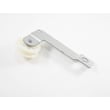
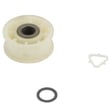
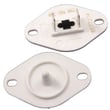
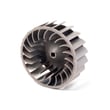
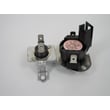
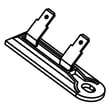
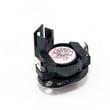
How do I know if my Kenmore dryer thermal fuse is blown?
On Kenmore electric dryer model 11069133414, a blown thermal fuse commonly shows up as a dryer that will not run at all, or a dryer that runs but will not heat. The sure way to know is to unplug the dryer and test the fuse for continuity with a multimeter (no continuity means it is blown). For location and access, follow the 11069133414 owner's manual.
- Dryer will not start even though the door is closed and controls are set
- Drum tumbles but there is no heat (clothes stay damp)
- “L2” code or weak heat symptoms caused by a power supply issue (can look like a heat failure)
- “Check Vent” indicator showing restricted airflow (can contribute to overheating conditions)
- Repeated shutdowns or very long dry times (often tied to venting problems)
- Unplug the dryer (electric dryers use 240V).
- Access the thermal fuse (typically on the blower housing or exhaust duct area).
- Pull the wire connectors off the fuse terminals.
- Set a multimeter to continuity or lowest ohms.
- Touch probes to the fuse terminals.
Expected result:
| Meter result | What it means | What to do next |
|---|---|---|
| Beep or near 0 ohms | Fuse is good | Keep troubleshooting heat/airflow/power |
| No beep or OL/infinite | Fuse is blown | Replace the fuse and correct the cause |
If you need the correct replacement for this model, use the thermal fuse W10909685.
A thermal fuse is a one-time safety device. When it opens, it is usually reacting to overheating, most often from restricted airflow. Fixing the airflow issue helps prevent the new fuse from blowing again.
- Clean the lint screen completely
- Inspect the vent hose for crushing, kinks, or too many turns
- Clear lint buildup in the vent run and outside hood
- Confirm the dryer has proper clearance and strong exhaust flow
- If you see “L2”, verify both household fuses/breakers are good (electric dryers commonly use two)
For power-cord and supply checks during setup, use the 11069133414 installation guide.
Last updated: February 2026
How do I know if my thermostat is bad in my dryer?
A bad thermostat in your Kenmore electric dryer model 11069133414 typically shows up as no heat, overheating, shutting off too soon, or very long dry times. We confirm it by safely accessing the thermostat and checking it with a multimeter, then correcting any airflow or power issues that can mimic thermostat failure.
- Dryer runs but clothes stay damp (little or no heat)
- Dryer gets too hot; load feels scorching
- Cycle ends early; clothes are still wet
- Dryer shuts off mid-cycle and restarts after cooling
- Burning smell or unusually hot cabinet (stop using and inspect airflow)
Many “bad thermostat” symptoms are caused by power or venting problems.
- Verify power: Electric dryers need full 240V supply; a partial power condition can let the motor run while the heater stays off. If you see an L2 message, follow the power-supply checks in the 11069133414 owner's manual.
- Check venting: A crushed or blocked vent can cause overheating and thermal cutoffs. If the airflow indicator says “Check Vent,” clear the vent path.
- Run a heated Timed Dry test: Select a heated Timed Dry cycle (not Air Only) and start the dryer; this is a reliable way to confirm whether the heater is being energized.
- Unplug the dryer (or switch off the breaker).
- Access the thermostat on the blower housing or heater housing (location varies by design).
- Label wires, remove at least one wire from the thermostat terminal.
- Use a multimeter on continuity/ohms.
| What you see on the meter | What it usually means |
|---|---|
| Continuity at room temp (closed) | Normal for many cycling thermostats |
| No continuity at room temp (open) | Thermostat likely failed open |
| Continuity never changes with heat | Thermostat may be stuck closed (overheating risk) |
If testing points away from the thermostat, these model-compatible parts are common fixes:
- Dryer high-limit thermostat WP8557403 (overheat protection)
- Thermal fuse W10909685 (opens if overheating occurs)
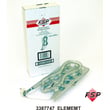
- Dryer heating element WP3387747 (no-heat condition)
- Dryer thermistor WP8577274 (temperature sensing on some designs)
A thermostat that is stuck open causes no heat and long dry times; a thermostat stuck closed can cause overheating, which can blow the thermal fuse and create repeated no-heat failures until the vent restriction is corrected.
Last updated: February 2026
How do I know what model my Kenmore dryer is?
Your Kenmore dryer’s model number is printed on the appliance ID label; for model 11069133414, it’s typically found around the door opening (most common), and it’s the key detail we use to match the correct parts, wiring, and cycle features.
Check these common locations on Kenmore electric dryers:
- Inside the dryer door opening on the cabinet frame
- On the back panel of the dryer
- Near the lint screen housing (depending on the design)
- On the side panel edge near the door opening
For diagrams and label-location notes specific to this platform, use the 11069133414 owner's manual.
Kenmore model numbers often start with a prefix that helps identify the manufacturing platform. For example, many Kenmore dryers beginning with 110 are built on a Whirlpool-style design, which affects which drum belt, heating system, and controls fit.
| What you have | What it tells us | What it affects |
|---|---|---|
| Full model number (example: 11069133414) | Exact product identity | Correct parts list and diagrams |
| Serial number | Production run info | Service bulletins and date coding |
| Type (electric dryer) | Power and heating method | Heating element, thermostats, wiring |
Use these best practices before you buy a replacement belt, heater, or control:
- Copy the model number exactly as printed (all digits matter)
- Match any suffixes or color codes if shown
- Compare the part name and ID, not just the description
- If you are troubleshooting heat issues, confirm your dryer is electric before selecting a heater like the dryer heating element WP3387747
The model number ties your dryer to the correct electrical requirements, cycle options, and component design. That is especially important on electric dryers, where the heater circuit and safety devices must match the exact build.
Last updated: February 2026
Is it worth fixing a 7 year old dryer?
Yes, a 7-year-old Kenmore electric dryer (model 11069133414) is worth fixing when the problem is a common wear item and the total repair cost stays well below the price of a comparable new dryer. Repairs like a belt, roller, idler pulley, or thermal fuse typically restore reliable drying without replacing the whole unit.
- Fix it when the repair is a single failed part and the dryer otherwise runs normally.
- Fix it when the symptom points to routine wear (squeal, thump, no heat, long dry times from airflow issues).
- Replace it when multiple major systems are failing (heat + motor + control issues) or the cabinet/drum is badly damaged.
These are frequent fixes on Kenmore 110-series style dryers and are usually cost-effective:
- No heat or weak heat: dryer heating element WP3387747, high-limit thermostat, or temperature sensing issues
- Dryer will not start: door switch/door latch issues, power supply problems, or a blown thermal fuse
- Loud squeal or thump: dryer drum support roller WPW10314173 and/or idler pulley wear
- Burning smell or poor drying: lint buildup and restricted venting (cleaning often solves it)
| What you’re seeing | Most likely category | Usually worth fixing at 7 years? |
|---|---|---|
| Runs but won’t heat | Heating circuit/airflow | Yes |
| Loud rumble/squeal | Drum support/belt drive | Yes |
| Won’t start at all | Power, door, safety fuse | Often |
| Intermittent, multiple symptoms | Control or wiring | Sometimes |
A dryer that is not venting well runs hotter and longer, which increases energy use and can repeatedly trip safety devices. The manual also calls out routine lint removal (including inside the cabinet and exhaust vent) to keep performance up. Use the 11069133414 owner’s manual for cleaning intervals and troubleshooting steps.
- Clean the lint screen before every load.
- Inspect the vent path for crushing, kinks, or blockage.
- Confirm the dryer door fully closes and latches.
- Verify the household breaker(s) are fully reset.
- Run a Timed Dry heated cycle (not Air Only) to confirm whether the heater turns on.
Last updated: February 2026
Is it worth replacing the heating element in a dryer?
Yes, it’s usually worth replacing the heating element in your Kenmore 11069133414 electric dryer when the dryer otherwise runs normally; the repair cost is typically far less than replacing the whole dryer, and a new element often restores full heat quickly.
Replacing the element is a strong choice when the dryer tumbles, the timer advances, and airflow is good, but clothes stay damp.
- The drum turns but there’s no heat (or heat is weak)
- You have proper power (electric dryers need 240V or 208V supply)
- The vent path is clear and airflow is strong
- The dryer is in good overall condition (no major control or motor issues)
- You want a predictable fix instead of replacing the appliance
A common replacement part for this model is the dryer heating element WP3387747.
The manual notes that an electric dryer can run but not heat if a household fuse is blown or a breaker trips; electric dryers typically use two fuses/breakers. Confirm power before buying parts. See the 11069133414 owner’s manual for the model’s troubleshooting guidance.
- Reset both dryer breakers (or replace both fuses if applicable)
- Verify the outlet is supplying 240V (L1 to L2) and the cord/terminal block is tight
- Clean lint screen and confirm the vent is not crushed or blocked
- Run a Timed Dry heated cycle (not Air Only) to confirm heat output
If power and airflow are good, heat failures are often caused by one of these components.
| Symptom | Most likely area | Example part for 11069133414 |
|---|---|---|
| Tumbles, no heat | Heater circuit | Dryer heating element WP3387747 |
| No heat after overheating event | Safety cutout | Thermal fuse W10909685 |
| Overheats or cycles heat oddly | Temperature sensing/control | Dryer thermistor WP8577274 or dryer high-limit thermostat WP8557403 |
A failed heater can look like a “bad dryer,” but many no-heat complaints come from power supply issues or restricted venting. Confirming those basics first prevents repeat failures and protects the new heating element.
Last updated: February 2026
What are signs of a bad dryer heating element?
On the Kenmore 11069133414 electric dryer, a bad heating element usually shows up as the drum tumbling normally but clothes staying damp or taking much longer to dry. Before replacing parts, we confirm the dryer is on a heated cycle and the home has full 240V power (electric dryers can run but not heat on partial power); see the 11069133414 owner's manual.
- Dryer runs, drum turns, but there is little to no heat
- Loads need multiple cycles to dry
- Clothes feel cool and damp at end of a heated cycle
- A burning smell (often from a broken coil contacting metal)
- Visible breaks or hot spots on the element coil (if inspected)
A “no heat” complaint is not always the heater. Use these checks first:
- Cycle/setting: Use a Timed Dry heated cycle (not Air Only)
- Power supply: Electric dryers need 240V or 208V; a tripped breaker can leave the motor running with no heat
- Vent airflow: A crushed or blocked vent can cause overheating and shutdowns
- Safety devices: A blown thermal fuse or failed thermostat can stop heat even with a good element
| Symptom | More likely cause | Parts commonly involved |
|---|---|---|
| Drum turns, no heat | Power issue or open heat circuit | Heating element, thermal fuse, high-limit thermostat |
| Heat starts then stops | Overheating from poor airflow | High-limit thermostat, venting |
| Long dry times, some heat | Restricted venting | Blower wheel, vent ducting |
We test the heating element for continuity with a multimeter (with power disconnected). If it is open, replacement is the fix. For this model, the correct heater is the dryer heating element WP3387747.
Running an electric dryer with poor airflow or repeated overheating can trip safety devices and shorten the life of the heating element, thermostats, and wiring.
Last updated: February 2026