 Owner’s manual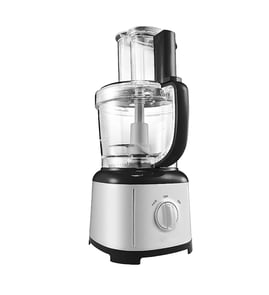

Is 1000 watts good for a food processor?
Yes. A 1000-watt food processor is considered powerful for home use; it handles tougher jobs like chopping meat (in small batches), shredding cheese, and mixing thicker ingredients with less stalling than lower-watt models. For the Black & DECKER FP1000, always follow the safety and capacity guidance in the owner's manual.
A higher-watt motor generally means better performance when the load is heavy or dense.
- Chopping raw meat with the knife blade (work in small batches)
- Shredding and slicing firmer foods with steadier speed
- Processing cheese with lighter pusher pressure to protect the disc and motor
- Pureeing cooked foods and making baby food with smoother results
- Handling frequent use with fewer slowdowns
Even with a strong motor, overfilling the bowl or forcing food through the chute can cause poor results and extra wear.
| Task | Best practice | Why it helps |
|---|---|---|
| Chopping meat | Use the knife blade; process about 1 cup at a time | Prevents bogging down and uneven chopping |
| Shredding cheese | Use light pressure on the food pusher | Reduces strain and helps avoid smearing |
| Very hard foods | Skip foods that a knife tip cannot pierce easily | Helps prevent blade/disc damage |
| Removing the lid | Wait until the blade/disc fully stops | Reduces injury risk |
Motor wattage affects how well the processor maintains speed under load. That directly impacts texture (even chopping vs. mush), processing time, and how much heat and stress the motor sees during tougher prep.
- Turn the unit off and unplug before cleaning or changing parts
- Keep hands and utensils away from moving blades and discs
- Lock the cover securely before operating
- Handle blades and discs carefully; they are sharp
Last updated: February 2026
How do you use a Black & Decker food processor?
To use the Black & DECKER FP1000 food processor, we assemble and lock the bowl and cover, choose the correct blade or reversible slice/shred disc, load food through the chute using the food pusher, then press ON to run until we press OFF. For model-specific steps and safety notes, use the owner's manual.
- Unplug the base before installing or removing any parts.
- Set the bowl into the base well and rotate it until the locking tabs drop into place.
- Install the disc stem on the center post, then add the knife blade or reversible disc (slice or shred side up).
- Lower the cover and twist it counterclockwise until it snaps firmly into the locked position.
- Insert food into the chute and use the food pusher (never fingers) to guide food through.
| Task | Best attachment | Notes |
|---|---|---|
| Chop, mix, puree | Knife blade | Great for salsa, dips, spreads. |
| Slice vegetables | Reversible slice/shred disc (slice side up) | Use steady, even pressure with the pusher. |
| Shred cheese/vegetables | Reversible slice/shred disc (shred side up) | Chill cheese first for cleaner shredding. |
- ON runs continuously until you press OFF.
- If the processor will not start, the bowl and cover are not fully locked; re-seat the bowl, then re-lock the cover.
- For single items like carrots, use the food fingers (in the chute) to reduce tipping and improve even slicing.
- Keep the base, cord, and plug out of water.
- Do not chop ice; it can damage the bowl and dull the blade.
- Do not attempt to sharpen the knife blade or disc; they are factory sharpened.
- Unplug before cleaning; rinse parts soon after use and wipe the base with a damp cloth.
Correct bowl and cover locking is a built-in safety interlock on the FP1000 series; when everything is seated properly, you get consistent slicing/shredding and the motor runs smoothly without stalling.
Last updated: February 2026
Is a Black Decker food processor good?
Yes. Black & Decker food processors like the Black & DECKER FP1000 series are a solid choice for everyday chopping, slicing, and shredding when you use them as directed and follow basic electrical safety steps from the owner's manual.
A food processor is “good” when it is safe, consistent, and convenient for the tasks it is designed to do.
- Handles common prep tasks (chopping, slicing, shredding, mixing)
- Saves time versus hand chopping
- Easy to assemble and clean after each use
- Stable on the counter when running
- Safe operation (lid/bowl properly in place, unplugged before handling parts)
Use this simple test after cleaning and correct assembly.
| Task | What you should see | If results are poor, try this first |
|---|---|---|
| Chopping onions/veg | Even pieces with short pulses | Use pulse, do smaller batches |
| Shredding cheese | Consistent shreds, minimal smearing | Chill cheese, shred in short runs |
| Slicing cucumbers | Uniform slices | Use steady feed pressure, don’t overfill |
| Mixing dough (light) | Dough forms without stalling | Reduce batch size, avoid heavy doughs |
Following the basics keeps performance strong and prevents avoidable problems.
- Unplug the unit when not in use and before installing or removing parts
- Keep the base, cord, and plug out of water to reduce shock risk
- Don’t overload the bowl; process in batches for better texture
- Use short pulses for control and more even chopping
- Stop and scrape down the bowl as needed (with the unit off and unplugged)
Most “bad food processor” experiences come from overloading, dull/dirty cutting parts, or unsafe handling. Using the FP1000 series correctly improves results, reduces mess, and helps the motor last longer.
Last updated: February 2026
What is the most highly rated food processor?
The “most highly rated” food processor changes over time, but top-rated picks are usually full-size models with strong motors, a stable base, and versatile discs for slicing and shredding. If you already own a Black+DECKER FP1000, it is designed for everyday chopping, slicing, and shredding tasks.
When we compare food processors, the highest-rated models typically score well in these areas:
- Consistent slicing and shredding results (reversible slice/shred disc performance)
- Easy assembly with secure bowl locking tabs
- Strong, steady power for dense foods (without stalling)
- Simple controls (clear ON/OFF operation)
- Easy cleaning and safe handling of the knife blade and discs
Your FP1000 series food processor includes common full-size features people rate highly, such as a bowl-and-base locking system, push-button controls, and multiple discs (for example, slice/shred options). For model-specific setup and safe use details, follow the FP1000 owner's manual.
The FP1000 is built for general prep, but the manual notes some tasks that food processors often do poorly or should avoid:
- Do not chop ice; it can damage the bowl and dull the knife blade
- Do not process extremely hard foods (if a knife tip cannot pierce it)
- It may not beat egg whites to a desirable volume
- It may not slice solidly frozen meat well
- Very soft cheeses and similar foods may not slice/shred cleanly
| Feature | Why it matters | What to check |
|---|---|---|
| Motor strength | Handles dense chopping and shredding | User reviews mentioning stalling or overheating |
| Disc options | Expands slicing/shredding versatility | Included reversible discs and specialty discs |
| Bowl lock and safety | Prevents leaks and improves safety | Positive feedback on locking and interlocks |
| Cleaning | Impacts day-to-day satisfaction | Dishwasher-safe parts and smooth surfaces |
A “highly rated” food processor is usually the one that matches your most common tasks. If you mainly chop vegetables, shred cheese, and puree sauces, a reliable full-size unit like the FP1000 can be a great fit when used within its recommended limits.
Last updated: February 2026