Installation guide
 Owner’s manual





What is the capacity of the Maytag washer model mvwc400xw0?
The Maytag washer model MVWC400XW0 has a 3.6 cu. ft. capacity. This is the tub volume used to describe how much laundry the washer can handle per load; cycle selection and load type can still affect real-world usable space.
How to use capacity to size your loads
Capacity is most helpful for preventing overloading, improving cleaning, and reducing out-of-balance spinning.
- Load items loosely; do not pack them down
- Keep bulky items (comforters, jackets) to one type per load when possible
- Mix large and small items to help balance during spin
- If the washer bangs or “walks,” reduce load size and re-level the cabinet
- Use HE detergent and measure carefully to avoid oversudsing
Quick sizing guide (practical, not exact)
These are typical examples of what a 3.6 cu. ft. top-load washer can handle when loaded loosely.
| Load type | Typical example | What to watch for |
|---|---|---|
| Everyday mixed load | Shirts, jeans, towels | Leave space at the top for turnover |
| Towels | Several bath towels plus washcloths | Towels can get heavy; avoid packing |
| Bulky items | Medium blanket or similar | If it floats or won’t circulate, reduce items |
Where to confirm model-specific details
For cycle options, load recommendations, and operating tips specific to MVWC400XW0, use the MVWC400XW0 washer manual.
Why it matters
Matching load size to the washer’s 3.6 cu. ft. capacity helps the impeller move items through the wash water properly, reduces vibration, and can extend the life of drive components like the belt and suspension.
Last updated: January 2026
What is the average lifespan of a Maytag Centennial washer?
For a Maytag Centennial-style top-load washer like model MVWC400XW0, there is not a single published “average lifespan” that we can verify for this exact model. In real-world use, many washers run for about a decade or longer, depending heavily on installation, load habits, and maintenance; see the MVWC400XW0 installation instructions for setup details that help reduce wear.
What most affects lifespan on MVWC400XW0
- Keeping the washer level to reduce vibration and “washer walk”
- Avoiding chronic overloading (especially bulky, water-heavy loads)
- Using the correct amount of HE detergent to limit residue buildup
- Catching small leaks early (hoses, clamps, tub-to-pump connections)
- Addressing draining or spinning problems promptly instead of continuing to run cycles
Practical “life-extending” checks you can do
- Verify the drain hose is installed correctly and secured; improper drain setup can cause siphoning or slow draining.
- Inspect inlet hoses for bulges, cracking, or seepage; replace on a regular schedule.
- Run periodic cleaning cycles (or an empty hot cycle) to reduce detergent and soil residue.
- Stop using the washer if you smell burning rubber or hear repeated grinding; that often points to a drive or drain issue.
When a repair can make sense
If the washer is otherwise in good condition, replacing a common wear part can restore performance and help extend service life.
| Symptom | What it often points to | Example compatible part for MVWC400XW0 |
|---|---|---|
| Won’t drain or drains slowly | Pump obstruction or failing pump | Washer drain pump assembly WPW10276397 |
| Won’t spin, rubber smell | Belt or drive system strain | Washer drive belt WPW10006384 |
| Lid won’t lock, cycle won’t start | Lid lock/strike issue | Washer lid lock assembly W10404050 |
Why it matters
A washer’s “lifespan” is usually determined less by age and more by vibration control, drainage health, and how quickly you correct early symptoms. Good installation and timely part replacement can prevent small problems from becoming major failures.
Last updated: January 2026
What is the most common problem with a Maytag washer?
For the Maytag MVWC400XW0 washer, we cannot identify a single “most common” failure from model-specific data alone; however, the issues customers most often troubleshoot on top-load Maytag washers are draining or spinning problems, leaks, and excessive vibration/noise. Use the MVWC400XW0 installation instructions to confirm setup items that commonly trigger these symptoms.
Common problems people report (and what to check first)
- Won’t drain or won’t spin: verify the load is balanced, the lid closes fully, and the drain hose is installed correctly
- Leaking water: check inlet hose connections, drain hose routing, and clamps for seepage
- Shaking/banging: confirm the washer is level and not overloaded
- Noisy operation: look for items between the tub and basket, or worn drive components
Quick setup checks that matter on MVWC400XW0
The MVWC400XW0 install guide includes several requirements that can directly affect performance:
- Standpipe height should be at least 39 in. and no higher than 96 in.
- Keep about 4.5 in. of drain hose inside the standpipe to help prevent siphoning
- Level the washer so all four feet contact the floor to reduce vibration
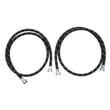
- Use new inlet hoses with flat washers; do not reuse old hoses
When a part is a likely fix
If basic checks do not resolve the symptom, these model-compatible parts are common inspection points:
| Symptom | Part to inspect | What it does |
|---|---|---|
| Won’t drain, drains slowly, or hums | Washer drain pump assembly WPW10276397 | Pumps water out so the washer can complete drain and spin |
| Won’t spin because lid won’t lock | Washer lid lock assembly W10404050 | Confirms the lid is locked for safe spinning |
| Squealing, slipping, weak spin | Washer drive belt WPW10006384 | Transfers motor power to the drive system |
| Excessive tub movement in spin | Suspension W10780051 | Stabilizes the tub during agitation and spin |
Why it matters
Many “washer problems” are symptom chains; for example, an incorrect drain hose setup can cause poor draining, which can prevent a full-speed spin and leave clothes wet.
Last updated: January 2026