Owner’s manual




Is it worth repairing a 20 year old garage door opener?
Yes, it’s worth repairing a 20-year-old garage door opener when the problem is adjustment-related (limits, force settings, sensor alignment) and the door is properly balanced. For a Craftsman 1021499A, we focus first on safety checks and setup in the 1021499A owner's manual before deciding on major mechanical or motor work.
Quick decision checklist
- Repair if the opener runs smoothly after limit/force adjustments and the safety reversal test passes.
- Repair if the issue is intermittent (remote programming, wall control, sensor alignment) rather than mechanical grinding.
- Replace if the door will not reliably reverse during the 1-inch (or 2x4 laid flat) safety test.
- Replace if the door is not properly balanced or binds in the tracks (fix the door first, then reassess the opener).
- Replace if repeated adjustments do not hold, or the unit needs frequent service to operate safely.
What to check first on a Craftsman 1021499A
The manual calls out critical safety and adjustment steps that often solve “old opener” complaints without major repair.
- Safety reversal system test (monthly): The door must reverse when it contacts a 1-inch object (or a 2x4 laid flat).
- Limit and force adjustments: If you adjust one, the other may also need adjustment; retest after every change.
- Door balance and hardware condition: Springs, cables, and related hardware repairs must be handled by a trained door systems technician.
Repair vs. replace: practical comparison
| Situation | Repair usually makes sense | Replacement usually makes sense |
|---|---|---|
| Door reverses correctly after adjustments | Yes | No |
| Door fails the reversal test even after careful adjustment | No | Yes |
| Problem is remote or programming related | Yes | No |
| Door is unbalanced or binds | Fix door first | Replace only after door is corrected |
Why it matters
A garage door opener is a safety device as much as a convenience feature. If the opener cannot be adjusted to reliably reverse and complete full travel cycles, the risk of injury and property damage goes up, especially with an older system.
Parts and help options
We recommend checking the parts list for your Craftsman 1021499A first; if you need to search by model number for additional items, use Sears PartsDirect. For troubleshooting blink patterns and diagnostics, use Craftsman error codes.
Last updated: February 2026
How do I know which garage door opener is compatible?
To choose a compatible opener or remote setup, we match what you have now: the exact Craftsman model number on the motor unit and the radio system it uses (many Craftsman units use Security+). For Craftsman 1021499A, confirm the model label and follow the compatibility and programming details in the 1021499A owner's manual.
What to check first (fast compatibility checklist)
- Model number on the motor unit: Use the label on the ceiling-mounted opener head; match it exactly to 1021499A.
- Remote system type: Many Craftsman openers use Security+ rolling-code remotes (the code changes each use).
- How many devices you need: The manual indicates the opener can run multiple remotes and a keyless entry (when equipped).
- Learn button programming: Compatibility is confirmed when the remote can be learned using the opener’s Learn button.
- Door control vs remote behavior: If safety sensors are misaligned, the door may not close from a remote even though the opener is “compatible.”
How we confirm compatibility in practice
- Identify the opener: Verify the motor unit label shows Craftsman 1021499A.
- Confirm the control method: Your opener should operate from a wall control and a hand-held remote.
- Test learning: Use the Learn button method to add a remote; the motor lights typically blink (or you hear clicks) when the code is accepted.
Common “not compatible” look-alikes
These issues often get mistaken for incompatibility:
| Symptom | What it usually means | What to check |
|---|---|---|
| Remote won’t close the door, but wall button will | Safety reversing sensors are misaligned or beam is blocked | Sensor alignment, wiring, and obstructions near the floor |
| Opener lights blink when trying to close | Sensor beam is interrupted during closing | Clean lenses, aim sensors, verify brackets |
| Chain looks loose | Normal droop in closed position | Only adjust if door fails reversal test |
Why it matters
Using the correct model-based compatibility prevents wasted time and helps keep safety features working correctly. The safety reversing sensors and proper door balance are part of normal operation; if they are off, the opener can act like the remote is wrong even when it is correct.
For replacement parts and accessories, start with the parts list for Craftsman 1021499A, or search by model on Sears PartsDirect.
Last updated: February 2026
Will a universal remote work on any garage door opener?
A “universal” garage door remote does not work on every opener. For the Craftsman 1021499A, the opener is designed to learn compatible remotes through its LEARN button and rolling-code system; the remote still has to match the opener’s radio format and security coding. See the 1021499A owner's manual for the exact programming method.
What “universal” really means
Most universal remotes work across many brands and models, not all of them. Compatibility depends on the opener’s receiver type, frequency, and security technology.
Common reasons a universal remote will not pair:
- The opener uses a different rolling-code format (for example, Security+ style coding).
- The remote does not support the opener’s frequency range.
- The opener is older and uses a different coding method than newer remotes.
- The opener’s memory is full (many openers have a limit on how many remotes they can learn).
- The opener is in “lock” mode on the wall control (portable remotes are blocked).
How to tell if a remote can work with Craftsman 1021499A
Use this quick check before you buy or program a remote.
| Check | What to look for | What it means |
|---|---|---|
| Learn button programming | Remote supports “press LEARN, then press remote button” | Good sign for compatibility |
| Rolling-code support | Remote lists Security+ compatibility | Needed for many Craftsman units |
| Multi-button remote | 3-function remotes can be programmed to multiple doors | Helpful if you have more than one opener |
Programming basics (model-relevant)
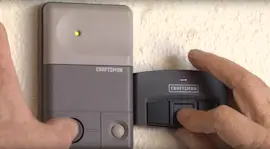
The Craftsman 1021499A can learn additional remotes using the LEARN button sequence.
- Press and release the LEARN button on the motor unit (indicator stays on briefly).
- Within the time window, press and hold the button on the remote you want to use.
- Release when the opener lights blink or you hear clicks (the code is learned).
If you need to remove an old remote from use, erase the opener’s memory and then reprogram only the remotes you want to keep (steps are in the 1021499A owner's manual).
Why it matters
Using a compatible remote keeps your opener’s rolling-code security working correctly and prevents “won’t program” headaches that look like a bad remote but are really a compatibility mismatch.
If you need to shop by model number, we list parts for Craftsman 1021499A and you can also search by model on Sears PartsDirect. For troubleshooting blinking lights or diagnostic patterns, use Craftsman error codes.
Last updated: February 2026
How to check garage door opener model?
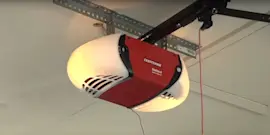
On a Craftsman garage door opener like model 1021499A, the model number is typically printed on a label on the motor unit, commonly located under a light lens cover. Check both light lens areas and the side opposite the antenna for the rating label; confirm details in the 1021499A owner's manual.
Where to look on the opener
- Under the front light lens cover
- Under the left light lens cover (when you are facing the garage door opener)
- On the side opposite the antenna (look for a rating label on the motor unit housing)
- Near the learn button area on the motor unit (labels are often nearby)
Quick steps to find it safely
- Close the garage door.
- Unplug the opener (or switch off the breaker).
- Remove or open the light lens cover(s) and look for a printed label.
- Write down the model number and any manufacturing/date code shown.
What the label usually includes
| Label item | What to record | Why it helps |
|---|---|---|
| Model number | 1021499A | Ensures correct parts and instructions |
| Motor unit info | Voltage/HP or DC info | Helps match compatible controls and boards |
| Date code | Manufacturing code/date | Helps identify version changes |
Why it matters
We use the exact model number to match the right Craftsman parts diagrams, remote programming steps, and troubleshooting info (especially for wall control, safety reversing sensors, and learn-button programming).
Helpful troubleshooting reference
If you are checking the model number because the opener is flashing lights or acting up, use Craftsman error codes to match the blink pattern or code to the most likely cause.
If you do not see parts listed for 1021499A in the diagrams, search by the full model number on the parts list first, then broaden your search on Sears PartsDirect.
Last updated: February 2026
What are the common problems with Craftsman garage door openers?
Common problems on a Craftsman garage door opener like model 1021499A are power/control failures (no response from wall control or remote), safety reversing sensor issues (door will not close, lights blink), and door balance or spring problems that make the opener strain, stop, or hum. Use the owner's manual for model-specific checks.
Most common symptoms
- No operation from wall control or remote: no power at the outlet, tripped breaker, or motor overload protector tripped (wait about 15 minutes).
- Remote works but wall control does not: wall control wiring or the wall control is faulty.
- Door will not close; lights blink: safety sensor beam blocked, dirty lenses, or sensors misaligned.
- Opener strains or needs maximum force: door is out of balance or springs are failing.
- Motor hums briefly, then stops: door lock engaged, binding door, or spring problem.
Quick checks we recommend (safe, no special tools)
- Verify power by plugging a lamp into the opener outlet.
- Disable any door locks before operating.
- Clear the sensor path; wipe lenses; confirm both sensors aim at each other.
- Pull the emergency release and move the door by hand; a balanced door stays near mid-travel.
- If the opener was cycled repeatedly, wait 15 minutes and try again.
Problem guide
| Symptom | Likely cause | Best next step |
|---|---|---|
| No response from wall control or remote | No power or overload protector | Check outlet/breaker; wait 15 minutes |
| Door will not close; lights blink | Sensors blocked/misaligned | Clear path; align sensors |
| Opener strains | Door out of balance/springs | Do balance test; service door hardware |
Why it matters
Many “opener problems” are actually door system problems. A heavy or binding door prevents proper reversing and overworks the motor and drive system.
For blink patterns and diagnostics, use Craftsman error codes. To find replacement parts by model number, search on Sears PartsDirect.
Last updated: February 2026