Owner’s manual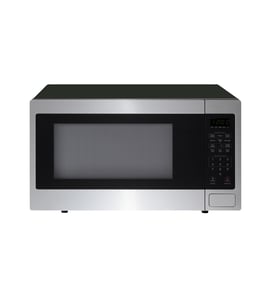



How many cubic feet is a Kenmore 72166463500 microwave?
The Kenmore 72166463500 countertop microwave has an oven cavity capacity of 2.0 cubic feet (IEC 60705 rating standard). You can confirm this in the specifications section of the 72166463500 owner's manual.
Where to find the capacity in the manual
Look for the Specifications table; it lists “Capacity of oven cavity” along with power supply, output wattage, and dimensions.
- Capacity is shown as 2.0 cu. ft.
- The rating is based on IEC 60705
- Specs can vary by measurement standard, so the manual is the best reference
Quick specs snapshot (from the specifications table)
| Spec | Value |
|---|---|
| Capacity of oven cavity | 2.0 cu. ft. |
| Power supply | 120 VAC, 60 Hz |
| Microwave output | 1,200 W |
Why it matters
Capacity helps you judge what will fit (casserole dishes, dinner plates, covered bowls) and also helps when comparing countertop microwaves by interior space, not just exterior width and height.
Last updated: February 2026
How many watts is a Kenmore Elite microwave?
For the Kenmore countertop microwave model 72166463500, the microwave cooking output is 1,200 watts. That is the heating power delivered to food; the unit’s electrical power consumption is higher during operation.
Quick wattage breakdown (what the numbers mean)
Microwaves often list more than one “watt” value. Here’s how to read them:
- Microwave output (cooking power): how strongly it heats food (this model: 1,200 W)
- Rated power consumption (input): what it draws from the outlet (this model: 1,600 W)
- Power supply: household electrical standard (this model: 120 VAC, 60 Hz)
- Power levels: lower settings reduce average output by cycling the magnetron on and off
For the exact specifications for your unit, use the 72166463500 owner's manual.
Specs at a glance
| Spec | Kenmore 72166463500 value | Why you care |
|---|---|---|
| Microwave output | 1,200 W | Cooking speed and performance |
| Rated power consumption | 1,600 W | Outlet load and energy use |
| Power supply | 120 VAC, 60 Hz | Standard U.S. countertop circuit |
Why it matters
If you are comparing “Kenmore Elite” microwaves, the most useful number is output watts because it affects cook times and results. Input watts matter more for electrical planning (what the microwave draws from the circuit).
If your microwave seems weak (not heating like 1,200 W)
We recommend these practical checks first:
- Try a simple water test (same cup, same time) to compare performance
- Confirm you are not using a reduced power level
- Make sure the door closes firmly and latches correctly
- Check for arcing or burn marks inside the cavity
- If it runs but does not heat, high-voltage components may be involved (service is typically required)
For symptom-based troubleshooting steps, use why is my microwave not heating.
Last updated: February 2026
Are Kenmore microwaves good?
Kenmore microwaves are a good choice for most homes because they typically deliver strong cooking performance and practical features at a solid value. For the Kenmore 72166463500, the specs in the 72166463500 owner's manual show a 1200W microwave output and a 2.0 cu. ft. cavity, which is a strong, family-friendly size.
What “good” means for this Kenmore 72166463500
Here are the model-specific highlights we use to judge day-to-day performance:
- Cooking power: 1200W output helps heat food faster and more evenly than many lower-watt units.
- Capacity: 2.0 cu. ft. cavity fits larger plates and common casserole dishes.
- Electrical requirements: 120 VAC, 60 Hz; rated current 14.0A (important for avoiding nuisance trips).
- Ventilation needs: allow about 4 inches of clearance on left, right, top, and rear for airflow.
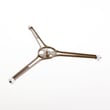
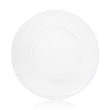
- Turntable care: chips or scratches on the glass can lead to breakage during use.
Common pros and cons (what we see most often)
| What owners usually like | What can be frustrating |
|---|---|
| Fast reheating and defrosting | Wear items can fail over time (fuse, door switches) |
| Large cavity for a countertop unit | Heating issues if high-voltage parts weaken |
| Straightforward controls and power levels | Damage from arcing or improper cookware |
If yours is not heating well, check these likely causes
Microwaves that run but do not heat often point to a few common components:
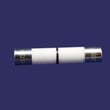
- A blown microwave fuse 3B74133Q
- A failing microwave magnetron 6324W1A001L
- A weak microwave diode 6851W1A002E
- A bad door interlock switch (door must fully latch)
- Burn marks or arcing around the waveguide area
For a symptom-based walkthrough, use why is my microwave not heating.
Why it matters
A “good” microwave is one that heats consistently and runs safely. Following the clearance, turntable, and safe-heating guidance in the manual helps prevent overheating, broken turntables, and arcing that can shorten the life of the magnetron.
Last updated: February 2026
Is there a reset on a Kenmore microwave?
Yes. On many Kenmore microwaves, including model 72166463500, a “reset” is done by restoring power (unplugging briefly) or by using the control-panel settings to return options to their defaults. For the exact key sequence your unit supports, follow the 72166463500 owner's manual.
Quick reset options (start here)
- Power reset: Unplug the microwave (or switch off the breaker), wait 1 minute, then restore power.
- Clear a mistaken entry: Press STOP/CLEAR once.
- Clear and restart cooking: Press STOP/CLEAR, then re-enter time and power level.
- Clock reset: Set the clock again after a power interruption.
- If the display is acting odd: Do a power reset first; then reprogram any settings.
What a reset fixes (and what it does not)
A reset is most useful for control glitches, stuck keys, or after a power surge. It does not fix a failed heating circuit or a door-safety problem.
| Symptom | Best first step | Likely next step if it continues |
|---|---|---|
| Display frozen or buttons not responding | Power reset | Check for a stuck key; review troubleshooting in the manual |
| Microwave runs but does not heat | Verify power level and cooking mode | Diagnose heating components (magnetron, diode, capacitor) |
| Unit goes dead (no display) | Check outlet and breaker | Check internal fuse and door interlock circuit |
If it still will not run after resetting
- Confirm the outlet has power (test with a lamp).
- Make sure the door closes firmly and latches fully.
- If it is completely dead, a blown fuse is common; see microwave fuse 3B74133Q.
- If it runs but will not heat, use our why is my microwave not heating guide to narrow down causes.
Why it matters
Microwaves use door interlocks and internal protection devices to prevent unsafe operation. Resetting restores normal control logic, but repeated shutdowns usually point to a fuse, door switch, or heating-component issue that needs diagnosis.
Last updated: February 2026
Where is the fuse on a Kenmore 72166463500 microwave?
On the Kenmore 72166463500 countertop microwave, the main fuse is typically mounted inside the cabinet near where the power cord enters, often on or near the noise filter/control area behind the outer cover. Use the wiring and disassembly guidance in the 72166463500 owner's manual before accessing it.
What to check first (before opening the cabinet)
- Confirm the outlet works by plugging in a lamp or small appliance.
- Reset the kitchen GFCI outlet (if used) and check the breaker.
- Make sure the door closes firmly and the latch is not loose.
- If the display is dead but the outlet is good, the internal fuse is a top suspect.
- If the unit goes dead when you close the door or press Start, a door switch issue can also blow the fuse.
Where the fuse sits and what it looks like
Most countertop microwaves like the Kenmore 72166463500 use a small cylindrical ceramic or glass fuse clipped into a holder. It is usually positioned so it protects the entire unit (display, keypad, and cooking circuits).
| Symptom | Most likely area to inspect | Common related part |
|---|---|---|
| Completely dead, no display | Main fuse and its holder | Microwave fuse 3B74133Q |
| Dead after pressing Start | High-voltage circuit components | Microwave diode 6851W1A002E |
| Dead or erratic when door moves | Door interlock circuit | Microwave door interlock switch 6600W1K001R |
Safety notes we follow for fuse access
Microwaves store dangerous high voltage even when unplugged. If you are not fully comfortable working around high-voltage components, we recommend using a qualified service technician.
- Unplug the microwave before removing any panels.
- Do not touch the high-voltage capacitor, magnetron, or wiring in the high-voltage section.
- Replace a blown fuse only with the exact type and rating specified for the model.
- If the replacement fuse blows again, troubleshoot the cause (door switches, wiring, high-voltage parts) instead of installing another fuse.
Why it matters
The fuse is a safety device; it opens when there is a short, overload, or door-interlock fault. Replacing the fuse without fixing the underlying problem can lead to repeated failures and additional damage.
Last updated: February 2026