Owner’s manual
 View engine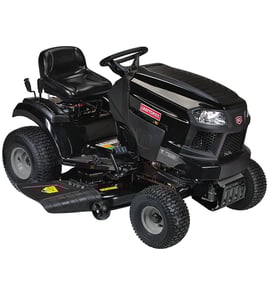


What engine does Craftsman riding mower use?
For Craftsman lawn tractor model 917273470, the owner’s manual identifies it as a 20.0 HP tractor with a low-emission engine; this model line is commonly equipped with a Kohler engine (the manual’s decals list includes an “Engine, Kohler” decal). For engine-specific details (exact engine model and tune-up specs), use the 917273470 owner’s manual.
We recommend verifying the engine make and model from the engine ID label, then matching it to the manual’s maintenance section.
- Lift the hood and look for an engine ID sticker or metal tag (often on the blower housing or valve cover)
- Record the engine model, type, and code/spec numbers
- Compare the brand name on the shroud (often Kohler) to the decal information
- Use the recorded numbers when ordering ignition, fuel, or air-intake parts
- Follow the manual’s safety steps before working near belts, blades, or the starter
| Item | What the documentation shows |
|---|---|
| Tractor rating | 20.0 HP |
| Mower deck size | 42-inch |
| Starting system | Electric start |
| Drive type | 6-speed transaxle |
| Engine notes | Low-emission engine; decal list includes “Engine, Kohler” |
The exact engine model determines the correct spark plug, air filter, oil type, and carburetor or fuel system parts. It also affects troubleshooting steps when the engine clicks, cranks, or will not start.
Last updated: February 2026
What kind of oil do you use in a Craftsman lawn tractor?
For the Craftsman lawn tractor model 917273470, we use 4-cycle engine oil; the tractor ships from the factory filled with summer-weight oil, and for cold-weather operation you switch to the viscosity shown in the oil chart in the 917273470 owner's manual.
Most 4-cycle riding mower engines run best on one of these, depending on temperature:
- SAE 30: common “summer-weight” oil for warm weather mowing
- 10W-30: good all-around choice for mixed temperatures
- 5W-30: best for easier starting in colder weather
- Synthetic 5W-30: strong option for wide temperature swings and easier cold starts
The manual’s process is straightforward; we follow these steps:
- Park the tractor on level ground
- Remove the oil fill cap/dipstick, wipe it clean
- Reinsert the dipstick and rest the cap on the tube (do not thread it in)
- Pull and read the level; add oil to the FULL mark
- Do not overfill
| Outdoor temperature | Oil type that typically fits best | Why |
|---|---|---|
| Above ~40°F | SAE 30 or 10W-30 | Stable protection in warm mowing conditions |
| Around 0°F to 40°F | 5W-30 (or synthetic 5W-30) | Easier cranking and faster lubrication |
| Wide swings (spring/fall) | Synthetic 5W-30 | Better viscosity stability across temps |
Using the right viscosity helps the engine lubricate quickly at startup and stay protected when hot. It also reduces hard-start complaints in cold weather and helps prevent overheating-related wear.
Last updated: February 2026
How much does it cost to replace a riding lawn mower engine?
Replacing the engine on a Craftsman lawn tractor model 917273470 typically costs $800 to $2,500 total (engine plus labor). The exact price depends on engine type, whether you choose OEM or aftermarket, and how much related maintenance (belts, pulleys, tune-up parts) you do at the same time; see the 917273470 owner's manual for model-specific service and safety guidance.
- Engine (new): $500 to $1,800
- Labor (shop install): $300 to $900
- Pickup/delivery (if needed): $0 to $200
- Optional add-ons: $50 to $300 (battery, fuel filter, spark plug, oil and filter)
| Scenario | What you pay for | Typical total |
|---|---|---|
| DIY swap | Engine + fluids + small parts | $500 to $1,900 |
| Shop swap | Engine + labor | $900 to $2,500 |
| “While you’re in there” refresh | Shop swap + tune-up items | $1,000 to $2,800 |
- Engine brand and horsepower (higher output usually costs more)
- Crankshaft size and PTO configuration (must match your mower deck drive setup)
- Condition of the drive and deck system (worn belts, idlers, mandrels add cost)
- Electrical and safety interlock issues (seat switch, brake switch, wiring)
- Availability of a direct-fit replacement versus modifications
Before committing to an engine replacement, we recommend checking these common causes of no-start or poor running:
- Battery charge and cable connections
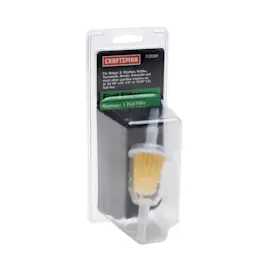
- Fuel quality and fuel filter condition
- Air filter and cooling fins (overheating risk)
- Spark plug condition and correct gap
- Safety interlock operation (seat and brake switches)
A worn deck drive system can also make the tractor feel “weak” even with a good engine. If your blades will not rotate, a common fix is replacing the deck belt such as the v-belt 532138255.
An engine swap is one of the highest-cost repairs on a riding mower. Pricing it correctly helps you avoid spending engine money when the real problem is fuel delivery, ignition, overheating maintenance, or a worn belt and pulley system.
Last updated: February 2026