Owner’s manual
 View engine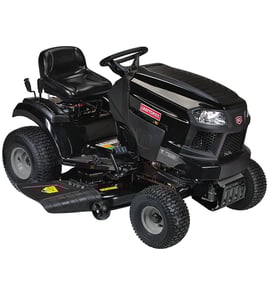


How to tell year of Craftsman lawn tractor?
On a Craftsman lawn tractor like model 917288673, the most reliable way to tell the year is to use the product identification label and decode the date code (when present) or match the tractor’s product number information in the 917288673 owner's manual. This confirms the build timeframe without guessing from appearance.
Check these common label locations first (clean the area so the numbers are readable):
- Under the seat pan or on the seat support
- On the frame rail near the engine
- Under the hood near the battery tray
- Near the rear fender or transaxle area
- On the mower deck shell (deck model info, not always the tractor year)
Many Craftsman riding mowers use a 6-digit date code on a label that reads as:
- MMDDYY (month, day, year)
| Code | Meaning | Build date |
|---|---|---|
| 072811 | MMDDYY | July 28, 2011 |
If your label shows a different pattern (letters mixed in, more digits, or multiple codes), use the identification section in the manual to confirm which number is the date code versus a product/serial number.
- If the last two digits are 00 to 26, that typically indicates 2000 to 2026.
- If the label has both a product number and a serial/date code, use the date code for the year.
- Battery labels often show a month and year; that helps with service history but does not always equal the tractor’s build year.
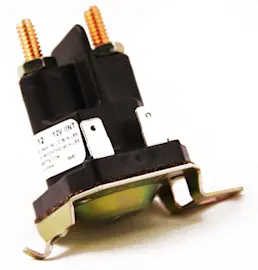
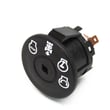
Knowing the correct year helps us match the right Craftsman parts and specs for maintenance and repairs (belts, blades, steering parts, and electrical items). For example, starting and charging issues often trace back to wiring or switching components such as the starter solenoid 582042802 or the switch.pto 582107601.
Last updated: February 2026
Is it worth replacing a lawn mower engine?
Replacing the engine on your Craftsman 917288673 front-engine lawn tractor is worth it when the tractor is in solid overall condition and the problem is truly limited to the engine; if the tractor also has major drive, deck, or electrical issues, the total repair cost usually makes replacement the better value.
Use this checklist before you spend money on an engine:
- Confirm the no-start or low-power issue is not battery, wiring, fuel, or maintenance related (the manual’s troubleshooting chart covers these basics).
- Check for multiple big-ticket problems at the same time (engine plus transaxle/drive plus deck).
- Compare total repair cost (engine + labor + any “while you’re in there” parts) to the tractor’s current value.
- Consider how the tractor has been maintained (clean cooling fins, regular oil changes, fresh fuel).
- Factor in downtime; an engine swap can take longer than common repairs.
The manual lists several issues that can mimic a bad engine, including weak/dead battery, corroded terminals, loose/damaged wiring, dirty air screen/fins, dirty fuel filter, stale fuel, and spark plug problems. Start there before committing to an engine replacement.
A few high-impact checks:
- Battery condition and cable connections
- Starter circuit (solenoid and wiring)
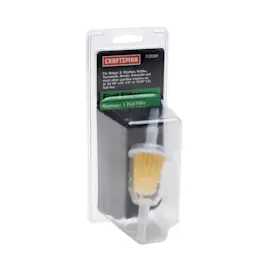
- Fuel quality and fuel filter restriction
- Air filter and engine cooling screen/fins cleanliness
| Scenario | Typical recommendation | Why |
|---|---|---|
| Tractor is otherwise solid; deck and drive are healthy | Replace the engine | You keep a known-good chassis and avoid buying a whole new machine |
| Engine issue plus loss of drive or major hydro/transaxle problems | Replace the tractor | Stacked major repairs quickly exceed the tractor’s value |
| Symptoms match electrical/fuel maintenance items | Repair/maintain first | Lower-cost fixes often restore starting and power |
If the engine only clicks and will not start, the starting circuit is a common culprit. For this model, a frequent replacement item is the lawn tractor starter solenoid 582042802.
An engine replacement is a high-cost repair; doing the manual-based troubleshooting first prevents replacing an engine when the real issue is a battery, wiring, fuel restriction, or overheating from clogged cooling fins.
For model-specific operating and troubleshooting steps, use the owner's manual.
Last updated: February 2026
What brand engine does Craftsman use?
Craftsman riding mowers and lawn tractors (including model 917288673) are commonly equipped with engines sourced from major small-engine manufacturers such as Briggs & Stratton, Kohler, and sometimes Kawasaki. The exact engine brand on your tractor is identified on the engine label and in the 917288673 owner's manual.
Check these spots on the tractor; they are the fastest way to confirm what you have:
- Engine shroud or blower housing decal (usually shows the engine maker and model)
- Valve cover label (common on OHV engines)
- Emissions label near the muffler or engine block
- Engine ID tag stamped on the block (varies by manufacturer)
- The specifications section in the 917288673 owner's manual
Different engine makers use different tune-up parts and service specs (spark plug type, oil capacity, air filter style). Here is a practical comparison:
| Engine brand | Common on Craftsman tractors | What changes for maintenance |
|---|---|---|
| Briggs & Stratton | Very common | Air filter, spark plug, oil type/amount, carburetor parts |
| Kohler | Common on some models | Filter styles and service intervals can differ |
| Kawasaki | Less common | Often different air filter and fuel system parts |
The tractor model number (917288673) gets you to the correct chassis, deck, and steering parts list, but many engine service parts are selected by the engine model and type code. Using the engine label prevents wrong-part returns and saves time.
If you are troubleshooting a no-start or click-no-crank condition, the starting circuit parts on the tractor side can also be involved. For example, a weak or failed starter solenoid is a common cause; see the lawn tractor starter solenoid 582042802 if your symptoms match.
- Use fresh fuel; gasoline with up to 10% ethanol (E10) is acceptable for this tractor
- Make sure the brake pedal is fully depressed and PTO is disengaged
- Check battery connections for corrosion and tightness
- Listen for a single click (often solenoid) versus rapid clicking (often low battery)
Last updated: February 2026
What model number is a Craftsman 6.75 lawn mower?
A “Craftsman 6.75” label by itself is not a single model number; Craftsman used the 6.75 rating on multiple walk-behind mowers. On our Craftsman tractor page, the model number shown in the documentation is 917.28867 (listed as 917288673 on the parts list); confirm your mower’s exact model from the ID tag or your owner's manual.
For a walk-behind mower, the model number is typically on a sticker or metal tag in one of these spots:
- Rear of the deck near the discharge opening
- Under the seat area (riding units) or behind the engine (walk-behind)
- On the frame rail near the rear wheels
- Near the handle mount or height-adjuster bracket
- Inside the battery compartment (electric start models)
“6.75” usually refers to an engine power rating, not the mower’s product model. Use the mower’s model number first, then use the engine model/type/code only if you are ordering engine-specific parts.
| What you have | What it identifies | Best use |
|---|---|---|
| “6.75” marking | Engine power class | Not reliable for parts lookup |
| Mower model number (example format 917.xxxxx) | The mower/tractor product | Correct diagrams and parts |
| Engine model/type/code | The engine itself | Carburetor, ignition, governor parts |
Parts like blades, belts, deck hardware, and safety switches are model-specific. Using only “6.75” often leads to the wrong blade length, wrong belt routing, or mismatched mounting holes.
Last updated: February 2026