Owner’s manual
 Error Codes






What is a bottom mount fridge freezer?
A bottom-mount fridge freezer is a refrigerator design where the fresh-food compartment is on top (at eye level) and the freezer is a pull-out drawer on the bottom. Your KitchenAid KFIS25XVMS2 uses this layout to make everyday refrigerated items easier to reach; see the owner's manual for features and use details.
How a bottom-mount design works
- Fresh foods (milk, produce, leftovers) stay in the upper refrigerator section.
- Frozen foods store in the lower freezer drawer, typically in baskets or bins.
- Cold air is managed separately for the refrigerator and freezer using temperature controls.
- Many bottom-mount models include an ice maker and dispenser features, depending on configuration.
Pros and cons (quick comparison)
| Feature | Bottom-mount refrigerator | Top-freezer refrigerator |
|---|---|---|
| Everyday access | Fresh food at eye level | Freezer at eye level |
| Bending/reaching | Less bending for fridge items | More bending for fridge items |
| Freezer storage | Drawer-style, often deeper | Shelf-style, often easier to see |
| Organization | Baskets/bins help sorting | Shelves make items visible |
Setup tips that matter for performance
Bottom-mount refrigerators need proper placement and airflow to cool correctly and keep doors sealing well.
- Leave about 1/2 inch of space at the top and behind the refrigerator for ventilation.
- If the unit has an ice maker, allow extra room behind for water line connections.
- If installed next to a fixed wall, leave about 2 3/4 inches so the door can swing open.
- Avoid installing near heat sources; keep the room temperature above 55°F.
Why it matters
This layout is popular because it prioritizes the items you use most (fresh food) while still giving the freezer large, drawer-style capacity. It can also reduce door-open time because you are not digging through the freezer for everyday items.
Last updated: February 2026
What's the life expectancy of a KitchenAid refrigerator?
Most KitchenAid refrigerators, including the KitchenAid KFIS25XVMS2 bottom-mount style, typically last 12 to 15 years with normal household use and basic maintenance; 10 to 17 years is a realistic overall range. Keeping airflow clear, seals tight, and temperatures stable has the biggest impact on lifespan (see the owner's manual).
Typical lifespan and what affects it most
A refrigerator’s service life is driven more by operating conditions than brand name alone.
- Heat and airflow: Dirty condenser area and blocked vents make the compressor work harder.
- Door seal condition: Leaky gaskets cause long run times and moisture issues.
- Power quality: Frequent outages or surges stress the electronic control.
- Ice and water use: Heavy dispenser use increases wear on ice system parts.
- Maintenance habits: Regular cleaning and correct temperature settings extend life.
What “sealed system” coverage tells you
Your model’s warranty information highlights the sealed refrigeration system (compressor, evaporator, condenser, dryer, and connecting tubing) as a major long-life subsystem. That aligns with real-world longevity: when a refrigerator reaches end-of-life, it is often due to sealed-system or control-related failures.
| Component group | Examples | Why it matters for lifespan |
|---|---|---|
| Sealed system | compressor, evaporator, condenser, dryer | Core cooling; expensive repairs when it fails |
| Airflow system | evaporator fan, air channels | Poor airflow causes warm temps and long run times |
| Door sealing | gaskets, alignment | Prevents warm air leaks and frost buildup |
| Controls | electronic control, sensors | Manages defrost and temperature stability |
Maintenance that adds years (practical checklist)
- Vacuum dust from the condenser area and keep clearance around the cabinet.
- Set temps to about 37°F fresh food and 0°F freezer.
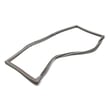
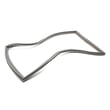
- Keep door gaskets clean; replace torn or hardened seals such as the refrigerator gasket panel (gray) W10830055 when they no longer seal.
- Avoid overpacking; keep interior vents unblocked.
- If you have water and ice, replace filters on schedule and flush air after filter changes using how to purge air from a refrigerator water dispenser video.
Why it matters
A refrigerator that runs longer and steadier uses less energy, holds safer food temperatures, and reduces wear on high-cost parts like the compressor and electronic control.
Last updated: February 2026
Why is my KitchenAid refrigerator leaking at the bottom?
On KitchenAid model KFIS25XVMS2, leaking at the bottom is usually caused by a loose or partially connected water line, a dispenser tube connection that is not fully tightened near the base grille, or a defrost drain issue that lets water overflow into the drain pan and onto the floor. See the owner's manual for model-specific checks.
Quick checks we recommend first
- Pull the refrigerator forward and look for water trails from the household supply line to the inlet area.
- Inspect the tubing and fittings for cracks, kinks, or a line that is not fully seated in the connector.
- Check for water on the floor near the base grille; tighten the dispenser tube connections if they are loose.
- If the leak happens after using the dispenser, flush the water system and confirm the filter is seated correctly.
- If the leak appears during or after defrost, suspect a clogged/iced defrost drain.
Most common causes and what you’ll notice
| What’s leaking | Typical symptom | Where to look |
|---|---|---|
| Water supply line or fitting | Puddle behind the unit | Back of refrigerator, lower area |
| Dispenser tube connection | Water near base grille/front | Bottom of freezer door area and base grille |
| Defrost drain/drain pan overflow | Water shows up periodically (often after defrost) | Freezer drain area, drain pan underneath |
| Filter or filter housing issue | Drips after filter change or low flow | Filter compartment and tubing |
Parts that can be involved (when symptoms match)
If you confirm the leak is tied to cooling-system service work or sealed-system components, these model-matched parts may be involved:
- Refrigerator uv filter dryer WPW10143759 (used in the sealed refrigeration system)
- Refrigerator condenser coil WPW10346415 (sealed-system component)
Why it matters
Even small leaks can damage flooring and can also lead to ice buildup around the freezer drain or base grille area, which can create repeat leaks and cooling airflow problems.
When to stop and get service
If you see water contacting wiring, if the leak is coming from inside the cabinet walls, or if tightening connections does not stop the leak, we recommend having a qualified technician diagnose it.
Last updated: February 2026
How to remove bottom grill from KitchenAid refrigerator?
To remove the bottom grille (base grille) on your KitchenAid KFIS25XVMS2 bottom-mount refrigerator, we grasp the grille firmly and pull it straight toward us. It snaps into place, so a steady pull releases it without tools in most cases (see the owner's manual).
Steps to remove the bottom grille
- Unplug the refrigerator or disconnect power (recommended if you plan to clean behind the grille).
- Stand in front of the refrigerator and locate the grille at the very bottom.
- Grasp the grille firmly with both hands.
- Pull the grille straight toward you to unsnap it.
- Set it aside on a soft surface to avoid scratches.
If it feels stuck
A base grille can feel tight if it has not been removed in a long time or if the tabs are binding.
- Pull from both ends evenly (left and right) to avoid twisting.
- Use a gentle rocking motion while pulling straight out.
- Check for debris along the bottom edge that may be wedging it in place.
- If needed, use a flat-blade screwdriver carefully to help release a tab (avoid prying against painted surfaces).
Reinstalling the grille
- Align the grille with the lower frame.
- Press evenly along the grille until it snaps back into place.
| Task | Grille position | Power needed? |
|---|---|---|
| Cleaning condenser area | Removed | Recommended to disconnect |
| Leveling the refrigerator | Removed | Not required |
| Normal operation | Installed | Yes |
Why it matters
Removing the base grille gives you access for routine cleaning and airflow checks. In dusty, greasy, or pet-heavy homes, cleaning behind the grille helps the condenser area stay efficient and can reduce cooling problems.
Last updated: February 2026