


What is the most common problem with a Maytag washer?
On the Maytag LAT2916AAE washer, the most common service issues are draining problems (won’t drain or drains slowly) and spin problems (won’t spin or spins weakly). These symptoms often trace back to a lid safety switch issue, a worn drive belt, or a restriction in the drain path.
Most common symptoms and what they usually point to
- Won’t spin: lid switch not closing, worn belt, motor or drive system issue
- Won’t drain / drains slowly: drain hose restriction, pump blockage, kinked hose
- Stops mid-cycle: intermittent lid switch, timer contact issue
- Loud during spin: bearing wear, loose components, belt slippage
- Fills but won’t agitate: belt or motor mount/drive issue
Quick checks we recommend first (safe, no special tools)
- Confirm the lid closes firmly and the lid strike lines up with the switch.
- Redistribute the load (one heavy item can prevent a stable spin).
- Check the drain hose for kinks and make sure it is not shoved too far down the standpipe.
- Unplug the washer for 2 minutes, then retry a cycle (resets some timer-driven stalls).
Parts that commonly solve “won’t spin” on this model
If the washer fills and agitates but will not spin, these are frequent fixes:
| Symptom | Common cause | Example part for LAT2916AAE |
|---|---|---|
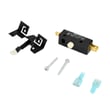
| Won’t spin, acts “dead” with lid open | Lid safety circuit not closing | Lid switch W10820036 |
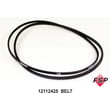
| Spins weakly or not at all, burning rubber smell | Belt slipping or broken | Washer drive belt 12112425 |
| Intermittent cycle timing or stalls | Timer contacts worn | Washer timer WP22002184 |
Why it matters
Drain and spin problems are the issues that most often leave clothes soaking wet and can lead to extra wear on the motor, belt, and bearings. Catching the root cause early usually keeps the repair simpler and less expensive.
Last updated: January 2026
What is the capacity of the LAT2916AAE?
The exact tub capacity for the Maytag LAT2916AAE is typically listed in the owner’s literature or on the model’s rating information, but it is not provided in the model data we have here. Most Maytag top-load washers from this era fall in the approximate 2.5 to 3.5 cubic foot range.
How to identify the correct capacity for your exact LAT2916AAE
Use these quick checks to confirm the true capacity for your specific washer:
- Check the model and serial tag (often under the lid or on the cabinet rim) for any printed capacity or series info.
- Look for a tub size statement in any original Maytag paperwork that came with the washer.
- Compare your washer’s tub diameter and depth to typical top-load tub sizes (capacity is based on usable tub volume).
- If you are shopping parts, match by model number first; capacity is less important than model match.
- If the washer will not start so you can test fill levels, check the lid safety circuit first because a failed lid switch can prevent operation.
Common capacity ranges (what most owners can expect)
Here is a practical way to think about capacity when planning loads:
| Approx. capacity | Typical load size | Examples |
|---|---|---|
| 2.5 to 2.9 cu. ft. | Small to medium | Towels for 1 to 2 people |
| 3.0 to 3.5 cu. ft. | Medium to large | Mixed weekly laundry |
| 3.6+ cu. ft. | Large | Bulkier items more easily |
Why it matters
Capacity affects how much you can wash per cycle and how well items circulate during agitation and spin. Overloading a smaller-capacity tub can lead to poor cleaning, out-of-balance spinning, and extra wear on drive components such as the belt.
Parts that can affect real-world “usable capacity”
If the washer is not filling, agitating, or spinning correctly, it can feel like the capacity is smaller than it should be. These model-matched parts are common starting points:
- Washer water inlet valve WP22002360 (controls hot and cold water flow into the tub)
- Washer drive belt 12112425 (drives agitation and spin on belt-drive designs)
- Lid switch W10820036 (prevents operation when the lid is open)
Last updated: January 2026
How do I fix f5 E1 error on Maytag washer?
On a Maytag LAT2916AAE washer, an F5 E1 error points to a lid switch or lid-lock sensing problem. We fix it by resetting power, checking that the lid closes and actuates the switch, inspecting wiring, and replacing the failed switch if it does not test correctly.
Quick reset and basic checks
- Unplug the washer (or switch off the breaker) for 1 minute, then restore power.
- Close the lid firmly; make sure nothing is caught between the lid and top.
- Check the lid strike area for cracks, looseness, or misalignment.
- Try a spin cycle; if the washer will not spin, the lid switch circuit is the first place to focus.
Test the lid switch circuit (most common fix)
A failed lid switch can stop agitation or spin and trigger lid-related errors. If the switch does not click consistently when the lid closes, or it fails a continuity test, replace it with the correct part for this model such as the lid switch W10820036 or the washer lid switch WP207166.
What to look for
| Symptom | What it usually means | What we do next |
|---|---|---|
| No click when lid closes | Switch not being actuated | Inspect lid strike and switch mounting |
| Clicks but no spin | Switch contacts failing | Continuity test with a meter |
| Works intermittently | Loose connector or broken wire | Reseat connectors, repair wiring |
Wiring and connector inspection
- Unplug the washer before accessing internal wiring.
- Inspect the harness at the lid switch for loose plugs, corrosion, or pinched wires.
- Look for rubbed-through insulation where the harness passes through the cabinet.
- If a wire is damaged, repair it correctly (secure, insulated, strain-relieved).
Why it matters
The lid switch is a safety interlock. If the washer cannot confirm the lid is closed, it will often stop spinning to prevent injury and to protect the drive system.
Last updated: January 2026


