 Owner’s manual


Is the GTW220ACK7WW high efficiency?
Yes. For the GE GTW220ACK3WW washer family, this is a high-efficiency (HE) design that uses lower water levels while still providing effective cleaning action; seeing less water in the tub than older washers is normal. For operating details, see the GTW220ACK3WW owner’s manual.
How we can tell it’s HE on this model family
In the GTW220/GTW330/GTW460/GTW485/GTW490 manual used for GTW220-series washers, GE notes that the washer is a high-efficiency washing machine and that water levels may look low compared to older models.
Key HE traits you’ll notice:
- Lower water level during wash and rinse (clothes may not be fully submerged)
- Load sensing and short spins during sensing on some cycles
- Better results when using HE detergent and correct dosing
- Longer cycle times on some settings compared to older, deep-fill washers
What “high efficiency” means for day-to-day use
HE washers like the GTW220-series are designed to clean with less water and energy. To get the best performance:
- Use HE detergent and measure carefully (too much causes oversudsing)
- Load items loosely around the agitator; do not pack the basket
- Use Deep Fill only when extra water is truly needed
- If you use fabric softener, select Deep Rinse (when available) for better dispensing
Quick comparison: HE vs older deep-fill top-load washers
| Feature | HE top-load (GTW220-series behavior) | Older top-load behavior |
|---|---|---|
| Water level | Lower, often below top of clothes | Higher, often covers clothes |
| Detergent | HE detergent recommended | Regular detergent often used |
| Efficiency | Lower water and energy use | Higher water and energy use |
| Common “normal” observation | Water level seems low | Water level seems “full” |
Why it matters
Knowing your washer is HE helps prevent common issues like poor cleaning, residue, and leaks caused by oversudsing. It also explains why the tub may not fill the way older washers did.
Last updated: January 2026
Where is the filter on my GE Deep Fill washing machine?
On the GE GTW220ACK3WW top-load washer, there is not a user-accessible “filter” like many front-load washers have. Routine maintenance is mainly cleaning the dispensers and keeping the inlet screens at the water valve connections clear; see the GTW220ACK3WW owner’s manual.
What to check on this model (common “filter” locations)
On GTW220ACK3WW, customers often mean one of these items:
- Water inlet screens: small mesh screens inside the hot and cold hose connections at the back of the washer and sometimes at the faucet end.
- Drain pump area: debris can collect in the pump or hoses, but it is not designed as a quick-clean filter door on this style.
- Fabric softener dispenser (on some versions): buildup can restrict flow and cause residue.
How to clean the inlet screens (safe DIY)
- Unplug the washer.
- Turn off both water faucets.
- Remove the fill hoses from the washer’s inlet valves.
- Gently clean the screens with a soft brush; do not puncture the mesh.
- Reconnect hoses and check for leaks.
Quick checklist
- Use a towel or shallow pan to catch water from the hoses.
- Confirm hoses are on the correct valves (H for hot, C for cold).
- If water flow is still weak, also check the screens at the faucet end.
When a “filter” issue is really a drain problem
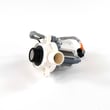
If the washer will not drain, drains slowly, or leaves water in the tub, the drain pump may be restricted or failing. For this model, the compatible replacement is the washer drain pump assembly WH23X28418.
| Symptom | Most likely area to inspect | Typical next step |
|---|---|---|
| Slow fill or fill error | Inlet screens, water supply | Clean screens, verify faucets fully open |
| Won’t drain / standing water | Drain pump, drain hose | Check for clogs; consider pump replacement |
| Residue on clothes | Dispenser, detergent use | Clean dispenser; use HE detergent correctly |
Why it matters
Keeping inlet screens and dispensers clean helps prevent low-fill issues, poor wash performance, and nuisance error conditions, especially when using options like Deep Fill that depend on consistent water flow.
Last updated: January 2026
What are common problems with GE washers?
Common problems we see on GE washers like model GTW220ACK3WW include water leaks, failure to drain, no spin or weak spin, excessive vibration, and odor buildup. Many issues start with loading, detergent, or hose setup, but worn parts such as the drain pump or drive belt can also be the cause; see the GTW220ACK3WW owner’s manual for model-specific troubleshooting tips.
Most common symptoms (and what they usually mean)
- Leaking water: loose fill hoses, worn hose washers, oversudsing, or a drain issue.
- Won’t drain: kinked drain hose, standpipe setup problem, or a failing pump.
- No spin or clothes too wet: out-of-balance load, lid lock issue, belt slip, or drive system problem.
- Loud banging or walking: unbalanced load, washer not level, or suspension wear.
- Low water level: normal on high-efficiency top-load designs; water may not cover clothes.
- Bad odors: detergent residue and moisture left in the tub area.
Parts that commonly solve these problems on GTW220ACK3WW
If troubleshooting points to a failed component, these are frequent fixes for this model:
| Symptom | Likely part area | Example compatible part for this model |
|---|---|---|
| Won’t drain / drains slowly | Drain system | Washer drain pump assembly WH23X28418 |
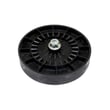
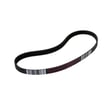
| No spin / weak spin | Belt drive | Washer drive belt WH01X24697 |
| Out-of-balance, heavy shaking | Suspension | Washer suspension rod kit WH16X26908 |
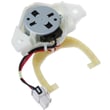
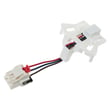
| Won’t start or lid won’t lock | Safety interlock | Washer lid lock WH08X37938 |
Quick checks we recommend before replacing parts
- Use HE detergent and reduce the amount if you see suds or leaks.
- Confirm the drain hose is not shoved too far into the standpipe (helps prevent siphoning).
- Redistribute the load and run Drain & Spin if clothes are wetter than normal.
- Verify hot and cold hoses are on the correct valves and fully opened.
- Level the washer so all four legs sit firmly on the floor.
Why it matters
Catching the root cause early helps prevent repeat failures. For example, oversudsing can look like a leak, and an out-of-balance load can mimic a spin or suspension problem.
Last updated: January 2026


