Owner’s manual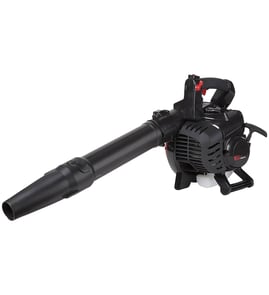






What is the life expectancy of a gas leaf blower?
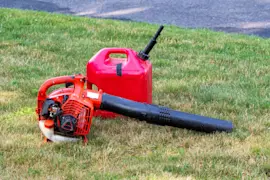
A gas leaf blower typically lasts about 10 years with normal homeowner use and routine maintenance. For the Craftsman 358794964 2-cycle blower/vac, using the correct 40:1 fuel mix and storing it properly are the biggest factors in reaching that lifespan; see the 358794964 operator's manual.
Typical lifespan (what to expect)
Most gas, handheld 2-cycle leaf blowers fall into these ranges:
| Use pattern | Typical life expectancy | What usually ends it |
|---|---|---|
| Occasional seasonal use | 10 to 15 years | Fuel system varnish, cracked fuel lines |
| Regular homeowner use | About 10 years | Carburetor wear, air leaks, compression loss |
| Heavy or frequent use | 5 to 8 years | Accelerated engine wear, vibration damage |
Maintenance habits that extend life
We see the longest-lasting blowers when these basics are followed:
- Mix fresh fuel at 40:1 (3.2 oz 2-cycle oil per 1 gallon unleaded gas)
- Avoid old or alcohol-blended fuel sitting in the tank for long periods
- Empty the fuel system before storage longer than 30 days
- Keep the air filter clean and replace it when it will not clean up
- Inspect fuel lines for soft spots, cracks, or leaks and replace as needed
Quick “wear item” checklist
These items commonly need attention long before the blower reaches end-of-life:
- Spark plug and air cleaner (normal wear items)
- Fuel lines and fittings (hardening, cracking, air leaks)
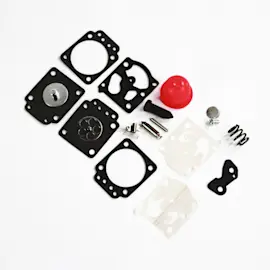
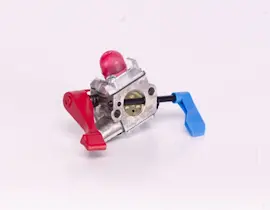
- Carburetor (gumming from stale fuel)
- Recoil starter parts (spring wear)
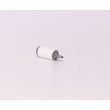
If you’re chasing a fuel leak or hard-start issue, the ayp lawn & garden equipment fuel line, large 530069216 is a common replacement part type for this model family.
Why it matters
A 2-cycle engine can run for years, but stale fuel and improper storage can damage the fuel system quickly. Following the correct fuel mix and storage steps prevents hard starting, poor performance, and premature carburetor and fuel line failures.
Last updated: January 2026
Is a higher mph or CFM better for a leaf blower?
For the Craftsman 358794964 blower/vac, neither MPH nor CFM is “better” by itself; the best choice depends on the job. Higher CFM moves more leaves at once for faster cleanup, while higher MPH helps break loose wet, stuck, or heavier debris. This model is rated 205 MPH / 410 CFM (a balanced combo for most yard cleanup); see the 358794964 operator's manual for operating tips and safe use.
How to choose: MPH vs. CFM
- Choose higher CFM when you want to move a larger volume of dry leaves across open areas (lawns, driveways, patios).
- Choose higher MPH when you need more “punch” to dislodge wet leaves, packed debris, or material stuck in cracks.
- Best real-world results usually come from a good balance of both, plus the right nozzle/tube setup and throttle control.
Quick guide by task
| Task | What matters more | Why |
|---|---|---|
| Dry leaves on driveway/patio | Higher CFM | Moves more material per pass |
| Wet leaves or matted debris | Higher MPH | Breaks debris loose and pushes it forward |
| Debris in joints/cracks | Higher MPH | Concentrates force to clear tight spots |
| Large yard cleanup | Higher CFM (plus steady technique) | Faster coverage and less time per area |
Tips to get better performance from this model
- Use the full blower tube/nozzle extension to focus the air stream.
- Run at the lowest throttle that still does the job to reduce noise and improve control.
- Rake or broom first to loosen debris, then blow into piles.
- In dusty conditions, lightly dampen surfaces before blowing.
- Keep the air stream directed away from people, pets, cars, windows, and loose gravel.
Why it matters
MPH and CFM affect both cleanup speed and control. Matching the blower’s airflow to the debris type helps you finish faster, avoid scattering material, and reduce the chance of throwing rocks or other hard objects.
Last updated: January 2026
How to find Craftsman leaf blower model number?
On the Craftsman gas leaf blower model 358794964, the model number is printed on the product identification label and also appears on the cover of the 358794964 operator’s manual. Check the blower housing (engine/motor casing) first, then the underside and rear areas where labels are commonly placed.
Where to look on the blower
Most Craftsman handheld blower/vac units place the ID label on a flat, easy-to-scan surface. Look in these spots:
- Side of the engine or blower housing (near the starter or air intake area)
- Back of the unit near the handle or rear housing
- Bottom of the unit (underside of the housing)
- Near the vacuum inlet door area (on blower/vac combo models)
- On a decal plate close to the fuel tank
What the label usually shows
The label typically includes several identifiers. Use the model number for parts lookup.
| What you see on the label | What it means | What to use for parts |
|---|---|---|
| Model No. (example: 358.794964) | The exact model identifier | Use this (drop the dot if needed) |
| Serial number | Unique unit ID | Not required for most parts |
| Engine specs (cc/CFM/MPH) | Performance information | Not a model number |
Tips to read and use the model number correctly
- Write it exactly as shown; for this unit it may appear as 358.794964 in print
- When searching parts, it’s common to enter it as 358794964 (no punctuation)
- If the label is dirty, wipe it with a damp cloth and mild soap; avoid solvents that can remove printing
Why it matters
Craftsman leaf blowers often share similar housings, but parts like the carburetor, fuel line, and starter components can vary by model. Using the correct model number helps ensure you get the right diagrams and the right replacement parts the first time.
Last updated: January 2026