 Installation guide
 Owner’s manual


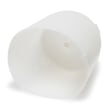

How to identify a Kenmore washer model?
Your Kenmore washer model number is printed on the model and serial number plate; for Kenmore model 11022622100, that plate is the key identifier we use to match the correct washer parts and documentation. Once you find the full model number, you can confidently choose compatible items like a lid switch, drain pump, or inlet valve.
Most Kenmore washers place the model and serial number plate in one of these common spots:
- Under the lid near the tub opening (top-load washers)
- On the back panel near the power cord entry
- Along the cabinet frame near the control console
- Inside the lid area on a sticker or metal plate
For the exact location and what the plate looks like on this design, use the 11022622100 owner's manual.
Kenmore model numbers are often numeric and commonly start with 110. The full model number (like 11022622100) is what ensures parts fit correctly.
| What you find | What it means | What to do next |
|---|---|---|
| A number starting with 110 | Kenmore-built/Whirlpool-built style numbering | Record the full number exactly |
| Model and serial on the same plate | Normal for Kenmore washers | Take a photo for reference |
| Only partial digits visible | Sticker worn or obstructed | Clean gently and use a flashlight |
- Write the model number exactly as shown (all digits, no spaces)
- Take a clear photo before ordering parts
- Keep the number with your purchase records for future repairs
- Use the model number when looking up diagrams, troubleshooting, and installation details
Kenmore washers can look similar across many series, but internal components (like the washer lid switch WP3949238 or washer drain pump WP3363394) can vary by model. Using 11022622100 prevents ordering the wrong replacement part and reduces installation issues.
Last updated: February 2026
How many cubic feet is a Kenmore Model 11022622100?
Kenmore compact washer model 11022622100 is a top-load, agitator-style washer; its exact tub capacity in cubic feet is listed in the product specifications section of the 11022622100 owner's manual. For compact top-load washers of this design, capacity is typically in the 2.0 to 2.6 cu. ft. range.
Check these spots in the 11022622100 owner's manual and you will get the precise cubic feet value for your washer:
- Specifications or features section (often near the front)
- Any page that lists dimensions, electrical requirements, and water usage together
- The model and serial number plate reference (the manual explains where the plate is located)
- Any “capacity” note tied to load size or water level guidance
Most Kenmore compact top-load washers like model 11022622100 are designed for smaller laundry spaces and smaller loads.
| Washer type | Typical capacity range | Best for |
|---|---|---|
| Compact top-load (agitator) | 2.0 to 2.6 cu. ft. | Apartments, small households |
| Standard top-load (agitator) | 3.2 to 4.0 cu. ft. | Medium loads |
| Large-capacity top-load | 4.5+ cu. ft. | Bulky items, large families |
Capacity affects how much you can wash per load, how well items circulate around the agitator, and how often you should run smaller loads to prevent poor cleaning or out-of-balance spinning.
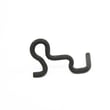
This washer uses a Dual Action agitator design described in the 11022622100 owner's manual. If your loads are coming out twisted or not moving well, common wear items in the agitator can contribute, such as the agitator dog 80040.
Last updated: February 2026
What is the average lifespan of a Kenmore washer?
Most Kenmore washers last 10 to 15 years with normal household use. For Kenmore model 11022622100, routine care (proper loading, correct detergent, and periodic cleaning) helps you reach the high end of that range; neglected maintenance and repeated overloads shorten it. See the 11022622100 owner's manual for model-specific care and operating guidance.
Washers usually fail from a few high-wear systems rather than the cabinet itself:
- Drive system wear (coupler, clutch, gearcase) can cause weak agitation or no spin
- Drain system issues (pump or clogs) can leave water in the tub
- Fill problems (inlet valve or screens) can cause slow fill or no fill
- Safety interlocks (lid switch) can stop spin or agitation
- Suspension wear can increase vibration and out-of-balance events
These habits reduce strain on the motor, transmission, and suspension:
- Load to loose, even distribution; avoid packing the basket tight
- Use the right water level for the load size (too low increases friction and wear)
- Keep the washer level so the basket spins smoothly
- Check pockets and wash small items in a mesh bag to prevent pump clogs
- Address early symptoms quickly (burning smell, grinding, slow drain, intermittent spin)
| Symptom | Most likely area | Example part for this model |
|---|---|---|
| Won’t spin, acts “dead” with lid closed | Lid safety circuit | Washer lid switch WP3949238 |
| Won’t drain or drains slowly | Drain pump or blockage | Washer drain pump WP3363394 |
| Agitates poorly, makes rattling/clicking | Agitator wear items | Agitator dog 80040 |
| Motor runs but basket/agitator doesn’t move right | Drive coupling | Coupling 285753A |
A washer that is nearing end-of-life often shows small warnings first. Catching a worn coupling, lid switch, or drain pump early can prevent secondary damage and keep your Kenmore 11022622100 running reliably for years.
Last updated: February 2026
How to hard reset kenmore washer?
To hard reset the Kenmore compact washer model 11022622100, we recommend a simple power reset first: unplug the washer (or switch off the breaker) for 1 minute, then restore power and try a normal cycle. This clears minor control glitches and stuck cycle behavior.
- Turn the Cycle Selector (Timer) knob to OFF.
- Unplug the washer for 60 seconds (or turn off the breaker).
- Plug the washer back in.
- Close the lid fully.
- Select a cycle and pull the Cycle Selector (Timer) knob out to start.
- If the washer was paused, push the knob in to stop, then pull it out to restart.
For model-specific operating steps and control descriptions, use the 11022622100 owner's manual.
A “reset” will not fix a failed safety switch, drain problem, or drive issue. Check these common causes next:
- Lid not closing or lid switch not clicking (no agitation or spin)
- Washer will not drain (water left in tub)
- Timer knob turns but cycle does not progress normally
- Motor runs but washer does not agitate (drive coupling issue)
- Off-balance load causing repeated stops
| Symptom after reset | Most common check | Example part for this model |
|---|---|---|
| No spin/no agitation | Lid switch operation | Washer lid switch WP3949238 |
| Won’t drain | Pump and drain path | Washer drain pump WP3363394 |
| Motor runs, no agitation | Drive coupling | Coupling 285753A |
A hard reset is fast and safe, and it often clears temporary electrical or timer-control confusion. If the same symptom returns immediately, the washer is usually reacting to a real condition (lid safety, draining, or a worn drive component) that needs troubleshooting or a part replacement.
Last updated: February 2026




