Owner’s manual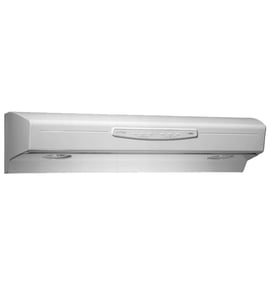




Can I use a 36 inch hood with a 30 inch range?
Yes. You can install a 36-inch range hood over a 30-inch range, and it typically improves smoke and grease capture because the hood overhangs the cooking surface. For the Kenmore Elite 23355023000 hood family, follow the mounting height and venting rules in the 23355023000 owner's manual.
Fit and performance guidelines
A wider hood helps capture the “spill” of steam and grease that spreads beyond the front burners, especially with high-heat cooking.
- Choose a hood that is at least as wide as the cooking surface; wider is commonly better for capture.
- Mount the hood so the top of the hood is 24 to 30 inches above the cooking surface (typical guidance for this style of hood).
- Turn the hood on when cooking at high heat; it reduces grease buildup on cabinets and the hood interior.
- If you cook with high-BTU gas or do a lot of searing, the extra width is even more helpful.
- Keep filters clean so airflow stays strong.
Installation checks that matter most
The hood width is only one part of good ventilation. Ducting and clearances often make a bigger difference.
| What to check | What we recommend | Why it matters |
|---|---|---|
| Mounting height | 24 to 30 inches above cooktop | Best capture without restricting access |
| Venting method | Ducted to outdoors when possible | Removes heat, moisture, and odors effectively |
| Duct material | Metal ductwork | Reduces fire risk and holds up to heat/grease |
| Makeup air | Provide sufficient air for combustion appliances | Helps prevent backdrafting |
Filter sizing tip (avoid ordering the wrong width)
If you are pairing a 36-inch hood with a 30-inch range, make sure you buy filters that match the hood width, not the range width. For example, a 30-inch grease filter set like the range hood 30-in hood grease filter, 2-pack 99010302 fits specific 30-inch hood configurations, not a 36-inch hood.
Why it matters
A hood that is wider than the range usually captures more of what rises and spreads, which helps keep your kitchen cleaner and improves ventilation performance without changing how you cook.
Last updated: February 2026
How do I know what model range hood I have?
To identify your Kenmore Elite range hood model, find the rating or specification label on the hood and match the model number printed there to your paperwork; for this page, the model is 23355023000. On many hoods, the label is on the top, the underside, or behind the grease filters.
Where to look on model 23355023000
Check these common label locations first (power off is best if you will remove filters or panels):
- Underside of the hood, near the lights or control area
- Behind the grease filters (remove the filters and look on the inner frame)
- Top of the hood (more common before the hood is installed)
- Inside the bottom cover or bottom panel area
- Near the wiring compartment cover (often close to where the house wiring enters)
For diagrams and typical label placement, use the 23355023000 owner’s manual.
What to write down (so you get the right parts)
Record the information exactly as shown on the label.
- Model number (example: 23355023000)
- Brand (Kenmore)
- Electrical rating (often 120 VAC on residential hoods)
- Any series or production codes
- Finish/color notes (helpful for panels and covers)
Quick checklist
| Item | Why it matters | Example |
|---|---|---|
| Model number | Ensures parts fit and wiring matches | 23355023000 |
| Part name | Helps confirm you are ordering the correct item | Grease filter |
| Dimensions | Helps choose the correct filter size | 30-in, 36-in, 42-in |
Why it matters
Range hood parts are model-specific; even similar-looking Kenmore hoods can use different grease filters, light components, or control parts. Confirming the model number first prevents ordering the wrong filter pack, cover, or electrical part.
Last updated: February 2026
How much bigger should the hood be than the range?
For the best capture on your Kenmore Elite range hood model 23355023000, we recommend choosing a hood that’s at least as wide as the cooking surface, and ideally 3 inches wider on each side (6 inches total wider) when space allows. More coverage helps pull smoke, steam, and grease into the filters before it spreads.
Quick sizing rule of thumb
- Minimum: hood width = cooktop/range width
- Better: hood width = cooktop/range width + 6 inches (3 inches per side)
- Best results: pair good width coverage with correct mounting height (see below)
Mounting height matters as much as width
Your 23355023000 hood is designed to perform best when installed with the top of the hood 24 to 30 inches above the cooking surface. Confirm the exact mounting guidance and clearances in the 23355023000 owner's manual.
Why this matters
A hood that is too narrow or mounted too high lets cooking byproducts escape around the edges. That means more lingering odors, more grease on cabinets, and more frequent cleaning of the grease filter and bottom panel.
Choosing the right hood width (common examples)
| Range/cooktop width | Minimum hood width | Recommended hood width |
|---|---|---|
| 30 in | 30 in | 36 in |
| 36 in | 36 in | 42 in |
| 42 in | 42 in | 48 in |
Tips that improve real-world performance
- Use the fan before you start cooking, then let it run a few minutes after.
- Keep the grease filters clean; clogged mesh reduces airflow.
- If you cook with high heat often, prioritize coverage and airflow over a decorative canopy.
- Make sure the damper opens freely and duct joints are sealed if you are ducted.
- For non-ducted setups, use the correct non-ducted filters specified for the hood.
Related part that affects capture
If grease is escaping or buildup is heavy, inspect and clean the filters; replace if damaged. For some installations, a compatible option is the range hood 30-in hood grease filter, 2-pack 99010302.
Last updated: February 2026
How to clean Kenmore Elite range hood filters?
For Kenmore Elite range hood model 23355023000, we clean the aluminum mesh grease filters about once a month using hot water and mild detergent (or the dishwasher), then dry them completely before reinstalling. If your hood is set up for non-ducted (recirculating) use, the non-ducted filters are cleaned differently.
Before you start (safety)
- Turn the hood off.
- Disconnect power at the breaker or unplug the hood before cleaning.
- Let the cooktop and hood cool completely.
How to clean the aluminum mesh grease filters (most common)
Follow the care steps in the 23355023000 owner's manual.
- Remove the filters by pulling down on the filter tabs and lifting them out.
- Wash with hot water and mild detergent, or place them in the dishwasher.
- Rinse well (if hand-washing).
- Dry fully to prevent dripping and reduce the chance of rust spots.
- Reinstall the filters, making sure they seat flat and the tabs latch.
Cleaning frequency guide
| Cooking style | Recommended cleaning interval |
|---|---|
| Light cooking | About every 4 weeks |
| Daily cooking | Every 2 to 3 weeks |
| Frying or wok cooking | Weekly to every 2 weeks |
If your hood is non-ducted (recirculating)
Non-ducted filters (often called “Clean Cooking” filters) are not cleaned the same way.
- Wipe filter surfaces with a damp cloth and mild detergent.
- Do not immerse in water.
- Do not put them in the dishwasher.
- Replace them when the indicator strips change color (if equipped).
Why it matters
Clean filters keep airflow strong, reduce grease buildup on the blower area, and help control cooking odors. A clogged filter can make the fan louder and less effective.
Last updated: February 2026
Is Kenmore Elite high end?
Yes. Kenmore Elite is positioned as Kenmore’s higher-end line, typically offering upgraded performance, quieter operation, and more premium styling than standard Kenmore models. For your Kenmore Elite range hood model 23355023000, the 23355023000 owner's manual covers the features, operation, and care details that define how this hood is intended to perform.
What “high end” usually means for Kenmore Elite range hoods
We see “Elite” models focus on stronger ventilation performance and better day-to-day usability.
- Higher airflow capability (when installed with proper ducting)
- More refined fit and finish (panels, covers, lighting trim)
- Better user controls (touch pads or upgraded switches)
- Easier maintenance access (filters, light panels)
- More attention to noise control when venting is set up correctly
Performance expectations: ducting matters
Your hood’s real-world performance depends heavily on the duct run. The manual notes the hood can operate at about 80% of rated airflow with 200 equivalent feet of 7-inch round ductwork attached (equivalent length accounts for elbows and transitions). Use the duct length chart in the 23355023000 owner's manual to plan the best vent path.
| Installation factor | What to aim for | Why it helps |
|---|---|---|
| Duct diameter | 7-inch round when applicable | Supports better airflow |
| Duct length | Short, straight runs | Reduces restriction |
| Elbows/transitions | Use fewer fittings | Lowers equivalent length |
Parts that support “premium” day-to-day use
Keeping wear items fresh helps the hood perform like it should.
- Grease filtration: replace or refresh filters such as the range hood 30-in hood grease filter, 2-pack 99010302
- Backdraft control: a sticking damper can reduce performance; consider the range hood vent damper SR740013 if yours is damaged
- Controls: if buttons are failing, the touch pad (off-white) SR169008 is a common fix path
Why it matters
A “high-end” hood only feels high end when it vents efficiently and stays easy to use. Clean filters, correct duct sizing, and responsive controls directly affect smoke capture, odor removal, and noise.
Last updated: February 2026
What are the parts of a range hood called?
On the Kenmore Elite range hood model 23355023000, the main parts are typically the hood canopy (body), venting components (duct connector and damper), blower and blower wheel, control panel or touch pad, lights, and grease filters. These parts work together to capture smoke and grease and exhaust air (ducted) or recirculate it (non-ducted).
Common range hood part names (and what they do)
- Hood canopy: the main housing over the cooktop
- Grease filter: traps grease before it reaches the blower
- Blower and blower wheel: pulls air through the filters and pushes it into the ductwork
- Vent damper / duct connector: helps direct airflow and reduces backdrafting in ducted setups
- Control panel / touch pad: turns the fan and lights on and off, selects speeds
- Light panel / light socket: holds and powers the hood lights
- Bottom panel / cover: closes the underside of the hood and supports filters and lighting
Parts you will commonly replace on model 23355023000
| Part type | What you notice | Example part for this model |
|---|---|---|
| Grease filter | Grease buildup, poor airflow, rattling filter | Range hood 30-in hood grease filter, 2-pack 99010302 |
| Vent damper | Flapping noise, outside air coming back in | Range hood vent damper SR740013 |
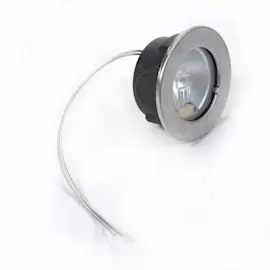
| Light socket | Light flickers or will not turn on with a good bulb | Range hood light socket SR111630 |
| Touch pad | Buttons do not respond or work intermittently | Touch pad (off-white) SR169008 |
Ducted vs. non-ducted terminology
Your hood may be installed either way, and the part names you see can change slightly.
- Ducted (vented outside): uses metal ductwork and a damper to exhaust air outdoors
- Non-ducted (recirculating): uses filters to clean air and return it to the kitchen (often adds non-ducted filters)
For installation and venting details (including damper orientation and duct options), use the 23355023000 owner’s manual.
Why it matters
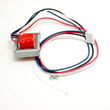
Knowing the correct part names helps you match the symptom to the right replacement part, especially for airflow issues (filters, blower, damper) versus electrical issues (touch pad, transformer, light socket).
Last updated: February 2026
Where can I find my Kenmore Elite oven model number?
Your Kenmore Elite 23355023000 model number is on the rating label attached to the range hood itself, typically inside the hood area behind the grease filters or on an interior side panel. Use the exact model number from that label when ordering parts or checking wiring and bulb specs in the 23355023000 owner's manual.
Where to look on the appliance
On a Kenmore Elite range hood like model 23355023000, the model and serial label is usually in one of these spots:
- Inside the hood, behind the aluminum mesh grease filters
- On an interior side wall of the hood canopy
- Near the blower or wiring compartment cover (inside the hood)
- On the top interior surface of the hood body (visible after removing filters)
Quick check steps (fastest method)
- Turn the hood lights and fan off.
- Let bulbs cool if they were on.
- Remove the grease filters.
- Look for a sticker or metal plate with the model and serial information.
What the model number should look like
For this product family, the manual lists model numbers in the 233.55xxxxx format; your specific stainless 30-inch model is 23355023000.
| What you see on the label | What it means | Use it for |
|---|---|---|
| 23355023000 | Exact model number | Correct parts and diagrams |
| Serial number | Production identifier | Service history and support |
Why it matters
Kenmore Elite range hood parts can vary by width and finish (30-inch, 36-inch, 42-inch). Using the exact model number helps match the correct grease filter size, light components, and control parts for your hood.
Last updated: February 2026
Why is the fan not working on my Kenmore range hood?
On Kenmore Elite range hood model 23355023000, the fan usually stops working because the hood is not getting power, the control fuse is blown, or the fan controls are not sending power to the motor. This model also has a Heat Sentry feature that can change fan behavior during high heat; check the indicators and settings in the 23355023000 owner's manual.
Quick checks (most common fixes first)
- Confirm the hood has power (breaker on, wall switch on if your hood is switched).
- Press a fan speed button; watch the fan-level indicator lights.
- If the green fan-level indicators work but the fan does not run, the manual points to a blown control fuse.
- If no indicators light, suspect a power supply issue (breaker, wiring connection, or switch).
- If the fan runs only sometimes, clean grease buildup and verify the damper moves freely.
What the indicator lights tell you on this model
The manual describes a built-in fuse that protects the hood control from power surges.
| What you see | What it usually means | What to do next |
|---|---|---|
| Fan-level indicators light, but fan does not run | Control fuse is likely blown | Test and replace the fuse per the 23355023000 owner's manual procedure |
| No lights, no fan | No power to hood or failed control | Check breaker, wiring connections, and control inputs |
| Fan changes speed by itself during cooking | Heat Sentry is active | Let the hood cool; it returns to the prior setting |
How to address a blown control fuse (model-specific)
The manual’s fuse replacement overview includes these key steps:
- Disconnect power at the service entrance.
- Remove filters and the bottom panel to access components.
- Inspect the fuse; replace if open (blown).
- Reassemble panels and filters; restore power and test.
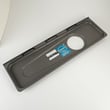
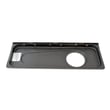
If you need to remove the underside to access the fuse area, having the correct bottom panel parts on hand helps; for some builds that is the range hood bottom panel, 30-in SR680511.
Why it matters
A non-working range hood fan reduces smoke and grease removal, and grease buildup can increase odor and ventilation problems. The manual also emphasizes cleaning the fan and filters frequently so grease does not accumulate.
Last updated: February 2026