Installation guide
 Owner’s manual
 Error Codes



What are the most common issues with 25370417410?
The most common issues we see with the Kenmore 25370417410 bottom-mount refrigerator are warm temperatures (fresh food or freezer), frost buildup from defrost problems, noisy or weak airflow from fan issues, ice maker not producing ice, and doors not sealing well. Your owner's manual covers the correct settings and basic checks.
Common symptoms and what usually causes them
- Refrigerator not cold enough: dirty condenser area, failed condenser fan, weak evaporator fan, or a temperature sensor problem
- Freezer cold but fridge warm: airflow restriction, iced-over evaporator, or evaporator fan issue
- Frost buildup or ice on back wall: defrost system problem (often a defrost thermostat)
- No ice or slow ice production: ice maker issue, water supply restriction, or filter/housing problems
- Door not closing or moisture around door: worn gasket, hinge alignment, or door closer problems
Parts commonly involved on this model
If your symptoms match, these are frequent repair targets for the 25370417410:
| Symptom | Likely part area | Example part on this model |
|---|---|---|
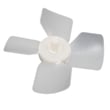
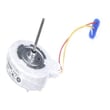
| Warm temps, poor airflow | Evaporator fan system | Frigidaire refrigerator evaporator fan motor 809069206 or refrigerator evaporator fan blade 5308000010 |
| Frost buildup | Defrost control parts | Refrigerator defrost bi-metal thermostat 5304521781 |
| Odors in fresh food section | Air filtration | Refrigerator air filter EAFCBF |
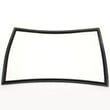
| Door leaks, sweating | Door seal | Ikea refrigerator door gasket (black) 241778315 |
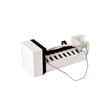
| No ice | Ice maker assembly | Refrigerator ice maker 241798233 |
Quick checks we recommend before replacing parts
- Confirm controls are set to normal mid-range settings (not “warm” or “off”).
- Make sure vents inside the refrigerator are not blocked by food packages.
- Listen for the evaporator fan running when the door switch is pressed.
- Check door gaskets for gaps, tears, or areas that do not grip paper.
- Clean dust from the condenser area to improve heat removal.
Why it matters
Bottom-mount refrigerators rely on steady airflow and a working defrost system; when a fan, sensor, or door seal starts failing, temperatures swing and moisture builds up quickly, which can lead to food spoilage and heavy frost.
Last updated: March 2026
What does DH mean on Kenmore Elite refrigerator?
On Kenmore model 25370417410, dH/DH indicates a defrost heating problem: the refrigerator is not sensing normal warming during the defrost cycle, so frost can build up and airflow can drop. Start by safely resetting power, then check for ice buildup and defrost-system issues.
What to check first (safe, quick steps)
- Unplug the refrigerator for 5 minutes, then restore power and watch if the code returns.
- Check the freezer back wall for heavy frost or a solid ice sheet (a strong sign of a defrost failure).
- Make sure the toe grille is not blocked; proper airflow helps overall cooling performance.
- If you are not connected to a water supply, keep the icemaker power switch Off (per the installation instructions).
- Review the defrost and error-code guidance in the 25370417410 use and care guide.
Common causes of a DH/defrost heat error
A DH code typically points to one of these conditions:
- Defrost thermostat (bi-metal) not closing when cold
- Heater circuit problem (wiring/connection issue)
- Control not completing defrost properly
- Frost buildup restricting airflow across the evaporator
Parts that often relate to defrost and temperature sensing
| Symptom you see | What it often points to | Example part for this model |
|---|---|---|
| Heavy frost on freezer back panel | Defrost system not heating | Refrigerator defrost bi-metal thermostat 5304521781 |
| Temps swing, code returns after reset | Temperature feedback issue | Refrigerator temperature sensor 5303918775 |
Why it matters
When defrost heat is not working, frost can block the evaporator and air ducts, which reduces cold-air circulation. That can cause warm refrigerator temps, soft ice cream, longer run times, and recurring error codes.
When to use the installation guide
If you need to access panels or remove the freezer drawer for inspection, follow the safety and disassembly steps in the 25370417410 installation guide before you begin.
Last updated: January 2026
Why is my Kenmore refrigerator leaking underneath?
Water leaking underneath a Kenmore 25370417410 bottom-mount refrigerator is usually caused by a clogged or frozen defrost drain that overflows into the drain pan, or by a water supply connection issue if the ice maker is hooked up. We start by checking the drain path and the drain pan, then confirm the water line and shutoff valve.
Quick checks that fix most leaks
- Unplug the refrigerator before inspecting underneath or removing panels.
- Look for a sheet of ice or standing water on the freezer floor; that points to a blocked defrost drain.
- Pull the toe grille area clear; do not block airflow at the lower front.
- If the ice maker is not connected to water, make sure the ice maker power switch is Off.
- If connected to water, confirm the shutoff valve is not a self-piercing type and that fittings are dry.
Step-by-step: defrost drain and drain pan
- Remove items from the freezer and check for ice buildup near the rear floor.
- Melt ice with warm water and clear the drain opening using a soft tube brush or pipe cleaner.
- Slide the refrigerator out carefully (avoid side-to-side shifting that can damage flooring).
- Inspect the drain pan for cracks, misalignment, or overflow; clean and reinstall it fully seated.
If the leak is related to the ice maker water line
The installation guidance for this model calls for 30 to 100 psi water pressure and 1/4-inch OD copper or stainless tubing; it also recommends adding about 7 feet of extra tubing so the refrigerator can be moved for cleaning. Use these specs to confirm your setup matches what the refrigerator expects.
| What you see | Most likely cause | What to do next |
|---|---|---|
| Water only after defrost cycles | Defrost drain restricted | Clear drain, remove ice, verify drain pan position |
| Slow drip behind unit | Loose compression nut/ferrule | Tighten carefully, replace ferrule if damaged |
| Puddle near front | Drain pan overflow or not seated | Clean pan, re-seat, confirm unit is level |
Why it matters
Leaks can damage flooring and can also lead to ice buildup that blocks airflow, causing warm temperatures in the fresh food section and poor freezer performance.
For model-specific access points and panel removal, follow the 25370417410 installation guide.
Last updated: January 2026