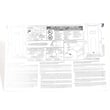
Owner’s manual
 Error Codes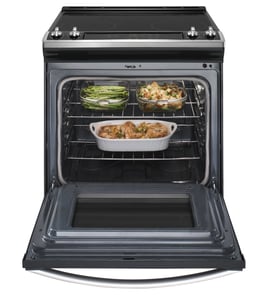



Where can I find my Kenmore electric range model number?
On Kenmore electric range model 79094363700, the model and serial number are printed on the identification (serial) plate on the right side of the oven front frame, inside the storage or warmer drawer compartment. Open the drawer to view the label; see the owner's manual for the exact illustration.
How to locate the model number label
- Turn the range light on and use a flashlight; the plate can be hard to see.
- Pull the storage or warmer drawer fully open.
- Look on the right side of the oven front frame (inside the drawer opening).
- Write down both the model number and serial number for parts lookup.
- Take a clear photo of the plate; it helps prevent digit mix-ups.
What the model number looks like
For this Kenmore series, the model number format commonly starts with 790. and then additional digits.
| What to record | Example format | Why we need it |
|---|---|---|
| Model number | 790.9436… | Matches the correct parts diagrams and lists |
| Serial number | Letters and numbers | Helps confirm production details when needed |
Why it matters
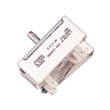
Using the exact model number ensures you get the right Kenmore 79094363700 electric range parts (for example, the correct oven temperature sensor, bake element, or surface element control switch) and avoids ordering a similar-looking part that will not fit.
Last updated: February 2026
Why is my Kenmore electric oven not getting hot?
If your Kenmore electric range model 79094363700 oven is not getting hot, the most common causes are a failed bake element, a bad oven temperature sensor, or a control setting or fault that stops heating. Start with a quick visual check, then test the heating circuit components.
Quick checks we recommend first
- Confirm you are using Bake, not Broil.
- Allow a full preheat before judging temperature.
- If the control is beeping and showing an F code, press STOP/CLEAR to stop the beeping and clear the display (a stored fault can prevent normal operation).
- Make sure the oven door closes fully; heat loss can mimic “not heating.”
- If the oven seems consistently too hot or too cool (but does heat), use the temperature adjustment procedure in the 79094363700 owner's manual.
Parts that most often cause “no heat”
When an electric oven will not heat, these are the first components we check:
| Symptom | Most likely part | What to do next |
|---|---|---|
| No heat on Bake, Broil works | Bake element | Inspect for blisters, cracks; test continuity; replace if open |
| Oven heats but temperature is wrong or erratic | Oven temperature sensor | Check sensor resistance at room temp; replace if out of spec |
| No heat on Bake and Broil | Control, wiring, power supply | Verify 240V supply, check terminal block and harness connections |
Model-matched parts from this page that commonly apply:
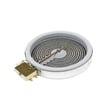
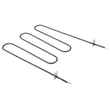
- Frigidaire range bake element 316413800
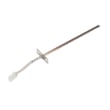
- Frigidaire range oven temperature sensor 316490000
- Kelvinator range terminal block 5304409888
Why it matters
An oven that will not reach temperature is usually an electrical heating circuit problem. Catching a weak element or drifting sensor early helps prevent long preheat times, undercooked food, and repeated control errors.
If you see an error code
If your display shows an “F” code (for example, F11), use our Kenmore 790 self-cleaning range error codes guide to match the code to likely causes and next steps.
Last updated: February 2026
What is the average lifespan of 79094363700?
A Kenmore electric range like model 79094363700 typically lasts 13 to 15 years with normal household use. Regular cleaning, avoiding overheating, and replacing wear parts (like elements or sensors) on time helps you reach the full service life.
Typical lifespan and what affects it
Most electric ranges land in the same general window, but these factors move the needle:
- Heavy daily cooking and frequent self-clean cycles shorten life
- Power issues (loose cord connections, voltage spikes) stress controls
- Cooktop habits (sliding pans on glass, boil-overs) accelerate wear
- Heat-related parts aging (bake element, broil element, temperature sensor)
- Preventive maintenance and prompt repairs extend life
Parts that commonly drive “end of life” symptoms
When an older range starts acting up, these are frequent culprits on this model family:
- Heating problems: bake or broil element, wiring connections
- Temperature problems: oven sensor such as frigidaire range oven temperature sensor 316490000
- Burner won’t regulate: surface element control switch
- Display or touch issues: control overlay
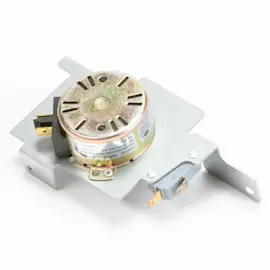
- Door won’t lock/unlock after self-clean: lock motor assembly
Quick check: repair or replace?
Use this as a practical guide for a 79094363700 that is aging.
| If your range is… | Usually worth repairing when… | Consider replacing when… |
|---|---|---|
| Under 10 years old | One failed part, otherwise solid | Multiple major issues at once |
| 10 to 15 years old | Repair is straightforward and cost-effective | Repeated failures, heavy corrosion, or major control issues |
| Over 15 years old | Simple part replacement restores safe operation | Several expensive parts are failing close together |
Why it matters
Knowing the expected lifespan helps you decide whether to invest in a repair (like a sensor or element) or plan for replacement, especially if performance issues are affecting baking accuracy or cooktop safety.
For model-specific use and care practices (including cleaning guidance that helps protect the cooktop and components), follow the 79094363700 owner’s manual.
Last updated: March 2026