Owner’s manual
 Error Codes



Are bottom mount fridges better?
Yes, for most households a bottom-mount refrigerator like the Maytag MBL2256KES is the better everyday layout because fresh-food items sit at eye and waist level while the freezer stays in a lower drawer. That makes daily access easier and helps you organize groceries more efficiently.
What “better” usually means with a bottom-mount
- More ergonomic fresh-food access: you reach milk, produce, and leftovers without bending as much.
- Better visibility: shelves and door bins are easier to see and keep organized.
- Freezer drawer storage: frozen foods stack well in bins, but you may need to dig for items at the bottom.
- Good for cooks: fresh ingredients are front-and-center.
- Often quieter than older designs: newer refrigeration designs can sound different, but many operating sounds are normal.
Bottom-mount vs. top-freezer: quick comparison
| Feature | Bottom-mount (like MBL2256KES) | Top-freezer |
|---|---|---|
| Fresh-food access | Best (most-used items higher) | Good, but lower shelves require bending |
| Freezer access | Drawer, lower position | Easy access at chest height |
| Organization | Great for fresh food; freezer can be “stacked” | Simple freezer shelves; less digging |
| Best fit for | Frequent fresh-food use | Heavy freezer use, tight budgets |
Tips to get the most from a bottom-mount
- Keep everyday items on the middle shelves and in door buckets.
- Use freezer bins to separate meats, vegetables, and prepared foods.
- Make sure the refrigerator is properly leveled; it helps doors close correctly and supports performance.
- Leave recommended air clearance around the cabinet for airflow.
- If you notice new clicks or hums, compare them to the normal sound descriptions in the MBL2256KES owner's manual.
Why it matters
Layout affects how often doors stay open, how easily you find food, and how comfortable the refrigerator is to use every day. For most families, putting fresh food at eye level is the biggest practical advantage of a bottom-mount design.
Last updated: January 2026
Why is the bottom freezer refrigerator not popular?
Bottom-freezer refrigerators (like the Maytag MBL2256KES) are less popular mainly because they typically cost more than top-freezer models and some people dislike bending to reach frozen foods in a lower drawer. Many shoppers still choose them because fresh foods sit at eye level, which is more convenient day to day.
Common reasons shoppers skip bottom-freezer models
- Higher upfront price than many top-freezer refrigerators with similar capacity
- More bending for frozen items, especially for heavier foods stored low in the drawer
- Drawer organization can be harder for stacked boxes and small items unless you use bins
- More moving parts in the freezer drawer (slides, gears, rails) that can wear over time
- Ice storage and access varies by design, and some layouts feel less convenient than a simple top-freezer shelf
What you gain with a bottom-freezer refrigerator
Bottom-freezer designs are popular with customers who prioritize the refrigerator section because the most-used shelves are higher and easier to reach.
| Feature | Bottom-freezer | Top-freezer |
|---|---|---|
| Fresh food access | Easier (eye level) | Requires more bending |
| Frozen food access | Requires bending | Easier (higher) |
| Typical price | Higher | Lower |
| Organization style | Drawer-based | Shelf-based |
Why it matters for ownership and maintenance
A bottom-freezer layout can be a great fit if you use fresh food most often, but it is worth keeping the freezer drawer aligned and closing smoothly so the door seals well. Poor sealing and frequent door openings can contribute to temperature swings and longer run times.
For model-specific use and temperature control guidance, follow the settings and adjustment tips in the MBL2256KES owner's manual.
Last updated: January 2026
What is the average lifespan of a Maytag refrigerator?
Most Maytag refrigerators, including the Maytag MBL2256KES bottom-mount refrigerator, typically last 10 to 15 years with normal household use. Regular cleaning, correct temperature settings, and good airflow around the cabinet help you reach the upper end of that range; see the MBL2256KES owner's manual for model-specific care and maintenance guidance.
Typical lifespan and what affects it
A refrigerator’s life depends more on operating conditions and maintenance than brand alone.
- 10 to 15 years is the typical lifespan for a full-size refrigerator.
- Heavy use (large households, frequent door openings) can shorten lifespan.
- Poor ventilation and dirty condenser areas increase compressor run time.
- Door gasket leaks force longer run times and can lead to temperature swings.
- Power surges and repeated outages can stress the electronic control board.
Maintenance that helps your MBL2256KES last longer
Use these habits to reduce wear on the compressor, evaporator fan, and controls.
- Keep the refrigerator at 37°F to 40°F and the freezer at 0°F to 5°F.
- Clean spills promptly and keep air vents inside the compartments unblocked.
- Vacuum dust from the condenser area periodically (frequency depends on pets and dust).
- Make sure doors close fully and shelves or bins are not preventing closure.
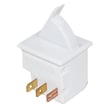
- Replace failed small parts quickly (like a door switch) so the unit operates normally.
Quick “repair or replace” guide
| What you’re seeing | Common cause | Typical next step |
|---|---|---|
| Warm fresh food section, freezer OK | Airflow or damper issue | Check vents; inspect the damper and fan |
| Clicking, won’t start cooling | Start device or compressor issue | Test start device; consider pro service |
| Lights do not work, door shows open/closed issues | Door switch problem | Check/replace the light switch |
Why it matters
A refrigerator that runs longer than necessary uses more electricity and puts extra strain on the compressor and evaporator fan motor. Staying ahead of airflow, sealing, and cleaning issues is the simplest way to extend service life.
If you’re troubleshooting cooling or ice issues as the unit ages, our how to use your refrigerator efficiently guide can help reduce run time and improve temperature stability.
Last updated: January 2026
What is the most common problem with Maytag refrigerators?
The most common problems we see with Maytag refrigerators (including model MBL2256KES) are cooling complaints (not cold enough, warm freezer, running constantly) and ice maker issues (no ice, small cubes, slow production). Many of these start with airflow restrictions, dirty condenser coils, or water supply and filter problems; use the MBL2256KES owner's manual to match symptoms to the right checks.
Most common issues and what to check first
- Dirty condenser coils: Causes poor cooling and long run times; clean coils and the condenser fan area.
- Airflow blocked inside: Overpacked shelves or blocked vents can warm the fresh food section.
- Evaporator fan problems: If the freezer is cold but the refrigerator is warm, the evaporator fan may not be moving air.
- Defrost system trouble: Frost buildup on the freezer back wall often points to a defrost issue.
- Ice maker or water supply problems: Low water pressure, a clogged filter, or a frozen fill tube can stop ice production.
Quick symptom-to-likely-cause guide
| Symptom | Most likely causes | Good first step |
|---|---|---|
| Refrigerator warm, freezer cold | Airflow issue, damper issue, evaporator fan issue | Check vents, listen for fan, verify settings |
| Both sections warm | Dirty coils, compressor/start device issue, control issue | Clean coils, confirm fans running |
| Frost on freezer back wall | Defrost thermostat/heater/control issue | Defrost manually, then monitor frost return |
| Ice maker not making ice | Water supply/filter issue, ice maker failure | Confirm water flow, then test ice maker |
Parts that commonly relate to these problems on MBL2256KES
If basic checks do not fix the issue, these model-matched parts are often involved:
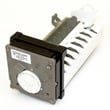
- Refrigerator ice maker D7824706Q for no-ice or intermittent ice production
- Refrigerator electronic control board WPW10503278 for erratic temperatures or control-related symptoms
- Evaporator motor WPW10128551 for weak or no airflow from the freezer to the fresh food section
- Refrigerator electronic damper WPW10196393 when the refrigerator section is warm but the freezer is normal
- Refrigerator defrost bi-metal thermostat WP67003426 when frost buildup points to defrost problems
Why it matters
Cooling and ice maker complaints often share the same root causes: restricted airflow, heat not being rejected at the condenser, or inconsistent water flow. Fixing the simple items first (coils, vents, settings, water supply) prevents unnecessary part replacement and helps the refrigerator hold safe food temperatures.
Last updated: January 2026