 Owner’s manual




What is the capacity of the wcvh6800j1ww?
The GE WCVH6800J1WW washer has a 3.5 cu. ft. capacity. This is the tub volume the washer is designed around, and it helps you estimate load size for best cleaning, rinsing, and spin performance. See the WCVH6800J1WW owner’s manual for loading guidance.
We recommend loading by drum fill level, not by weight.
- Load items loosely so they can tumble freely
- Mix large and small items in the same load
- Keep large items (like towels) from being more than about half the load
- Avoid washing single heavy items; add 1 to 2 similar items to balance
- Do not pack items down; overloading reduces cleaning and can cause vibration
| Term | What it refers to | Why it matters |
|---|---|---|
| Capacity (cu. ft.) | Interior wash basket volume | Helps prevent overloading and poor wash results |
| Load size | How full the drum is with laundry | Affects cleaning, rinsing, and spin balance |
| Cycle choice | Whites, Normal, Delicates, Speed Wash, etc. | Matches agitation/tumble and temps to fabric |
Using the right load size for a 3.5 cu. ft. front-load washer helps prevent out-of-balance spinning, reduces wear on the drive system, and improves detergent rinsing so clothes come out cleaner.
Last updated: January 2026
What is the life expectancy of a GE washing machine?
A GE front-load washer like model WCVH6800J1WW typically lasts 10 to 14 years with normal household use and consistent maintenance. Following the care steps in the WCVH6800J1WW owner’s manual helps reduce wear on key components such as the drain system, door boot, and drive belt.
- Detergent use: Use HE detergent and avoid oversudsing.
- Monthly cleaning: Run the BasketClean cycle as recommended.
- Drain care: Keep the pump filter area clear of debris and small items.
- Load habits: Avoid chronic overloading and repeated unbalanced loads.
- Moisture control: Leave the door slightly open between loads to reduce odor and gasket issues.
| Task | How often | Why it helps |
|---|---|---|
| Run BasketClean (with bleach) | Monthly | Reduces odor and residue buildup |
| Clean the pump filter area | Every 1 to 3 months | Helps prevent no-drain and slow-drain problems |
| Inspect door gasket and wipe dry | Weekly | Prevents leaks and mildew |
| Check fill hoses for wear | Yearly | Helps prevent leaks and water damage |
If performance drops (slow drain, leaks, loud spin), these model-compatible parts are often involved:
- Washer drain pump filter WH11X34741: Captures debris and small items before they reach the drain pump.
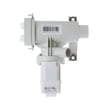
- Washer drain pump assembly WH23X10028: Pumps water out during drain and spin.
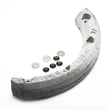
- Washer drive belt WH08X10024: Transfers motor power for tumbling and spinning.
A washer near the end of its expected life often shows early warning signs (odor, leaks, longer cycle times, poor spinning). Staying ahead of cleaning and small repairs can extend the useful life of your GE WCVH6800J1WW and help prevent bigger failures.
Last updated: January 2026
What is the most common problem with GE washers?
For the GE WCVH6800J1WW washer, the most common service issue we see is a drain problem: the washer will not drain, will not spin, or stops mid-cycle because water cannot pump out. A clogged pump filter or a restricted drain hose are frequent causes; see the WCVH6800J1WW owner’s manual for the model-specific pump filter cleaning steps.
- Not draining / not spinning: water left in the tub, cycle pauses or ends early.
- Leaking at the door: drips at the front, often tied to the door boot or debris.
- Odor or residue: musty smell, detergent buildup, or mildew.
- Won’t start / seems dead: power, door lock, or control-related symptoms.
- Excess vibration: out-of-balance loads or leveling issues.
- Unplug the washer (or switch off the breaker) before any inspection.
- Confirm the drain hose is not kinked and is installed with an air gap.
- Clean the pump filter (front-load models like this one commonly trap coins, lint, and small items).
- Run a Drain & Spin cycle after clearing restrictions.
- If the washer still will not drain, inspect the drain pump and related hoses.
If you need a replacement, the compatible parts for this model include the washer drain pump filter WH11X34741, washer drain pump assembly WH23X10028, and washer drain hose WH41X10126.
| Symptom | Most likely cause | Typical next step |
|---|---|---|
| Won’t drain / won’t spin | Clogged pump filter | Clean filter, check for debris |
| Slow drain | Restricted drain hose | Straighten or replace hose |
| Hums but won’t drain | Pump jammed or failed | Inspect pump, replace if needed |
| Water at front of washer | Door boot issue or debris | Clean gasket, inspect boot |
Drain restrictions can trigger mid-cycle stops, leave clothes soaking wet, and strain the drain pump. Keeping the pump filter clean and the drain hose properly routed helps prevent repeat failures and nuisance error conditions.
Last updated: January 2026
How do I know if my GE washer control board is bad?
If your GE WCVH6800J1WW washer has a dead display, won’t start, behaves erratically, or repeatedly stops mid-cycle, the main control board can be the cause. Before replacing it, we confirm proper power in, rule out a door-lock issue, and check for obvious wiring damage using the WCVH6800J1WW washer manual.
- Display is blank or flickers, even with power at the outlet
- Washer won’t start, or START/PAUSE does nothing
- Random beeping, buttons not responding, or cycles changing on their own
- Door locks and unlocks repeatedly, or the washer stops and drains unexpectedly
- Multiple symptoms appear at once (fill, drain, spin) with no clear mechanical cause
Unplug the washer before removing panels or touching wiring.
- Verify the outlet has power and the breaker is not tripped
- Confirm the washer is not in control lock mode (if equipped)
- Inspect harness plugs at the control for loose fit, corrosion, or burned pins
- Look for pinched or rubbed-through wires near the cabinet edges
- If the door won’t lock or unlock correctly, test that circuit first; a failed door lock can mimic a bad board
A common “board looks bad” symptom on front-load washers is actually a door-lock problem. If your WCVH6800J1WW won’t start and the door won’t reliably lock, we often check the washer door lock WH10X10006 before replacing electronics.
A voltage check helps separate a “no power to the board” problem from a “board not responding” problem.
| What you observe | What it usually means | Next step |
|---|---|---|
| No lights, no response | No power reaching control or failed control | Confirm outlet, cord, wiring connections |
| Power present but no operation | Control not processing inputs | Check door lock, wiring, then consider board |
| Intermittent operation | Loose connection or failing control | Reseat connectors, inspect harness, retest |
Replacing a control board is one of the more expensive washer repairs. Doing a few targeted checks first helps avoid replacing the wrong part and gets your GE washer running again faster.
Last updated: January 2026


