Installation guide
 Owner’s manual
 Error Codes

How big is the KitchenAid KSRS25ILSS02?
The KitchenAid KSRS25ILSS02 is a full-size side-by-side refrigerator; most models in this class are about 33 inches wide, 65 to 71 inches tall, and 30 to 34 inches deep (depth varies with handles). For the exact dimensions and capacity for your unit, use the owner's manual.
What “big” usually means (and what to measure)
Use these measurements to confirm fit through doorways and into the cabinet opening:
- Width: measure the cabinet (not the doors) at the widest point
- Height: floor to top of hinge cover; include leveling legs if extended
- Depth: measure without handles and with handles
- Door swing clearance: allow room for doors to open past 90 degrees
- Ventilation space: leave airflow room above and behind the refrigerator
Typical size ranges for side-by-side refrigerators
These are common ranges for KitchenAid side-by-side units like the KSRS25ILSS02.
| Measurement | Typical range | Why it varies |
|---|---|---|
| Width | 32 3/4 to 33 inches | cabinet design and trim |
| Height | 65 to 71 inches | hinge style, leveling legs |
| Depth (cabinet) | 29 to 32 inches | liner and insulation thickness |
| Depth (with handles) | 31 to 34 inches | handle style and projection |
Why it matters
Correct dimensions prevent delivery problems, door interference, and poor airflow that can lead to warm temperatures or longer run times.
Quick fit checklist before you move it
- Measure the narrowest doorway on the path to the kitchen
- Confirm the cabinet opening width is at least 1/4 inch wider than the refrigerator
- Plan for water line slack if you have an ice maker or dispenser
- Verify the floor is level; adjust front rollers/legs as needed
Last updated: February 2026
What is the most common problem with KitchenAid refrigerators?
The most common issues we see on KitchenAid refrigerators like model KSRS25ILSS02 are ice maker and water dispenser problems, cooling complaints (refrigerator warm or freezer too warm), and water leaks or frost buildup. These often trace back to airflow restrictions, defrost system faults, or water supply component wear.
Most common symptoms and what they usually point to
- Ice maker not making ice: water supply restriction, inlet valve issue, or ice path blockage
- Water dispenser slow or not dispensing: clogged filter, air in the line, or inlet valve problem
- Freezer cold but fresh food warm: evaporator airflow problem or diffuser issue
- Frost on back wall or heavy ice buildup: defrost heater or defrost thermostat (bi-metal) problem
- Water under the refrigerator: defrost drain issue or a leaking water line connection
- Noisy operation: fan blade interference, condenser fan motor wear, or vibration
Quick checks you can do first (KSRS25ILSS02)
- Confirm controls are set to normal temps (typical targets: 0°F freezer, 37°F refrigerator).
- Check for blocked vents and overpacked shelves that restrict airflow.
- If water flow is weak, replace the filter and purge the dispenser.
- Inspect for frost buildup behind the freezer rear panel (a common defrost clue).
- Verify household water supply is within the typical range shown in the documentation: 30 to 120 psig and 33°F to 100°F water temperature (important for dispenser and ice maker performance).
Parts that commonly solve these problems
If symptoms match, these model-compatible parts are often involved:
| Symptom | Likely system | Example part for KSRS25ILSS02 |
|---|---|---|
| Slow/no water at dispenser | Filtration or water supply | Refrigerator water filter EDR5RXD1 |
| No ice or weak fill | Water supply control | Refrigerator inlet valve W10408179 |
| Frost buildup, warm temps | Defrost system | Refrigerator defrost bi-metal WPW10225581 and refrigerator heater WP2323198 |
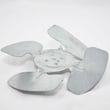
| Poor airflow/noisy freezer | Evaporator fan area | Refrigerator evaporator fan blade WP2169142 |
Why it matters
These “common problems” are usually connected: a weak water supply can stop ice production, and a defrost failure can choke airflow and cause temperature swings. Catching the root cause early helps protect food, reduce energy use, and prevent repeat failures.
Helpful DIY guides
For model-specific operating and care details (including water supply guidance), use the owner's manual.
Last updated: February 2026
Is KitchenAid a good brand of refrigerators?
Yes. KitchenAid refrigerators, including the KitchenAid KSRS25ILSS02 side-by-side, are generally a solid mid-to-high-end choice with strong build quality and long service life; many owners keep them running 10 to 15 years with routine maintenance and timely part replacement.
What we can say for the KSRS25ILSS02 specifically
The KSRS25ILSS02 documentation shows KitchenAid backed this platform with a multi-tier warranty, including extended coverage on the sealed refrigeration system (compressor, evaporator, condenser, dryer, and connecting tubing) when the unit is operated and maintained as instructed in the owner's manual.
Warranty coverage snapshot (from the manual)
| Coverage area | What’s covered | Time period |
|---|---|---|
| Full refrigerator (excluding water filter) | Parts and repair labor for defects | Year 1 |
| Cavity liner and sealed system | Parts and repair labor | Years 2 to 5 |
| Sealed system parts | Parts only | Years 6 to 10 |
| Door bins and can racks | Replacement for defects | Life of product |
What “good brand” means in day-to-day use
A “good” refrigerator brand usually comes down to temperature stability, parts availability, and how repairable common systems are (ice maker, water dispenser, fans, defrost).
Common strengths we see with KitchenAid side-by-sides:
- Consistent cooling when airflow paths are kept clear
- Strong parts support for water and ice systems
- Repair-friendly design for many common failures
- Good fit and finish (doors, bins, shelving)
Common pain points (typical for many side-by-sides):
- Ice and water issues from filter restriction or low water pressure
- Drips or slow dispensing from a worn valve or air in the line
- Frost buildup if a defrost component starts failing
Why it matters
Brand quality shows up most when something needs service. With the KSRS25ILSS02, many common “ownership” problems are fixable with standard maintenance and readily available parts like the refrigerator water filter EDR5RXD1 and the refrigerator inlet valve W10408179.
Quick maintenance checklist that protects performance
- Replace the water filter on schedule to prevent slow flow and ice maker issues
- Keep freezer vents unblocked for proper airflow
- Clean condenser area periodically to reduce compressor run time
- Watch for early signs of defrost trouble (frost, warm freezer, noisy fan)
- Confirm household water pressure is in a normal range for dispenser and ice maker operation
Last updated: February 2026
How to fix E2 error code KitchenAid refrigerator?
On a KitchenAid KSRS25ILSS02 side-by-side refrigerator, the most reliable first fix for an E2 message is a power reset: turn the refrigerator off at the breaker (or unplug it) for 1 minute, restore power, then watch the display for 1 minute to confirm the code stays cleared. Use the KSRS25ILSS02 owner's manual for the exact display and diagnostic steps for your control panel.
Reset steps (do this first)
- Unplug the refrigerator or switch the circuit breaker OFF.
- Wait 1 full minute.
- Restore power.
- Watch the display for 1 minute.
- Confirm normal operation: interior lights, fans running, and cooling resuming.
If “E2” comes back after the reset
Because error-code formats vary by KitchenAid refrigerator series, we treat a repeating E2 as a sign to verify the basics that commonly trigger control alarms.
- Make sure both doors close fully and the gaskets seal all the way around.
- Check for heavy frost on the freezer back wall (airflow restriction).
- Verify vents are not blocked by food packages.
- Confirm temperature settings are in a normal range (freezer near 0°F, fresh food near 37°F).
- If the unit was recently moved, confirm it is level and has proper airflow at the condenser area.
Quick symptom guide
| What you notice with E2 | Most likely area to check first | What to do next |
|---|---|---|
| Code clears and stays off | Temporary control glitch | Monitor temps for 24 hours |
| Code returns and temps rise | Airflow or defrost-related issue | Check for frost and fan operation |
| Code returns with weak/no water at dispenser | Water supply/valve issue | Inspect supply line and valve function |
If you also have dispenser or ice maker water-flow problems, testing the refrigerator inlet valve W10408179 is a practical next step because it controls water entering the refrigerator.
Why it matters
A reset separates a one-time control hiccup from a condition that can cause warm temperatures. Catching airflow, frost, or water-supply issues early helps protect food and prevents repeat alarms.
Last updated: February 2026