Installation guide
 Owner’s manual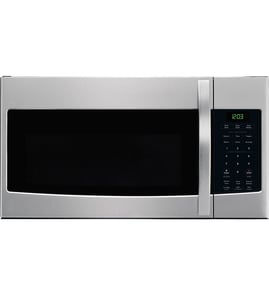




What is the average lifespan of a whirlpool microwave?
Most Whirlpool microwaves, including the Whirlpool WML55011HS0 microwave/hood combo, typically last 7 to 10 years with normal household use; heavy daily use, poor ventilation, and slamming the door can shorten that, while routine cleaning and prompt repairs can extend it.
- Usage frequency and cook times (multiple long heat cycles per day wear components faster)
- Ventilation and grease buildup (a microwave/hood combo works harder when filters are clogged)
- Door handling (hard closes can damage door switches and alignment)
- Power quality (surges can stress the electronic control board)
- Cleaning habits (steam, splatter, and arcing residue accelerate interior wear)
Use these habits as your baseline, then follow the care and safety guidance in the WML55011HS0 user guide.
- Wash or replace the grease filter regularly (a restricted filter traps heat and grease)
- Keep the cavity clean; wipe after spills to prevent odors and arcing
- Never run the microwave empty; it overheats internal components
- Use microwave-safe containers; avoid metal and foil contact
- Close the door gently and keep the latch area free of debris
If the unit is within the typical 7 to 10-year window, repairs are often worthwhile when the cabinet and door are in good shape.
| Symptom | Common direction | Parts often involved on this model |
|---|---|---|
| Runs but does not heat | Heating circuit diagnosis | Magnetron, high-voltage diode, control board |
| Dead, no display | Power protection issue | Fuse, control board |
| Loud hum or burning smell | Stop using and inspect | Magnetron, diode, wiring |
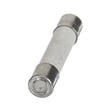
For a “no power” condition, the microwave fuse W11707984 is one of the first components we see tested in the power path.
Microwave/hood combos live in a hot, greasy environment above the range; keeping airflow and filters in good shape reduces heat stress on the magnetron, wiring harnesses, and electronic control board.
Last updated: January 2026
What is the disadvantage of a low profile microwave?
A low-profile microwave like the Whirlpool WML55011HS0 saves space and looks sleek, but the main disadvantages are reduced interior height (less room for tall dishes), potentially weaker real-world vent capture than a dedicated range hood, and tighter installation clearances that can limit cabinet and duct options. See the WML55011HS0 installation guide for the exact fit and clearance requirements.
- Smaller usable capacity: Low-profile designs trade interior height for a slimmer look, so tall bowls, large casserole dishes, and some microwave-safe steamers may not fit comfortably.
- Ventilation performance limits: Even with multiple fan speeds, an over-the-range microwave hood typically captures less smoke and grease than a full-size hood, especially with front burners.
- More installation constraints: You need proper wall support, cabinet opening dimensions, and a grounded outlet in the upper cabinet; the installation guide also calls out clearance needs near a side wall so the door opens fully.
- Harder access for some users: Depending on mounting height and user height, reaching controls and lifting hot food can feel awkward.
- Higher cost for the form factor: Low-profile units often cost more than standard countertop microwaves.
| Feature | Low-profile microwave/hood combo | Dedicated range hood + separate microwave |
|---|---|---|
| Cooking space | Shorter interior height | More flexibility (choose microwave size) |
| Venting | Convenient, but often less capture | Typically stronger capture and airflow |
| Installation | One appliance, tighter fit rules | Two installs, more layout options |
| Best for | Light to moderate cooking | Frequent high-heat cooking (searing, frying) |
If you regularly use tall cookware or do a lot of smoky, greasy cooking, the low-profile style can feel like a compromise. If you mainly reheat, melt, and do light cooking, the space-saving design is usually a good trade.
- Measure your tallest microwave-safe dish before buying.
- Confirm cabinet opening and wall structure requirements (stud support and drywall thickness).
- Plan your venting route (recirculating vs wall venting vs roof venting) before installation.
- Keep the vent-hood filter clean; airflow drops fast when filters load up with grease.
Last updated: January 2026
What are common problems with whirlpool microwaves?
Common problems on Whirlpool microwave/hood combos like model WML55011HS0 include not operating at all (power, door, or fuse issue), running but not heating (high-voltage components), sparking/arcing (food debris or damaged interior parts), and turntable or keypad problems. We use the troubleshooting steps in the WML55011HS0 user guide to narrow the cause safely.
- Confirm the outlet has power; reset the household breaker if needed.
- Open and firmly close the door, then start a cook cycle (a door message can appear if the door was closed for several minutes without starting).
- Heat-test: microwave 1 cup of cold water for 2 minutes on 100% power; if it does not heat, move to heating-related checks.
- Listen for normal fan and turntable operation; unusual silence can point to a power or control issue.
- If the unit is completely dead, a blown internal fuse is a common next suspect.
| Symptom | What it usually points to | What to do next |
|---|---|---|
| Won’t operate (no response) | Power supply issue or internal fuse | Check breaker; consider testing/replacing the microwave fuse W11707984 |
| Runs but does not heat | High-voltage circuit (diode, magnetron) | Professional service is often the safest route; parts commonly involved include the microwave high-voltage diode W11256462 and magnetron W11402082 |
| Sparks/arcing inside | Food splatter, metal, or damaged cover/interior | Clean cavity; stop using if arcing continues; inspect and replace damaged components as needed |
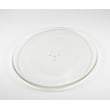
| Turntable not turning | Tray/ring issue or drive problem | Reseat the microwave glass turntable tray W11367904 and turntable ring W11213915; check for obstructions |
| Buttons not responding | User interface or control board issue | Power reset first; if persistent, control components may need diagnosis |
Microwave heating circuits store dangerous high voltage even when unplugged. For “runs but won’t heat” or repeated fuse blowing, we treat it as a repair that typically requires a qualified technician.
- Why is my microwave not heating
- How to replace a microwave fuse
- Never do these things with a microwave
Last updated: January 2026