 Installation guide
 Owner’s manual
 Error Codes


Which dishwasher to stay away from?
We don’t recommend “staying away” from any single dishwasher brand across the board because reliability varies by model line, features, and installation quality. For Bosch dishwashers like model SHX55R55UC, the best approach is to compare specific models by service history, parts support, and whether common issues (leaks, draining, heating) are straightforward to repair.
What to look for (instead of avoiding a brand)
When you’re comparing dishwashers, we suggest focusing on these practical factors:
- Parts availability for wear items like door seals, drain hoses, and pumps
- Leak risk points (door seal condition, inlet valve connections, drain routing)
- Serviceability (access to the base, pump area, and electrical junction box)
- Error code support and clear troubleshooting steps
- Installation requirements you can meet (proper drain hose high loop, dedicated circuit)
For Bosch installation expectations and safety basics, use the SHX55R55UC installation guide.
Common “regret” triggers when buying a dishwasher
Many “avoid this dishwasher” complaints come from a few repeat scenarios:
- Poor drying performance expectations (especially without rinse aid or heated dry options)
- Noise complaints due to improper leveling or cabinet contact
- Chronic leaks from worn seals or loose hose connections
- Draining problems from incorrect drain hose routing or clogs
- Long cycle times that are normal for energy-saving cycles
Quick comparison: what’s a deal-breaker vs. fixable?
| Issue | Often fixable? | Typical next step |
|---|---|---|
| Minor leak at door | Yes | Inspect/replace seal, check alignment |
| Won’t drain | Often | Clear blockage, check pump/hose routing |
| No fill / slow fill | Often | Check supply, inlet valve, float system |
| Repeated electronic failures | Sometimes | Diagnose controls and wiring |
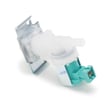
If you’re evaluating a used unit or troubleshooting a current one, parts like the dishwasher water inlet valve 00622058 are examples of components that can be replaced when filling problems point to a failed valve.
Why it matters
Choosing based on model-specific support and install fit helps you avoid the most expensive outcomes: water damage from leaks, repeat service calls, and “no parts available” dead ends. A well-installed dishwasher with supported replacement parts is usually a safer bet than judging by brand alone.
Last updated: January 2026
What is the most common problem with a Bosch dishwasher?
For the Bosch SHX55R55UC, the most common issues we see are poor cleaning (food left on dishes) and draining problems (water left in the tub). In many cases, the root cause is routine maintenance, such as a dirty filter system, blocked spray paths, or a restricted drain setup; see the SHX55R55UC installation guide.
Quick checks that fix many “common” problems
- Clean the filter area and remove debris from the sump.
- Spin spray arms by hand to confirm they move freely and are not clogged.
- Confirm the drain hose is not kinked and is routed correctly.
- Run hot water at the sink before starting a cycle so the dishwasher fills with hot water.
- Use the correct detergent amount for your water hardness.
Draining problems: what to look for on this model
A Bosch dishwasher can leave water behind if the drain path is restricted or if the drain hose routing is incorrect. The SHX55R55UC installation instructions specify that the drain hose must be routed with a raised section (a “high loop”) to help prevent draining issues.
If you’ve verified the hose routing and still have standing water, the next likely components to inspect are:
- Sump filter 00441905 (clogged filter can slow or stop draining)
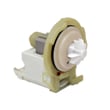
- Drain pump 00642239 (pump not running or weak)
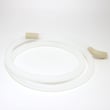
- Dishwasher drain hose 00668108 (restricted, kinked, or damaged)
Poor cleaning performance: common causes
Poor cleaning is usually a water flow or wash action issue rather than a “bad dishwasher.” Focus on these areas first:
- Filter and sump are dirty
- Spray arms are blocked by labels, seeds, or hard-water scale
- Overloading or blocking the spray pattern with large items
- Water not hot enough at fill
- Detergent not dissolving (old detergent, wrong cycle, or low water temperature)
Symptom-to-cause guide
| Symptom | Most likely cause | What to check first |
|---|---|---|
| Grit on dishes | Filter/sump debris | Filter cleaning and rinse |
| Cloudy glassware | Hard water, detergent imbalance | Rinse aid and detergent amount |
| Water left in bottom | Drain restriction or routing | High loop and drain path |
| Weak wash action | Low water flow | Spray arms and inlet flow |
Why it matters
Cleaning and draining problems can look like major failures, but they often come from buildup or a restricted hose. Addressing the basics first helps prevent repeat clogs, odors, and unnecessary part replacement.
Last updated: January 2026
Can I still use my appliance with an E22 error?
We don’t recommend continuing to run your Bosch SHX55R55UC dishwasher while an E22 error is showing. For this exact model, the specific E22 definition isn’t confirmed in the model documents we have here, so the safest approach is to stop the cycle and correct common drain and filter issues first.
What to do first (safe, quick checks)
- Cancel the cycle and let the dishwasher drain if it will.
- Turn off power to the dishwasher at the breaker before reaching into the sump area.
- Remove the lower rack and check the sump area for food debris or broken glass.
- Remove and rinse the filter(s) with warm water; reinstall them fully seated.
- Check the sink drain or garbage disposal for a backup that could slow draining.
- Inspect the drain hose for kinks or crushing; make sure it’s routed correctly.
For model-specific operating and care steps, follow the SHX55R55UC use & care manual.
Parts to inspect if the error returns
If the error comes back after cleaning and hose checks, a restriction or failure in the drain path is a common next area to investigate.
- Sump filter 00441905: helps trap food soil before it reaches the pump area.
- Drain pump 00642239: moves water out of the tub during drain.
- Drain hose: check for internal blockage and secure connections.
Quick symptom guide
| What you notice | What it can indicate | What we recommend |
|---|---|---|
| Water left in tub after cancel/drain | Restriction in filter, sump, hose, or plumbing | Clean filter and sump; verify hose routing and sink/disposal drain |
| Humming during drain | Pump trying to run against a blockage | Recheck sump for debris; inspect drain hose for clogs |
| Drains slowly | Partial clog or restricted plumbing | Check sink/disposal connection and hose routing |
Why it matters
Dishwashers depend on proper draining between wash and rinse steps. Running with an active error can leave dirty water in the tub, reduce cleaning performance, and increase the chance of odors or leaks.
Last updated: January 2026





