Installation guide
 Owner’s manual
 Error Codes


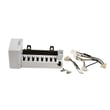
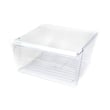
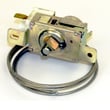
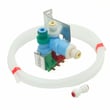
How can I tell how many cubic feet my Kenmore refrigerator is?
For your Kenmore side-by-side refrigerator model 10652542101, the most reliable way to confirm cubic-foot capacity is to look it up by model number in the 10652542101 owner's manual. If you need a quick estimate, you can calculate capacity by measuring the usable interior space and converting cubic inches to cubic feet.
Fast ways to find the capacity
- Check the model/serial label inside the fresh food compartment (commonly on a side wall or ceiling) and confirm it matches 10652542101.
- Look up the capacity in the specifications section of the 10652542101 owner's manual.
- If you are missing shelves/bins or have heavy frost buildup, measure after clearing obstructions so your estimate reflects usable space.
- For a rough estimate, measure the main open cavity areas (not door bins) and add them together.
How to calculate cubic feet (DIY method)
Use this formula for each compartment (refrigerator side and freezer side), then add them:
- Measure width x height x depth in inches (usable interior space).
- Multiply to get cubic inches.
- Divide by 1,728 to convert to cubic feet.
| What you measure | Formula | Example (inches) | Result |
|---|---|---|---|
| One compartment volume | W x H x D | 18 x 60 x 20 | 21,600 cu in |
| Convert to cubic feet | cu in ÷ 1,728 | 21,600 ÷ 1,728 | 12.5 cu ft |
Why it matters
Knowing cubic-foot capacity helps us match the right refrigerator parts and accessories (like shelves, bins, and ice maker components) and it also helps you compare storage space when planning food storage or replacement.
Last updated: January 2026
How wide is a Kenmore side-by-side refrigerator?
Most Kenmore side-by-side refrigerators are about 32 to 36 inches wide. For your specific Kenmore model 10652542101, the exact cabinet width and required clearance are listed in the 10652542101 owner's manual; we also recommend planning for extra space so the doors can swing fully.
Typical width ranges (what you can expect)
Most side-by-side units fall into these common width bands:
- 32 to 33 inches: space-saving models
- 35 to 36 inches: most common full-size width
- 42 inches: larger, premium-width models (less common)
Don’t forget installation clearance
Even if the cabinet width fits, you also need room for airflow and door swing. The Kenmore documentation calls out these common clearance needs:
- Allow about 1/2 inch on each side and at the top for ventilation
- If installed next to a fixed wall, allow about 2 inches minimum on the hinge side (varies by setup) so the door can open
- Leave extra space behind the refrigerator if you have an ice maker water line
For the exact clearance diagram and your model’s measurements, use the 10652542101 installation guide.
Quick planning table
| What you’re measuring | What to include | Typical target |
|---|---|---|
| Cabinet width | Refrigerator body only | 32 to 36 in. |
| “Fits in opening” width | Cabinet width + side clearance | Add about 1 in. total |
| Door swing space | Hinge-side clearance | About 2 in. near a wall |
Why it matters
Width is only part of “will it fit.” Side-by-side doors need swing room, and tight clearances can reduce airflow, which can hurt cooling performance and increase run time for the compressor.
Last updated: January 2026
What does er if mean on kenmore elite refrigerator?
On Kenmore model 10652542101, the Er IF code points to an ice fan (ice compartment fan) airflow problem. That fan moves freezer air through the door ducting to keep the ice maker area cold; when airflow stops, ice production and dispensing can be affected.
What to check first (quick, no-parts steps)
- Power reset: unplug the refrigerator (or turn off the breaker) for 5 minutes, then restore power.
- Make sure the freezer door closes fully and the door gasket seals all the way around.
- Clear ice or frost buildup around the ice bin area and air passages.
- Confirm the freezer temperature is set correctly (typical target is 0°F).
- Listen for a small fan running when the freezer door switch is pressed (door closed simulation).
Common causes and the most likely fixes
Er IF is usually caused by restricted airflow or a fan that is not running at the right speed.
| Symptom you notice | Most common cause | What we recommend |
|---|---|---|
| Ice maker slows or stops, freezer still cold | Ice/frost blocking the duct | Defrost the blockage; check door seal and alignment |
| No fan sound near ice maker area | Fan motor issue or wiring | Inspect connections; replace failed fan-related parts as needed |
| Intermittent Er IF | Door not sealing, moisture intrusion | Correct door closing and alignment; warm gasket to reshape |
| Er IF returns quickly after defrost | Defrost system issue causing recurring frost | Check defrost heater and defrost thermostat circuit |
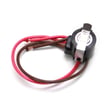
If you suspect a defrost-related frost buildup, the parts most often involved are the defrost thermostat and heater. For this model, examples include the refrigerator defrost bi-metal WPW10225581 and the refrigerator heater WP2323198.
Why it matters
When the ice fan cannot move cold air through the door ducting, the ice maker compartment warms up. That leads to soft cubes, clumping, slow production, and repeated error codes.
Model-specific guidance
Use the troubleshooting and control information in the 10652542101 owner's manual to locate the ice maker/ice bin area, confirm control settings, and follow the recommended checks for airflow and door sealing.
Last updated: January 2026