Owner’s manual
 View engine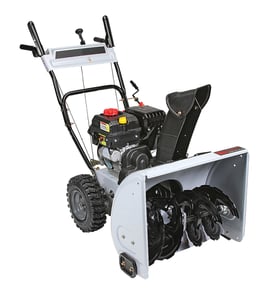



How to tell year of Craftsman snowblower by serial number?
To tell the year of a Craftsman snowblower by serial number, we match the serial-number format used on your machine and decode the date characters. For Craftsman model 536918300, the most reliable approach is to use the identification and parts information in the 536918300 owner's manual and then decode the serial number from the unit’s data label.
Where to find the serial number on a Craftsman snowblower
Most Craftsman snowblowers place the model and serial label on the:
- Rear of the frame near the handles
- Side of the auger housing
- Area near the engine mounting plate
- Transmission frame area (behind covers)
Write the serial number exactly as shown (letters, numbers, and any dashes).
How serial-number year decoding typically works
Craftsman snowblowers were built by different manufacturers over the years, so the serial format varies. Two common patterns you will see:
- Craftsman-style code: specific characters in the serial represent month and year within a decade
- MTD-style code (common on many Craftsman units): the first characters often encode month (letter), day, and year within a decade
Quick decode checklist
Use this checklist to pick the right method:
- If the serial starts with a month letter (often A through L), treat it like an MTD-style date code
- If the serial is mostly numeric with a few letters in fixed positions, treat it like a Craftsman-style code
- If the label also lists an engine model, you can date the engine separately and compare it to the snowblower’s likely build year
Example: what “year within a decade” means
Many serial systems use a single digit for the year (0-9). That digit can map to more than one calendar year.
| Serial year digit | Possible build years (examples) | How to choose the right one |
|---|---|---|
| 1 | 1991, 2001, 2011 | Match to your snowblower’s design, decals, and engine era |
| 4 | 1994, 2004, 2014 | Compare to parts diagrams and engine date code |
| 9 | 1999, 2009, 2019 | Use the closest realistic decade for the machine |
Why it matters
Knowing the build year helps us match the correct parts list, decals, belts, friction wheel components, and hardware so you order parts that fit your Craftsman 536918300 the first time.
Last updated: February 2026
Is it worth fixing a snowblower?
Yes, it’s worth fixing a Craftsman snowblower like model 536918300 when the problem is a normal wear item (drive belt, shear bolt, spark plug, cable adjustment) and the machine is otherwise solid; those repairs restore performance for far less than replacing the whole 24-inch snow blower.
Quick way to decide
Use this checklist before you spend money:
- Fix it if the issue is routine maintenance or a single failed part (belt, shear bolt, cable, spark plug).
- Fix it if the unit starts reliably and only struggles under load (often belt, friction drive, or adjustment).
- Fix it if damage happened after hitting a foreign object and you can identify the broken component.
- Replace it if the machine has repeated major failures season after season.
- Replace it if the repair requires major drivetrain work and the rest of the unit is heavily worn.
For model-specific procedures like drive belt replacement, shear bolt replacement, carburetor adjustment, and control cable adjustment, follow the steps in the owner's manual.
Typical repair cost vs. replacement value
These ranges help you judge value quickly (parts and labor vary by area).
| Repair type | What it usually involves | Usually worth it? |
|---|---|---|
| Tune-up | Spark plug, fuel system cleaning, adjustments | Yes |
| Wear-item repair | Belt, shear bolts, cables | Yes |
| Impact damage | Bent auger/impeller parts, broken fasteners | Often |
| Major drivetrain | Transmission or internal engine work | Sometimes |
Why it matters
A snowblower that is properly adjusted and maintained is safer and clears snow faster. The manual also calls out key safety steps, like stopping the engine and disconnecting the spark plug wire before inspections or repairs.
One model-specific tip that saves money
If your 536918300 starts vibrating after hitting something, stop and inspect immediately; vibration is a warning sign that a damaged auger/impeller component can cause bigger failures if you keep running it.
Last updated: February 2026
What is the typical lifespan of a gas snowblower?
A typical gas snowblower lasts 10 to 20 years when it is maintained and stored correctly. For your Craftsman 536918300 24-inch snow blower, consistent maintenance (oil checks, shear bolt checks, and proper off-season storage) is what most directly determines whether you land closer to 10 years or closer to 20.
What most affects lifespan (and what to do)
Use these habits to keep the engine, auger/impeller system, and drive components from wearing out early:
- Run it briefly after clearing snow to help prevent auger/impeller freeze-up.
- Check shear bolts and mounting bolts regularly and keep them properly tightened.
- Check gear case oil level before each use and top off as needed.
- Avoid long-term fuel storage in the tank; for seasonal storage, drain fuel when the unit will sit.
- Store fuel and the machine safely; never store where fumes could reach an ignition source.
For model-specific maintenance intervals and procedures (including lubrication, drive belt replacement, and storage steps), follow the owner's manual.
Quick “repair vs. replace” guide
If your snowblower is aging, this simple rule helps you decide what makes sense.
| Situation | Usually makes sense to do | Why |
|---|---|---|
| Starts reliably, throws snow well | Maintain and keep using | Routine service is cheaper than replacement |
| Frequent breakdowns or hard starting | Diagnose fuel/ignition and wear items | Small issues compound quickly in winter |
| Major drivetrain or engine work needed | Compare repair cost to machine value | Big repairs can exceed the value of an older unit |
Why it matters
A gas snowblower’s lifespan is mostly about preventing corrosion, fuel-system varnish, and freeze-related damage. The storage guidance in your manual is especially important because gasoline left sitting for 30 days or more can create deposits that lead to carburetor and starting problems.
Last updated: February 2026
Is sae 30 the same as 5W30 for snowblower?
No. On the Craftsman 536918300 snowblower, SAE 30 and 5W-30 are different oils and they are used for different places: 5W-30 is specified for the engine crankcase for cold-weather starting, while SAE 30 is specified for the auger gear case oil level fill.
What to use on model 536918300
Use the oil type based on the component you are servicing (engine vs. gear case). Our owner's manual calls out both oils in the lubrication instructions.
- Engine crankcase: Use 5W-30 motor oil (10W motor oil is listed as an acceptable substitute).
- Auger gear case: Use SAE 30 engine oil to top off until oil is visible at the level hole.
- Do not swap them by default: The engine needs good cold-flow for starting; the gear case fill spec is different.
- Check levels often: Crankcase oil is checked before starting and during use; gear case oil is checked before each use.
- Change interval: Crankcase oil is changed after the first 2 hours, then every 25 hours or at the start of each season.
Quick comparison
| Location on snowblower | Oil called out for 536918300 | What it affects most |
|---|---|---|
| Engine crankcase | 5W-30 (10W acceptable substitute) | Cold starting and engine lubrication |
| Auger gear case | SAE 30 | Gear case lubrication and protection |
Why it matters
Using the correct viscosity in the correct place helps your Craftsman 24-inch snow blower start reliably in cold weather and keeps the auger drive components properly lubricated, which reduces wear and helps prevent damage.
Last updated: February 2026
Should I spray my snowblower with WD-40?
Yes; on a Craftsman snowblower like model 536918300, a light coat of WD-40 on snow-contact surfaces can reduce chute clogging and help shed wet snow. Keep any spray off drive components and hot engine areas, and follow the lubrication and maintenance guidance in the 536918300 owner's manual.
Where WD-40 helps (and where to avoid it)
Use it only where you want a slick surface; never where the machine needs friction to drive.
- Good targets: inside the discharge chute, chute deflector, auger housing interior (snow path only)
- Avoid: belts, pulleys, friction disc and drive plate (if equipped), tires, skid shoes, and any braking or traction surfaces
- Avoid: muffler, cylinder head, and other hot engine parts
- Avoid: controls and electrical connectors unless the product is labeled safe for that use
Safe application steps
- Shut the engine off, remove the ignition key (if equipped), and let the unit cool.
- Brush or scrape packed snow and ice from the chute and housing.
- Apply a very light coat to the snow path; wipe excess so it does not drip.
- Start and test briefly outdoors; confirm the drive and auger engagement feel normal.
Spray options compared
| Product type | Best use on a snowblower | What to watch for |
|---|---|---|
| WD-40 (water-displacing spray) | Quick slickness on chute and snow path | Oily overspray can contaminate belts or friction drive parts |
| Silicone spray | Chute and deflector for snow shedding | Still avoid drive components |
| Dry PTFE spray | Low-residue coating for snow path | Apply to clean, dry surfaces for best results |
Why it matters
Chute clogs force you to stop and clear the discharge area. Keeping the snow path slick reduces clogging and helps you avoid unsafe clearing practices. The 536918300 owner's manual also covers key safety steps like stopping the engine before servicing or unclogging.
Last updated: February 2026